
High Style vs Low Style Camp Setup: 7 Factors That Actually Matter
High Style vs Low Style Camp Setup: 7 Factors That Actually Matter
The right camp setup height has less to do with looks and more to do with how you spend your time outdoors. We break down posture, standing frequency, fire proximity, cooking, vehicle loading, child safety, and winter cold across seven axes to help you decide between high, low, or mixed-height configurations.
The right camp setup height has less to do with looks and more to do with how you spend your time outdoors. We break down posture, standing frequency, fire grill proximity, cooking, vehicle loading, child safety, and winter cold across seven axes so you can figure out whether high, low, or mixed-height configurations suit you best. Table heights of 60-70 cm, seat heights around 40 cm for high style and 25 cm for low style -- these are the benchmarks. Factor in adjustable tables that switch between 35 and 70 cm, plus the 4.5 kg base weight threshold that ultra-light enthusiast campers aim for, and that vague "this looks nice" impulse starts giving way to informed decisions. Our team settled on a mixed setup during a fall family trip: high for the kitchen, low for meals and the fire grill. When kids are running around, a raised prep station keeps them clear of hot surfaces. When everyone winds down, sitting low together changes the whole mood. That practical split is what keeps comfort intact for families and winter campers alike.
The Difference Between High and Low Style Goes Beyond Height
Defining High and Low Style
High style and low style are not simply "tall chair vs. short chair." What actually drives the experience is whether your table and chair share the same height philosophy. VASTLAND's breakdown puts it clearly: high style pairs a taller table with a taller chair, low style pairs a shorter table with a shorter chair.
For high style, expect table heights in the 60-70 cm range with seat heights around 40 cm. Low style centers on chairs with seat heights around 25 cm, paired with correspondingly shorter tables. The detail people miss is that "high" and "low" are not labels for individual pieces of gear -- they describe the posture your entire setup creates.
Even brands like Snow Peak that offer both high and low lines prove the point: comfort comes from the combination, not any single piece. Drop a Coleman high chair next to a low table and meals become awkward. Pair a Helinox low chair with a tall table and you're fighting between relaxation posture and working posture. Before worrying about visual cohesion, get the heights to agree with each other.
ハイスタイル・ロースタイルとは?あなたに合ったキャンプスタイルをご紹介
キャンプスタイルを決める前にテーブルやチェアを買い揃えると、高さが合わずに不便を感じてしまうことがあります。ですが「キャンプをする前にどうやってキャンプスタイルを決めればいいの?」と思う方もいるのではないでしょうか?そんな方のために、キャン
vastland.co.jpWhy Matching Chair and Table Height Matters
When heights align, your elbows, sightline, and forward lean settle naturally. Mismatch one side and even a 30-minute meal starts to wear on you. Camp days involve long stretches of sitting, so that low-grade strain accumulates.
A reliable rule of thumb: keep the table about 10-20 cm above seat height. So a 40 cm seat pairs with a 60-70 cm table, and a 25 cm seat works with a 35-45 cm table. Elbows and sightlines stabilize. Individual products vary, so check actual dimensions before buying.
Hinata's coverage makes the same point -- changing height changes how camp feels -- and field experience confirms it. High style tilts toward a dining posture that favors cooking and eating. Low style drops your gaze, pulling you closer to the fire grill and into a more relaxed headspace. Neither is objectively better. What matters is whether you've given your chair the right partner.
💡 Tip
When you can't decide between high and low, stop evaluating the chair alone. Ask: "Can I eat comfortably at my table while sitting in this chair?" That question cuts through most of the noise.
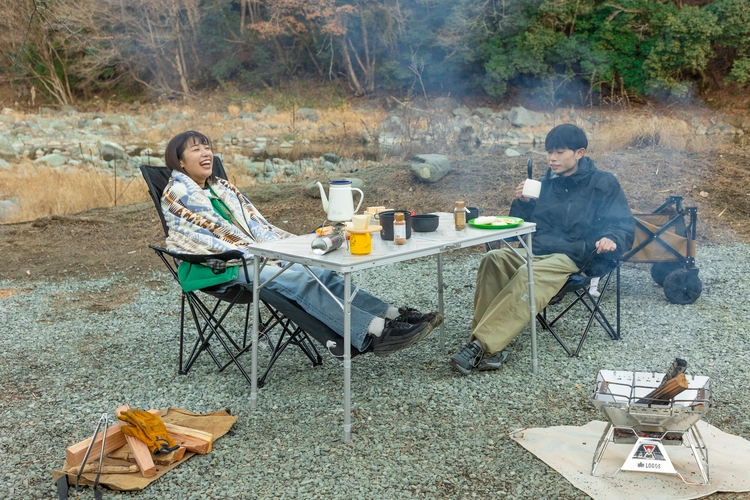
「高さ」を変えればキャンプが変わる!ハイスタイルとロースタイル、自分にとってベストはどっち!? | キャンプ・アウトドア情報メディアhinata
キャンプの楽しみ方を細分化するとそのスタイルは多岐に渡りますが、あえてギアの高さで大別すると「ハイスタイル」と「ロースタイル」の2種類に分けられます。今回は、両者それぞれのスタイルでキャンプ楽しむための道具と心構えをご紹介。あわせて、まだま
hinata.meCommon Height Mismatch Mistakes
The most frequent error: loving a low chair's comfort but pairing it with whatever tall table you already own. A 25 cm seat next to a 70 cm table forces your arms up, tightens your neck and shoulders, and has you hunching forward during meals. Even short sessions feel draining.
The reverse happens too. A 40 cm high chair paired with a low table makes everything feel oddly sunken. You're constantly reaching down for cups and plates, and the setup never quite settles. With families, where adults and kids sit at different heights, the same table can work perfectly for one person and be miserable for another.
Add kids who stand up and sit down a dozen times per meal and the picture gets more complicated. Our family wanted low and relaxed for dinner but needed high surfaces in the morning for prep work. That realization is what pushed us toward thinking in terms of which height serves which moment -- meals, cooking, lounging -- rather than picking one height for everything. Height is a system spec, not an individual one.
Comparison Table: Height, Loading, and Usability
Putting high, low, and mixed side by side makes the differences concrete. The real differentiator is not ambiance -- it's which movements you want to make easier. Family camping adds standing, serving, helping kids change clothes. Solo camping puts a premium on long hours of comfortable sitting near the fire. With auto-camping participation in Japan exceeding 7.5 million in 2021 (source: hinata), the growing camping population only reinforces that "one size fits all" matters less than "the right size for your routine."
High / Low / Mixed Comparison Table
| Factor | High Style | Low Style | Mixed Style |
|---|---|---|---|
| Default posture | Similar to dining at home; easy to keep your torso upright | Sinks deep; drops your sightline | Switch between upright for tasks, reclined for rest |
| Standing/sitting | Easy | Noticeable strain when frequent | Shift cooking and serving to the high side |
| Cooking & serving | Strong. Less bending at the waist | Sustained forward lean | Kitchen-only high solves this cleanly |
| Fire grill compatibility | Tends to feel a bit distant | Excellent. Fire feels close and immersive | Easy to keep just the fireside chairs low |
| Packing tendency | Bulkier | Easier to keep compact | Varies widely depending on your mix |
| Kid-friendliness | Better meal flow | Easy to sit in, but low burners become reachable | Split meals low, cooking high |
| Best scenario | Families, serious cooks, groups, high task volume | Solo, fire-focused, low shelters, relaxation priority | Undecided campers, families with kids, multi-season use |
| Dimension benchmarks | Table: 60-70 cm, seat: ~40 cm | Seat: ~25 cm | Adjustable table: 35/70 cm, ~8.6 kg, top 100x60 cm, packed 100x30x12 cm |
The table simplifies things, but field use reveals that standing/sitting frequency and cooking are where the gap really shows. Coleman and Snow Peak dining-oriented setups shine during breakfast prep and plating. Helinox-style low-seat chairs and fire-side low tables dominate those long evenings staring at flames. With small children, these differences matter more than you'd expect. Beyond adult comfort, you need to think about where kids walk, what they can reach, and whether that changes your opinion on mixed-height setups.
The Numbers Tell the Story
High style's benchmarks cluster around table height 60-70 cm and seat height ~40 cm. That mimics a home dining table -- stable for portioning food, using a knife, pouring hot water. Low style sits at ~25 cm seat height, great for fireside relaxation but noticeably tiring if you're getting up repeatedly throughout the day.
Adjustable-height tables bridge the gap. One example (source: logbum Camp) lists dimensions of 100x60 cm top, 35/70 cm height settings, packed size 100x30x12 cm, and weight around 8.6 kg. Specs vary substantially between products, so treat these as illustrative and always verify with the manufacturer before purchasing.
Load Weight Depends on Your Gear, Not Your Style Label
The assumption that low style means light and high style means heavy is only half right. Pick a lightweight low chair but pair it with a heavy table and the total climbs fast. Go high style with aluminum-frame everything and it can pack surprisingly small. BE-PAL's ultra-light benchmarks put base weight at 4.5 kg or under (source: BE-PAL). That's an extreme target, but the underlying principle applies broadly: judge your setup by total weight, not by style category.
The same logic scales down to small items. CAMP HACK's comparison of UL stoves shows models at ~67 g and ~81 g -- a 14 g difference. Trivial in isolation, but stack those margins across your chair, table, stove, cookset, and storage bag, and the feel at pack-up changes measurably. Low style is not inherently light. The question is whether you've assembled a light kit that happens to be low. Families add plates, extra clothes, and kids' toys on top of all this, so thinking in terms of total weight rather than aesthetic category prevents surprises.
ℹ️ Note
If you've gone low style but your pack still feels heavy, the culprit is almost always the table -- its weight and packed size, not the chair height.
For Families: Separate Where You Eat from Where You Cook
With kids around, forcing the whole family into one height makes less sense than splitting by function. A low dining area is easier for children to sit at and more relaxed for everyone. But dropping the cooking surface to the same level puts burners and hot pots within arm's reach. That's where raising just the kitchen pays off. WAQ's breakdown of family-friendly setups reaches the same conclusion.
Our family runs this way: low table for meals, high stand for the stove and prep area. Mealtime feels calm because everyone's eyes are at the same level. Cooking feels safe because adult hands work above the kids' reach. Mixed style looks like a compromise on paper, but in practice it's an intentional grab for both safety and comfort at the same time. If you're stuck choosing between high and low, line up the numbers next to the scenarios and your answer usually surfaces.
Seven Axes That Determine Comfort
Gut feelings like "low style seems chill" or "high style looks practical" get you part of the way. Mapping comfort to specific activities gets you the rest. The baseline is simple: low style favors leaning back and relaxing, high style favors staying upright and working. Layer on fire grill time, breakfast prep, pre-departure cleanup, and how kids move through the site, and you start to see which configuration fits your camping rhythm.
Posture and Seated Comfort
Instant comfort when you sit down comes less from the look of the chair and more from pelvic angle and how upright your torso stays. Low style naturally tips you back, which suits fire-gazing and conversation. VASTLAND and WAQ both characterize low as relaxation-oriented and high as closer to everyday seating posture.
On our team's trips, nighttime around the fire grill in a Helinox-style low chair -- legs stretched out, shoulders dropped -- is when tension drains out of the day. But come morning, dripping coffee or doing a bit of laptop work, a Coleman or Snow Peak dining-height setup wins by a wide margin. If your hands reach forward a lot, go high. If your eyes are on the fire and the sky, go low. That framing moves the conversation past feelings and into practical structure.
How Often You Stand Up
Comfort isn't only about sitting. It's also about how many times you stand up and crouch back down. High style pays dividends on days packed with serving, refilling drinks, and helping kids change clothes. The motion mirrors what you'd do at a dining table at home -- no extra knee or hip effort.
Low style is genuinely blissful once you settle in, but days with constant interruptions reveal its weakness. Family camping multiplies those interruptions: a spill to clean up, a jacket to fetch, rerouting a toddler away from the fire grill. Small children make this axis surprisingly important. Factor in total stand-up count for the day, not just how good the chair feels during a sustained sit, and the value of a higher seat becomes clear.
Cooking Efficiency
The consensus that high style wins for cooking holds up in the field. Chopping, stirring, plating, serving family-sized portions -- all of these are more stable when your hands work at a comfortable height without hunching. CAMP HACK and Walkerplus both flag the ergonomic advantage of high setups for kitchen tasks.
Our team notices it most on simple mornings: boiling water, laying out bread and soup. Even those brief tasks accumulate forward-lean fatigue at a low table. Flip the scenario to fireside snacking and low style causes no issues at all -- the stakes are low and the movements are minimal. The dividing line is whether cooking is an activity you enjoy and invest time in, or something you keep short and simple. Mixed style's popularity traces directly to this: raise just the kitchen and the weakness disappears.
Distance from the Fire
If the fire grill is the centerpiece of your trip, low style's appeal is hard to beat. Your sightline drops, the fire feels closer, and the immersion deepens. Hinata characterizes this proximity to nature and flame as low style's signature draw.
Our team feels the difference most after dark. A high chair puts you slightly removed, observing the fire from dining-table distance. Switch to a low chair and the time around the fire itself slows down. If post-dinner hours around the fire grill are what you look forward to most, low is the natural choice. If the fire is more of a backdrop to conversation and dinner, high works perfectly well.
Packing and Total Weight
Packing is determined by the total weight of what you've chosen, not by the style label. Low style trends compact, but a heavy low table erases that advantage instantly. High style with aluminum-centric gear can load neatly into a vehicle. The practical comparison has to be item-by-item.
For a lightweight benchmark, BE-PAL cites a base weight of 4.5 kg for UL setups. Nobody expects a family camp to hit that target, but the mindset transfers: look at the whole stack, not individual pieces. Stove differences of 67 g vs. 81 g seem negligible until you multiply that kind of margin across every item in the car. At pack-up, the cumulative effect is undeniable. Low style is not automatically light. Whether you've built a genuinely light loadout is the real question.
Winter Ground Chill
Winter adds heat loss to the comfort equation. Low style puts you closer to cold ground and chilled air, and sustained sitting lets that cold creep up from the legs. There is a noticeable difference in field testing. High style raises the seat enough to create a buffer around the feet, and in practice that small gap makes cold less aggressive.
Still, chair height alone doesn't determine winter comfort. Shelter ventilation, insulating mats, rugs, and fire grill positioning all factor in. The trend worth noting is that winter low style has wider comfort swings. When everything lines up -- good ground insulation, close fire, calm wind -- it's atmospheric and satisfying. But the moment your feet get cold, the experience drops hard. Switching to a high chair on a freezing morning gets your body upright, puts a warm drink at natural hand height, and restores practical function quickly.
Child Safety
With kids, comfort and safety overlap heavily. High style makes it easier to manage dishes, serve food, and support children while standing. The downside: tall chairs can be hard for younger kids to climb into, and some will try to scale them.
Low style is easier for children to sit in and reduces fall risk, but it also drops burners and hot pots to within reach. That's why splitting function works so well for families: meals at low height, cooking at high height. Since our team adopted that split, mealtimes have felt calmer with everyone at eye level, and cooking sessions have kept small hands farther from heat sources. The question is not where the child sits but where the child walks and what they can reach. Frame it that way and mixed style's logic becomes very compelling.
Scenarios Change the Answer: Solo, Family, Group, Winter
Solo / Hiking / Motorcycle
When you're solo with a pack on your back or a bike underneath you, the answer tilts clearly toward low style. The reasoning is straightforward: compact packing. BE-PAL's UL framework targets a base weight of 4.5 kg. You don't have to go that far, but the trimming mindset pairs naturally with lower, smaller gear. Short chairs and compact tables fit inside a solo tent vestibule or beneath a low tarp without fighting for space.
Solo time also skews heavily toward "being there" rather than "getting things done." Watching fire, sipping coffee, sitting quietly. Low style's dropped sightline and laid-back posture fit those moments perfectly. On winter solo outings at around 0-5 degrees C, our testers found that sitting low and leaning toward the fire grill made it easier to pull warmth into the hands and core rather than relying on ambient heat. For nighttime atmosphere alone, solo low style is exceptionally strong.
The exception: solo campers who cook seriously or stand up frequently throughout the day. Boiling water is fine at low height. Full skillet meals with plating are not. CAMP HACK's high-style field tests confirm a clear ergonomic gap for kitchen tasks. Even on foot or by bike, what you spend the most time doing at camp -- not your transport mode -- should drive the decision.
Family / Elderly Members
For family trips, the default leans high. This becomes especially clear with young children or older family members. Meal flow and standing-sitting logistics are simply easier at dining height. Everyone can sit and rise without struggle, serving stays orderly, and one person getting up doesn't disrupt the group. Walkerplus notes that high style's advantages compound as headcount grows.
With elderly family members, the gap widens further. A deep-sinking low chair feels great while seated but demands real effort to stand up from -- repeatedly. High style keeps meals, seating, and movement in one smooth sequence, eliminating the "camp means awkward postures" problem. A single overnight with a family generates dozens of small movements -- breakfast prep, cleanup, fetching things -- and high style absorbs those without stacking up fatigue.
When kids are in the picture, raising only the kitchen is remarkably effective. WAQ's mixed-use guidelines point in the same direction: keep the eating area at a comfortable low height for kids, and lift the cooking zone to keep heat and sharp tools out of reach. Our family's breakfast routine is noticeably faster at high height, with smoother flow from stove to plate to table. The insight that matters most is not where the child sits, but ensuring the child's walking path doesn't pass next to the heat source.
Group / Cooking-Focused
Group camping with friends or multiple families favors high style. The reason: shared cooking generates constant movement. Someone chops, someone grills, someone plates. Those overlapping tasks flow better when people can stand, shift, and sit at dining height rather than everyone sinking into low chairs. Logbum Camp highlights high style's work-surface advantage in exactly this context.
For cooking-focused trips, comfort depends less on seat feel and more on whether people can cross paths without friction. Low style creates great ambiance, but the moment you're stepping over pots and reaching across plates, it gets cramped. Table-only conversation works fine at low height. Ongoing grilling, portioning, and topping-up favors high.
That said, even group trips don't need to stay high all evening. The practical pattern is high for dinner service, low for the fire circle after. Stay mobile and productive through the meal, then drop into low chairs and let the pace slow down. That transition is what makes group camping feel both organized and relaxed. The larger the group, the more a "change height by phase" approach outperforms a single fixed height.
Winter Camping
Winter resists a single-style answer. Mixed is usually where you land. Low style's fire proximity is wonderful -- sitting close to the fire grill on a cold night is one of camping's best experiences. But mornings and late evenings bring ground chill that hits legs and feet hard at low height. High style makes morning cooking, firewood hauling, and dish-laying more comfortable with an upright torso.
The practical split: kitchen at high, fire grill at low. Enjoy the closeness of fire in the evening, then shift to high for morning tasks and teardown. Our testing confirmed this as the most satisfying winter pattern. Solo cold-weather nights feel better low and near the fire. Family winter mornings move faster at high height. Winter's real question is not "which is more comfortable" but "what are you doing at each point in the day?"
Shelter choice connects here too. Winter-oriented tents with snow skirts and usable vestibules change the livability equation. For families especially, how you divide sleeping space from living and cooking space matters, and that decision ties directly into winter tent selection thinking. Height style works best when you plan it alongside where you'll actually be sitting inside the shelter.
Height Compatibility Inside Tents and Shelters
An often-overlooked factor: your chair and table height interact with your tent or shelter's shape. Inside a low solo tent or a shallow-vestibule tarp, low style avoids the cramped feeling. Seated movement stays natural. Inside a large family tent or a two-room layout with standing headroom, high style's convenience comes alive.
Family living space inside a tent is better judged by daytime usability than just sleeping capacity. The widely shared advice to size up -- a family of four choosing a five- or six-person tent -- makes even more sense when you plan to use chairs indoors. People sitting, gear stacked, entry and exit, changing clothes: do all of that inside and high style quickly outgrows a tight space.
Ceiling height perception matters too. If adults can move and change standing up, the tent supports high style. If the shelter keeps height low, low style layouts fit more naturally. Rather than picking chair and table heights in isolation, think about which shelter you'll be inside, where you'll sit, and where you'll handle fire and food. That full picture is what connects directly to real-world usability.
💡 Tip
If you're stuck trying to go all-high or all-low, use this shorthand: solo, hiking, and motorcycle lean low; family, elderly, and group cooking lean high; winter and kids lean mixed.
Who High Style Is For
Ideal Reader Profile
High style clicks for people who spend a lot of their camping time doing things with their hands in front of them. Eating, cooking, pouring drinks, opening a laptop, wiping up a child's spill -- these are all "forward task" activities, and dining-height posture handles them smoothly. The more you stand up and sit down during a day, the more that comfort adds up.
Two groups where the fit is especially strong: serious camp cooks and people who mix work or laptop time into their trips. A high table raises your work surface enough to avoid constant bending. Our testers find that when the cutting board lands at about chest-to-stomach height on a ~70 cm table, chopping, stirring, and plating flow without interruption. An added benefit with kids: that raised surface is harder for small hands to reach into, cutting down on close calls.
People sensitive to lower-back strain also tend to favor high style. It doesn't eliminate load on the back entirely, but the trend is toward less cumulative strain because you spend less time hunched forward in the deep lean that low style encourages. CAMP HACK's comparison of posture and task efficiency aligns with this field observation: the comfort high style offers is less about "relaxation" and more about "capacity to get things done."
One more high-style profile: anyone regularly feeding multiple people. Families and groups generate a loop of serving, passing plates, clearing empties, and fetching refills. When standing and sitting are easy and aisles between chairs are passable, that loop runs cleanly. Our family camp meals consistently reach the "everyone eating" stage faster at high height, and cleanup flows better than individually rising from deep low chairs.
Tent and Layout Pairings
High style performs best in layouts with vertical room to spare. The natural pairing is a large family tent or the living side of a two-room tent. With sleeping and living areas separated, a full-size dining table fits without choking the walkway, and multi-person meals stay manageable. As covered earlier, shelters where people walk upright are where high style's strengths land most cleanly.
A practical layout: table in the center or along one side, chairs around it, one clear path kept open. The cook can move with pots and plates without squeezing behind seated people. This is high style's structural advantage for group meals -- the person cooking, the person serving, and the person clearing dishes can all move simultaneously without bottlenecks.
For a workation-leaning setup, add a single desk seat off to one side, separate from the main dining table. The dining-chair posture supports screen work, note-taking, and mouse use, and standing up from the session is easy. Campers who fold a bit of work into their trips find that high style's upright posture outperforms low style's reclined comfort for those blocks.
With kids, keep the dining zone high and place the play area a step away. High chairs aren't inherently kid-friendly, but raising the cooking surface means knives and hot pots stay above small-child reach. Concentrate foot traffic at the dining area and route children's paths away from the cooking zone. That logic and high style reinforce each other well.
ℹ️ Note
High style's comfort is not about sinking in and going limp. It's about standing, sitting, serving, and working in a smooth loop. Days heavy on meals, cooking, and laptop time are where the advantages show up most clearly.
Who Low Style Is For
Ideal Reader Profile
Low style suits people who want their camping time to be about presence, not productivity. Fire proximity is closer, the chair invites a deep sit with legs extended, and the whole posture says "slow down." If your favorite camp moment is staring into flames with a drink in hand, low style is built for you. The dropped sightline calms the visual field, letting fire movement and night air fill the experience.
The strongest match is solo-leaning campers and anyone focused on keeping gear light. Low-style setups trend compact and lightweight overall, fitting naturally into the UL mindset where base weight under 4.5 kg is the target. Chair and table weight alone don't tell the whole story, but when you want everything to pack small, the low configuration cooperates without a fight.
The quality of relaxation also differs from high style. Where high provides "productive seated comfort," low delivers the ability to lean back and let tension go. On a winter night under the stars, dropping into a low chair and letting the backrest take your weight stretches time out. Radiant heat from the fire grill reaches hands and feet more easily at lower height, adding warmth to the cold-weather outdoor experience.
The tradeoff: sustained forward-leaning cooking or frequent standing wears you down faster in low-only setups. When that's part of your trip, going full low everywhere isn't the answer. Keep meals and fire low, raise just the cooking zone -- that's the practical hybrid that preserves low style's strengths without importing its weaknesses.
Tent and Layout Pairings
Low style truly shines when paired with shorter tents and shelters. Lower ceilings feel less oppressive, and seated movement stays fluid. Solo tents and low-profile shelters are where this height match translates directly into comfort. The gear-selection thinking aligns with solo tent comparison and selection guidance on our site.
A clean layout: low chair facing the fire grill, a short side table within arm's reach. Fire proximity is easy to control, and cups, lanterns, and small items sit at natural hand height. Inside a low shelter, sightlines stay uncluttered, and the whole site feels more open -- a visual benefit unique to low configurations.
For a mixed approach, keep the lounging seat low and raise only the stove and prep surface. This retains low style's atmosphere while offloading the forward-lean penalty from cooking. Fire-focused evenings stay low; morning coffee and breakfast shift slightly higher. That toggle is what lets low style's best quality -- deep, unhurried comfort -- come through cleanly.
⚠️ Warning
Low style is not "short and therefore inconvenient." It's a style that thrives when you know what you're doing with your time. If sitting near the fire with legs stretched out is the main event, lowering everything actually raises satisfaction.
Mixed Style: The Quietly Reliable Choice
Kitchen = High / Lounging = Low
If you can't commit fully to one height, splitting by function -- work surfaces high, relaxation spots low -- is the most failure-resistant approach. For families especially, this is thoroughly practical. Cooking zones stay high because standing, plating, and serving happen there. Meal and fire zones stay low for settled, eye-level togetherness. The result is safety and comfort captured simultaneously.
With small children, this split matters more than you might expect. Kids sit more easily at low height, but dropping cutting boards and hot burners to the same level puts hazards within reach. Raising just the kitchen isolates the cooking flow from the family's lounging space. Eat low and relaxed, prep high and safe. That division is far more realistic than picking a single height.
Our team's typical day follows a rhythm: morning cooking at high, midday family time at low, evening fire at low. Mornings need efficient upright prep. Midday needs easy sitting for kids who pop up and down constantly. Evenings gravitate naturally toward the fire. Even the transition after a child's nap -- shifting the mood from active to calm -- is smoother when the space already has two height zones built in.
Tips and Cautions for Adjustable Tables
Adjustable-height tables are the easiest way to make mixed style work. One example (source: logbum Camp) offers 35/70 cm settings, making morning-to-evening role changes straightforward. As with any product-specific specs, verify dimensions with the manufacturer before purchasing.
The operating principle: divide the day into phases and assign the table a role in each one. Breakfast prep: high. Post-meal lounging: low. Think of the table not as a fixed piece of furniture but as a tool that shifts with the schedule. This is how you extract value from both height philosophies without doubling your gear.
Unconventional pairings work too. Low chair with a high table means you can eat seated and handle brief standing tasks without rearranging anything. It's less rigid than full high style but avoids the forward lean of a full low table. Going the other direction, a mostly-high setup with a low side table added just for fireside use gives nighttime a different feel -- drinks and gloves at hand height beside the fire, without overhauling the main layout.
Adjustable does not mean universal, though. If the table itself is heavy, portability stays an issue regardless of its height settings. Building a low-style kit around a heavy adjustable table means total weight doesn't actually drop. CAMP HACK's family loading comparisons reflect this reality: assess by total weight, not by style label.
ℹ️ Note
Mixed style is not a compromise. It's shifting the optimal height across the hours of the day. Morning task efficiency, midday seating comfort, nighttime fire proximity -- one adjustable table can serve all three, and overall site satisfaction stabilizes.
Optimizing Packing and Layout
Mixed style becomes complete when you plan packing too. The key is not owning both high and low versions of everything. It's deciding which items pull double duty. Unify the main chairs as low, then add height only at the cooking station with a stand or taller table. Gear count stays controlled and the setup holds up even when conditions shift. The opposite approach -- full high chairs for everyone plus extra low chairs for the fire -- overwhelms vehicle space fast.
Layout also benefits from role separation. A strong configuration: kitchen pushed to one edge of the site, center and fireside area kept as low lounging space. Foot traffic for the cook and stillness for the group no longer collide. With kids, the boundary between eating, playing, and cooking areas becomes visually obvious, and site clutter drops.
Deliberately mismatching chair and table heights is part of the mixed-style playbook. Low chairs with a high table preserves seated comfort while supporting stand-up tasks. A high main setup with a low fireside side table grafts evening atmosphere onto an otherwise productivity-oriented camp. These small height offsets don't require buying a whole new set -- they just ask you to think about height as a tool rather than a label.
A reminder that going lower does not automatically mean going lighter. UL benchmarks put base weight at 4.5 kg, but even outside that extreme, weight reduction is the sum of every item's weight. A 14 g difference between stoves means nothing alone but adds up across every gear slot. One table's weight registers across the entire loadout. Mixed style is versatile, but success comes from choosing what to keep and what to let one item handle, not from the style name printed on the box.
Pre-Purchase Checklist
Confirming Height Compatibility Before You Buy
The most impactful pre-purchase check is not how the chair feels for two minutes in a store. It's whether the height and volume fit your existing shelter and vehicle. The overlooked test: can you sit, reach forward, and stand up inside your tent without bumping your head or elbows? If your shelter runs low and you've bought a full set of high chairs, headroom and entry/exit become awkward. Low shelters pair better with low style -- don't force height where the ceiling won't allow it.
Standing ease is also hard to judge from a brief sit. As VASTLAND's seat-height guidelines note, chairs at ~40 cm make repeated standing and sitting substantially easier -- valuable on days packed with serving and cleanup. Chairs at ~25 cm reward deep relaxation but become a noticeable burden when you're up and down constantly. With small children, the "up and down" count rises fast: spills, jacket runs, bathroom escorts. That makes the height-to-activity match more consequential than a showroom test suggests.
For packing, weight alone misleads. Packed volume matters more in practice -- the car cares about box shape before it cares about kilograms. Families feel this acutely: four chairs' packed volume hits hard. Our team learned the hard way, hauling four high chairs across a walk-in site over multiple trips. After that, swapping even one chair to a low model to shave volume made loading and carrying noticeably easier. Add the table -- which takes up a slab of space on its own -- and thinking of the load as "four boxes and a board" keeps expectations realistic.
The Three-Factor Check: Family Makeup, Season, Packing
For families, the right style lives at the intersection of family makeup, season, and packing constraints -- not headcount alone. Family makeup's biggest variable is children's age. With preschoolers, you don't need everything at high height, but raising the cooking zone alone delivers outsized safety value. Low-placed burners and hot pots sit at exactly the height where small hands and curious eyes converge. Keeping meals low and cooking high is practical and removes the feeling of being controlled by the gear. WAQ's child-safety guidance confirms that height separation at the cooking zone directly impacts family safety.
For season, separate fire grill distance from ground chill. Fireside comfort depends on the gap between the fire grill's fire bed height and your seat height. Low style brings you closer and boosts atmosphere, but sitting too close and square-on invites excessive radiant heat. Angling slightly off-center settles the experience. High style creates distance that keeps the upper body comfortable but exposes feet to cold -- wind direction awareness and foot-level insulation help.
Winter ground-chill mitigation differs by style. Low-centered setups need rugs or insulating mats -- without them, comfort drops sharply. High-centered setups protect the seat but leave feet exposed, making below-seat insulation the gap to fill. Winter height decisions are really about identifying where cold attacks your posture and adding the right layer. Shelter selection ties in too: winter-capable tents with snow skirts and usable interior volume connect to our tent sizing guide and easy-setup tent comparison.

ロースタイルやお座敷スタイルが人気の理由|ハイスタイルとの違い、メリットデメリットを解説
子ども連れのファミリーキャンプを中心に人気があるのが、ロースタイルやお座敷スタイルです。 とはいえ「ロースタイル・お座敷スタイルってどこがいいの?」といった疑問を持たれている方もいるのではないでしょうか。 今回は、 ロースタイルやお座敷スタ
waq-online.comWhen in Doubt, Build in an Escape Hatch with Mixed or Adjustable Gear
The more uncertain you are, the less you should commit to one extreme. Going all-high or all-low from the start increases the odds of a costly do-over. The lowest-risk first purchase is mixed by default: an adjustable table paired with chairs biased toward whatever the family sits in longest. That way mornings, meals, and fire time can each use a different height without swapping gear.
The clearest escape hatch is an adjustable table with 35/70 cm settings. Raise it for morning prep, lower it for evening hangouts. Our team's experience is that one flexible piece in the first loadout produces more stable long-term satisfaction than trying to nail the perfect fixed setup right away. As kids grow, the ideal heights shift too, and adjustable gear absorbs that change without a full replacement cycle.
💡 Tip
When you're stuck, default to "chairs for comfort, kitchen for height." You don't need uniform heights to have a great setup -- in fact, intentional mismatching often works better.
Mixed is not settling. It's a method for balancing ease of standing, safety, and packing weight. Before locking in four high chairs and a large table, test the idea of swapping one chair to low, raising only the cooking surface, or keeping a single low seat for the fire. Setups with that kind of built-in flexibility survive changes in family size, season, and campsite type without falling apart. For families especially, carry-ability and daily flow end up mattering more than visual consistency.
Summary and Quick-Decision Flow
The decision framework is simple. Frequent task work and standing? High. Fire proximity and light packing with a low shelter? Low. Families with children, winter campers, and anyone torn between the two will find that splitting kitchen high and lounging low in a mixed setup is the most practical path.
Working through all seven axes, our team's family weekend camps settled on mixed over pure high, while solo fire-focused trips landed on low. As a memory aid: cooking-focused and workation trips point to high, fire-focused and hiking/motorcycle trips point to low, kid and winter trips point to mixed. That shorthand holds up reliably across conditions.
Related Articles
Best Low Camping Chairs in 2024 — 8 Options Compared Across 6 Key Axes
Pick the wrong chair for a low-style camp setup and suddenly the campfire feels close but standing up becomes a chore, and your morning coffee turns into a back workout. This guide breaks down low camping chairs across 6 axes — seat height, posture and recline angle, ease of standing, storage design, weight and packed size, and fabric fire resistance — comparing 8 models as if you could try them all side by side.
Lightweight Chairs Under 1kg: 6 Top Picks for Hiking and Motorcycle Tours | Comparison Guide
A lightweight chair under 1kg isn't just about being light—it's a tool where weight alone doesn't guarantee the right choice. On a mountain summit, even a few minutes of sipping coffee becomes noticeably more restorative with a backrest, and on a motorcycle tour, a compact stored length means your saddlebags and rack space fit together so much more easily.
How to Choose a Camp Table | Compare by Height and Material
Camp tables come in many varieties, but comparing by height × material × size × storage shape makes the choice surprisingly simple. The key is deciding on your chair seat height and whether you'll use it mainly for dining, cooking, or campfire cooking.
How to Choose an Outdoor Chair in Japan and Compare Sitting Comfort
Choosing a camping chair in Japan might seem overwhelming due to the variety available, but the process becomes much simpler once you decide what takes priority: dining, campfire time, relaxation, or portability on foot. For seat height, aim for 40–50cm for high-style chairs and 20–35cm for low-style chairs. When you combine this with storage methods—folding, collapsing, or assembly types—and match them to your use case, the right chair becomes clear.