How to Choose a Camp Table | Compare by Height and Material
How to Choose a Camp Table | Compare by Height and Material
Camp tables come in many varieties, but comparing by height × material × size × storage shape makes the choice surprisingly simple. The key is deciding on your chair seat height and whether you'll use it mainly for dining, cooking, or campfire cooking.
Camp tables in Japan come in many varieties, but comparing by height × material × size × storage shape makes the choice surprisingly simple. The key is deciding on your current chair seat height and whether you'll use it mainly for dining, cooking, or campfire cooking.
During an autumn auto-camp trip, I noticed a huge difference when using a low tabletop that matched my low chair, a stainless steel top near the fire, and a slightly higher table inside the touring room. The comfort of eating and ease of work changed dramatically. This article walks through specific height guidelines for low, high, and cooking-table setups, comparing heat resistance and weight by material, while addressing easy-to-miss issues like leg interference and uneven ground. By the end, you'll be able to narrow your choice down to two or three table types that actually work for you.
Think of Height and Material Together
The most common mistake in table selection is deciding on height alone or material alone. For example, if you mainly use low chairs but pick a 70cm tabletop (typical high-table range), your arms stay raised the whole meal and your shoulders tire easily. Conversely, if you're floor-sitting and go higher than 40cm, you reach awkwardly for food and the table becomes harder to use than it looks. Even within "low style," the comfortable height varies: around 30cm for floor seating, around 40cm for low chairs, and 45–50cm for higher-low setups inside shelters.
A good rule of thumb for dining comfort is a tabletop 10–20cm higher than your chair seat. That said, if cooking is your priority, the math changes—a work surface around 80–90cm reduces back strain and makes prep and plating much easier. I never pick eating tables and cutting tables using the same logic.
Material matters equally. Choosing by "I like the look" or "it's light so convenient" often leads to regrets. Wood creates a soft atmosphere and looks beautiful in photos, but close to a campfire you need to watch for embers and hot pots. Plus, wet wood is hard to pack away. Aluminum is light and reliable for solos and backup tables, but lightweight designs sometimes feel wobbly under heavy cookware. Stainless and steel offer real peace of mind around heat and grime, which matters for campfire cooking.
The realization hit me during fireside cooking. I pulled a skillet from the flames and wanted to set it down just for a moment—on my wood tabletop. I barely caught myself and moved it to a heat mat, but that moment taught me: the best table for looks and the best table for hot cookware have different jobs. Your food table can be perfect, but your campfire partner needs a different answer.
Different uses demand different trade-offs. Dining prioritizes easy reach from a seated position; cooking prioritizes standing comfort and clean-up speed; campfire work needs heat resistance and doesn't mind ash or soot. If you want one table to do it all, adjustable height becomes crucial—and so does checking for leg interference. A tabletop that fits perfectly can still feel cramped if the frame bumps your knees while you eat.
When turning a touring room into a living area, the space itself matters too. A 45–50cm mid-low table works better in spacious shelters than a full-low 30–40cm. This ties back to discussions about two-room tent recommendations and size guides—think about how you'll actually spend time inside before picking the height.
For deeper insight into chair-table balance, check the related article on seating posture. A table is only as comfortable as its match with your chair. That's why the best approach isn't "height or material first," but working backward from what posture and cooking style you actually want.
How to Decide Height: Low, High, and Kitchen Setups
Low Style 30–40cm: Floor-Seating at 30cm / Low Chairs at 40cm
The first rule of height is that "low style" has two different standards. Floor-seating needs around 30cm; low-chair setups work best around 40cm. Lumping them together causes problems: "lower than expected" or "comfortable but hard to eat from."
At 30cm, whether you stretch your legs or cross-leg, reaching the table is natural. Around 40cm, reaching food becomes a bigger motion and the table feels slightly more distant. Soto Recipe splits the difference the same way—30cm for floor, 40cm for low chairs.
With a low chair, 40cm feels more stable for eating. Your seated position is higher, so 30cm feels too low and you lean forward at every meal. In dishes-to-pass situations, a few centimeters make real comfort differences. Low style tempts you to choose by vibe, but where your bottom lands determines the right height.
Higher-Low Inside Shelters: 45–50cm
Some shelters benefit from a "higher-low" around 45–50cm. This height (referenced in sources like Honda Camping) keeps some ground-level coziness while making meals and light work easier. It avoids the overly-low feeling and the cramped sensation of pure high tables.
The sweet spot works because sight lines stay low and leg space opens up. In a shelter, too low means constant forward bending; too high creates a boxed-in feel. At 45–50cm, deep low-chair seating stays comfortable, not too close or far, and the look settles into the space naturally.
I once paired a 34cm-seat low chair with a 50cm tabletop. On paper, "higher-low seems convenient," but my shoulders stayed lifted the whole meal and I felt unsettled. Switching to a 40cm top made everything relax—my arms dropped naturally and comfort jumped. This range is useful, but with low-seat chairs it suddenly feels too high. Think of 45–50cm as right for higher seats or spacious living areas, not as a catch-all.
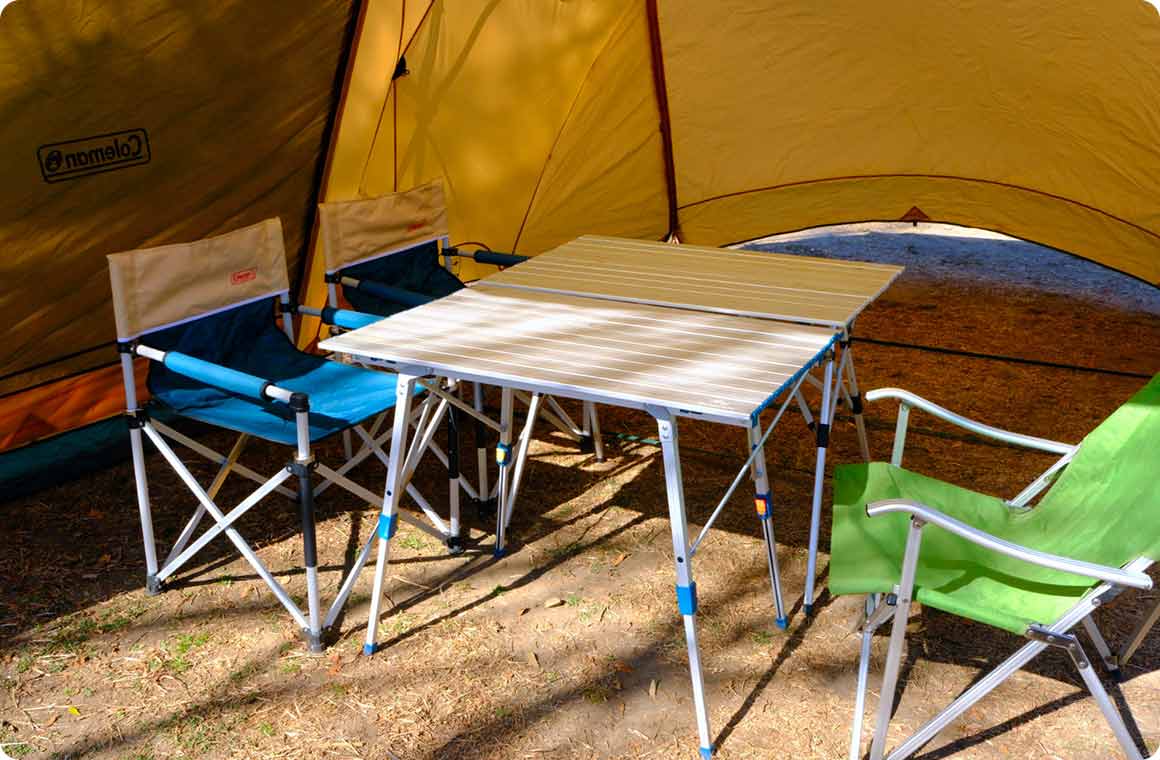
How to Choose a Camp Table Without Failing! Often-Overlooked Points
Outdoor shops stock many tables, and first-time campers often wonder which to buy. This piece covers shape, height, material differences, and other points to avoid mistakes in camp table selection.
www.honda.co.jpHigh Table Around 70cm: Easy Standing and Work
Around 70cm is the standard for high style. Soto Recipe and Honda Camping both reference this as typical, offering familiar dining comfort and easy standing/sitting.
This height shines because meals, plating, and light tasks all flow naturally. With kids or frequent serving trips, movement is much easier than with low tables. Family camps see faster plate turnover partly because of this height. Boardgames or light prep stays comfortable too; posture doesn't collapse.
Put a 70cm table with low-chair sites, though, and it feels off-balance. As mentioned earlier, lower seats mean raised arms and lost coziness. Think of 70cm not as "high" but as the baseline for high chairs and dining-like posture—that clarifies things.
Kitchen Table 80–90cm
When cooking takes the lead, separate your thinking from dining comfort. Kitchen tables around 80–90cm make chopping, mixing, and plating much smoother while standing. Less back-bending time means campfire cooking becomes genuinely easier.
A useful formula comes from Honda Camping: height ÷ 2 + 5cm. For someone 170cm tall, that's 90cm. (This is just a guide; arm length, posture, and shoes vary—try it on site and adjust.)
Chair Seat + 10–20cm: Measuring and Matching
A reliable rule for avoiding height mistakes is placing your tabletop 10–20cm above the chair seat. Your SELECT uses this same logic for ease. Measuring the actual chair you own—in its normal seated position, not fully compressed—and adding 10–20cm gives you a comfort band. A 30cm seat means 40–50cm table; a 34cm seat means 44–54cm. This shows why some people thrive at 40cm for "low chairs" while others prefer 45–50cm.
Leg space ties in here too. Even perfect height feels cramped if the support bar touches your knees or ankles. The 10–20cm rule links your low 30–40cm, higher-low 45–50cm, high 70cm, and kitchen 80–90cm into one clean system.
💡 Tip
Measure your chair seat height first, not the table. Then pick one main use—dining, cooking, or campfire. That focus keeps height decisions from scattering all over.
How to Choose Material: Aluminum, Stainless, Steel, Wood, and Fabric
Aluminum: Weight vs. Stability
Aluminum's appeal is light weight and ease of handling. For solos cutting gear, the benefits shine, and hinata targets under 1kg. While 500g models look tempting for foot travel, total gear weight, distance, and personal strength vary—stay flexible rather than chasing a fixed number.
The catch: light builds mean stability depends entirely on the frame design. Thin tops, thin legs, small bases all prioritize lightness, so cookware and drinks can wobble. Enough for dining, but a heavy Dutch oven or skillet for cooking work asks a lot. Around fires especially, light aluminum works fine for small items; for frequent hot-pot swaps, stainless or steel feel safer.
Heat resistance isn't automatic either. Aluminum itself tolerates heat, but as a finished product it's different. Ultra-light models cut corners on thickness and frame strength, making them less suited to constant heat-source work. Using a heat mat alongside is actually the comfortable way.
Water resistance is straightforward—wet and dry easily, wipe off spills and dirt quickly. Looks sharp and pairs well with burners. However, scratches come easily, so surfaces dull with use. That wear-and-tear feel becomes part of the tool's character.
For campfire and hot cooking, stainless or steel take over. As Decathlon and hinata note, heat resistance and grime tolerance shine—hot pots feel safer to set down, fire pits feel okay to approach. Working around heat becomes calmer, which matters to people who cook.
Stainless especially handles oil and soot, wipes clean, and resists water. Steel feels equally practical, with a raw look that suits fire scenes. Blackened or matte finishes photograph well and gain character. It dents and scratches more easily than aluminum, but that quickly reads as "well-used gear" rather than damage.
The trade-off is weight. Stability and peace-of-mind matter more than lightness here, so it's heavier. Pots don't sag, work surfaces stay solid, making cooking and serving flow better. Anyone handling multiple dishes tends to accept the weight. Dents and marks feel natural to this material, and that comfort free you up to use it without worry. For campfire purposes, stainless and steel are clearly the right side of that choice.

What Does 500g Feel Like? Weight Standards and Intuition for Daily Items
For those unsure what 500g weighs, understand it through familiar examples: water bottles, vegetables, magazines. Get a real sense of weight in simple terms.
kick-freedom.comWood and Bamboo: Atmosphere and Real Care
Wood and bamboo tops do something special: they soften the whole space's air. Food looks wonderful, lantern light feels gentle, and the dining vibe differs completely from metal. Warmth pairs easily with natural chairs, cots, and fabrics—turning a site into a genuinely livable room.
But upkeep is real. Wood and bamboo aren't carefree with water; wet storage and fire proximity expose weakness. I once brought home an oil-finished wood top from a rainy pack-up and got water rings. After refurbishing with oil, it looked fine, but that taught me to switch to metal on rainy forecast days. Wood isn't fussy so much as clear about its preferences.
Weight rarely stays light with good wood feel. Solid-looking tops gain heft fast, making transport less casual. Dents and impact marks show more than on metal—though use-marks do develop a nice patina. It's a trade: beauty for a little extra attention.
Campfire compatibility looks perfect but works poorly up close. Reserve wood for dining and mood, not your main fire table. Hot-pot placement and flying embers don't mix. People who enjoy hands-on care find real satisfaction here.
Fabric: Ultra-Light and Single-Purpose
Fabric roll or hanging tables speak to ultralight, compact builders. Drinks, phones, lights, small dishes—plenty convenient. Mobility as a backup surface is excellent. Hiking-focused kits find real value here.
Use-cases are clear: side table for little items, not your main surface. Fabric sags, so the hard-surface stability vanishes. Heavy pots, burners, cutting boards don't belong. Heat-resistance is low; don't set hot gear down or place it near flames. Water absorption is a problem too—spills and soot soak in faster than metal cleans. Looks light and clean in minimalist setups, but shine only with strict use-limits.
Reading "Heat Resistance": Material Science vs. Product Reality
"Heat resistance" mixes material talk with product talk—an easy confusion point. Hinata and CAMP HACK confirm stainless and steel are stronger sides, but real tables aren't just the top. Paint, joints, legs, and plastic parts all matter.
So: "metal top = campfire-safe" is half right. The whole design counts. A heat-proof top with paint that burns, joints that weaken, or bracing that holds heat changes the real-world comfort. An aluminum top works fine for hot-item staging away from flame. Wood far from fire stays lovely.
The smart cut: which scene for which top? Stainless/steel near flames with hot pots. Aluminum for light, solo, or backup use. Wood for dining vibe. Fabric for ultralight burden. Wood for mood, metal for campfire, fabric for UL extremes. All traits link—weight, heat, durability, scratches, looks, care. Pick your priority and the "right" material shifts accordingly.
Common Oversights: Leg Interference, Uneven Ground, Storage Shape, Weight Limits
Checking for Leg and Bar Interference
Table comfort can collapse if a frame bumps your knees or feet while eating, even when height seems right. That horizontal cross-brace or leg assembly might sit exactly where your knees land. As Honda Camping notes, this "underside space" is overlooked yet vastly affects comfort.
Problem spots: X-leg spreads, side-connecting bars, under-top bracing. A clean look hides trouble. Sit down and your knees meet metal. Deep-seated low-chair posture pushes knees forward, making interference real. Cooking stance—stepping up to the table—can catch toes on bars, throwing off knife work or pot handling.
Watch three things: knees clear when you pull the chair close, feet slip under without hitting side bars, and even center seats feel comfortable (not just the ends of a 4-seat table). Adjustable-height models add lock mechanisms that sometimes catch thighs. Lever or button systems are intuitive but can jut into leg space; split-leg types feel cleaner but cost setup time. Where the frame touches your body, not just tabletop height, decides real comfort.
Uneven Ground Strength: Fixed vs. Adjustable Feet
Neat grass hides problems; sandy or sloped ground shows them immediately. Stepless or individually-tuning feet beat fixed legs for rough terrain. Decathlon and BE-PAL praise this, and rightly—ground-tracking ability is clearly higher.
The power lies in getting nearly-level, not just "close enough". I've felt a single floating leg on fixed feet cause tiny vibrations at every pour. Adjust-able feet solve that, and the peace of mind feels real.
The flip side: more parts mean less light, higher price. Micro-adjust or per-foot control costs weight and money. But uneven-site frequency tips the scale—truly common rough ground makes adjustment practical necessity, not nice luxury.
Adjustment styles differ. Levers adjust quick and clearly; buttons lock in set stages; split-legs simplify structure but cost setup effort. Stepless feels strong but needs all four feet tuned. Still, for sandy, potholed, or tilted camps, that attention gives huge comfort returns. For uneven sites, foot freedom becomes quality-of-life gear itself.
Thin Storage vs. Tube Storage: Loading and Transport Real-World
Storage form matters as much as size. Flat vs. rolled changes usability completely—Honda Camping covers this well.
Flat storage slots into vehicle gaps—floor, container top, cooler-box side. Auto-camps find this super handy. Stacked, they don't roll or shift. Car loading stays stable.
Rolled storage bundles like a long pole—great with a backpack or for fewer trips between car and site. Roll tables or pole-section types naturally form tubes. One carry-trip fit feels good.
Really, it's compatible with your whole load. Car trips favor flat bins stacking well. Foot trips favor a roll you carry once. I cart many cooking tools, so flat wins in cars—but riverbank camps where parking is far away? Rolled tubes suit the back-and-forth better. Think storage shape, not just size, and your load-in stress drops fast.
💡 Tip
Stored "thickness" shapes how easily it fits your vehicle. Long but thin squeezes in; short but fat takes positioning. Know your rig's real space.
Weight Limits: Point vs. Distributed, Including Heat Load
Weight ratings confuse because people read "supports Xkg" as one answer, when where and how you load it matters. Wide bases spread load; small bases concentrate it. Cookware is heavy and mobile—held, shifted, shaken—so burden on the frame exceeds static resting.
The number assumes still weight. Actual cooking adds movement. A heavy Dutch oven parked in the center and a cutting board with active prep work load differently. Steel and stainless with heavy bracing take it; light aluminum can sag. Design and use-case alignment, not ratings alone, decide real capacity.
Heat load isn't invisible either. Earlier discussion noted this: material tolerance and finished product are separate. A heat-proof top doesn't promise stable joints or unhurt feet if braces conduct heat upward. Cooking-main users need load-bearing and heat-receiving strength paired.
Food-table light crockery differs vastly from cooking-station heavy pots. Real satisfaction comes from matching gear to task. Moving from an elegant table that wisely stayed light to a sturdy table that barely bends when you work on it changed my cooking happiness. Frame and weight-distribution, not the magic number, create that shift.
Style-Based Picks: Solo, Duo, Family, and Campfire-Centric
Real-world limits sharpen choices. Before specs, ask: how far can you carry, how many people, do you have room in your car? Width goals are 60–90cm for duos, 40–50cm solos, 110–130cm families—these anchor decisions.
I found relief when I stopped asking "can one table do everything?" and split jobs. Small light fabric top for drinks and phones, knee-level eating, shared fire table for cooking. Each tool fit its role, packing became easier, setup got faster. Split tasks beats one overloaded piece.
Solo: Under 1kg / Consider 500g, Width 40–50cm
Start solo at 40–50cm width. Drinks, sierra cup, burner gear fit well; no crowding; no heavy footprint. Wider looks comfy but solo sites and carrying logistics often favor a touch tight—it's actually easier to manage.
Duo: 60–90cm Width, Setup Ease and Countertop Space
2-person zones run 60–90cm nicely. Narrower fills instantly; wider adds setup weight. Duos can loosely divide roles—one side food, one side prep. Width tastes vary: 60cm is compact, 80cm adds breathing room, near-90cm opens sub-workspace. Car space becomes a factor.
Smart duos add a tiny side table for hot-gear or spice reach. Keeps cook's flow clean, plating less "shuffle dishes around." Two-person freedom lets you size up comfort without building a family footprint.
Family: 110–130cm Width, High or Taller Low Choice
Families need 110–130cm for plates, large dishes, drinks, and the inevitable toy corner. Below that, you're constantly reshuffling.
Height flips the equation. Solo/duo favor flexibility; families see real trade-offs. High tables (70cm) aid standing and serving. Low-style stability—kids can't tip things, view stays gentle, the table becomes living-room center. Kid-safe low beats fancy high. Comfort leans 30–40cm for real floor-seating, 45–50cm higher-low for slightly better reaching.
Real family tables match adult labor + kid safety. Too low exhausts serving; too high risks crashes. The goldilocks zone is usually higher-low—keeps fun-times cozy while letting grown-ups work.
Campfire-Centric: Metal Top + Heat Gear Pairing
Fire-work needs metal—steel or stainless. Hot-pot quick-setting and confident move-around matter. Cooking and fire happen together; equipment doesn't sit on regular tables.
Smart fire-setups add a small heat-mat or tile pad. Creates a "hot zone," keeps the main surface tidy, signals "serious-work area." Fire-table comfort isn't just raw capacity; it's knowing heat has its place.
My fire-cooking days run: metal table as fireplace kitchen, separate food table far back. Food and flame space apart = clean eating + focused cooking. Heavy? Yes. Worth the load? Totally. Hot oven doesn't scare you when placement says it's safe.
💡 Tip
Fire sites profit from split tables: one takes heat, one takes food. Separate roles beat one that tries everything.
Quick-Compare Table: Height, Material, Size, Weight, Use
Here's the shorthand. Find your use-case row, scan material + width + notes, narrow down.
| Type | Height Range | Usual Materials | Width Target | Weight Feel | Main Uses | Storage Form | Watch Out |
|---|---|---|---|---|---|---|---|
| Low Table | 30–40cm | Aluminum, Wood | Solo 40–50cm / Pair 60–90cm / Family 110–130cm | Solo light (under 1kg easy) | Floor-seating, low chairs, kid-safe meals, downtime | Thin-fold, split-top, roll | Low = extra serving work on busy-cooking days |
| Higher-Low | 45–50cm | Aluminum, Wood, Metal | Pair 60–90cm / Family 110–130cm | Slightly heavier than light-obsessed | Touring-room living, chair-friendly, serve-ease | Fold-frame, split-top, thin-fold | Seat-match really matters; leg bumps show up fast |
| High Table | 70cm | Aluminum, Wood | Pair 60–90cm / Family 110–130cm | Low models feel weight-growth | Dining, work, easy stand/sit | Fold, bi-fold, integral-frame | Doesn't match low-chair cozy sites well |
| Kitchen Table | 80–90cm | Stainless, Steel, Aluminum | Pair 60–90cm / Cook-focus 110–130cm | Tends heavy for full features | Prep, plate-up, burner-side work | Integral-frame, shelf-fold | Food and cooking can't always be one |
| Adjustable | 30–40 / 45–50 / 70 stepped | Aluminum, Metal | Solo–Family all widths | Worse-off than fixed, scales with range | Multi-use, changing style, rough ground | Fold, extend-leg, adjust-mechanism | Added weight + leg-structure takes space |
Quick read: find your use, check "Height Range," add "Main Uses," narrow materials, note warnings. Most people hit 5 minutes to a 3-choice shortlist—especially cooks, who reverse-engineer from tasks.
Low Table 30–40cm: Kids, Downtime
This range settles sites and eases the evening. Floor-seating at 30cm, low-chairs at 40cm keeps it home-like. Kids thrive in low-table spaces—sightlines stay calm, less wobble, fewer crashes. Eating time becomes core.
Pick aluminum for light, wood for mood. Widths vary per group. This row wins when unwinding matters most and cooking stays light.
Watch: low means reaching-fatigue on big-cook days. Comfort for eating ≠ comfort for four-course prep.
Higher-Low 45–50cm: Shelter Living
This band is low-style's working cousin—cozy stays, meals flow easier. Touring room use-cases fit here. Low-seat chairs land well if you size right.
Aluminum or wood both work. Metal if fire's close. "Between zones" living—downtime plus feeding finds home here.
Notes: Seat-pairs matter hugely; foot-bumps show fast.
High Table 70cm: Eating, Work, Flow
70cm is eating-comfort baseline. Dine, work, board-game, light-prep all stable. Kids + standing shifts are smooth. Family comfort, dining throughput all upward.
Feels less cozy than lows; car-load gets bulkier. Pairs with higher chairs or standing. Prioritize stand-sit ease and flow—upbeat meals; skip this if downtime is the goal.
Kitchen 80–90cm: Cooking Star
80–90cm is cook-bliss. Knife-work, mixing, plating all aligned. Body stays tall, flow is butter. Effort drops, joy climbs. Math rule: height ÷ 2 + 5cm (e.g., 170cm = 90cm) is your zone.
Materials: steel/stainless shine. Heat and grime? No worry.
Treat this as "cooking zone," not eating table. Dual use works but loses kitchen-station magic.
Adjustable: Multi-Use with Compromises
One table, multiple heights. Sounds perfect; delivers less. Weight increases; feet-bumping increases. Reserve for people seriously doing low-days and high-days, not hedging bets.
Uneven-ground foot-tuning? Legit benefit here.
If you know you'll only sit low or only work high, fixed beats adjustable.
💡 Tip
Scan the table by starting "height zone," add "Will I heat things often?"—yes = metal. Then "how many people" sets width. Finally note storage. Three choices emerge naturally.
FAQ: Camp Table Questions
Is Adjustable Height Worth It?
Yes, if you genuinely toggle low-days and high-days. Lounge one trip, feed many the next—this flexibility is real. Uneven ground + per-foot tune = peace of mind.
Trade: weight and foot-bumping. Comfort at each height depends on whether frames hit your legs. Numbers hide this. Check that real-world sitting-feeling, not just range.
Can You Set Hot Pots Straight Down?
Metal materials (stainless, steel) handle heat; finished tables are different. Paint, joints, foot-building all factor in. Metal doesn't promise ease everywhere.
Smart cooks add a small heat-mat. Placement clarity + surface safety + cleaner plating zone. Hinata and heat-accessory wisdom confirm: light and tough-heat rarely pair—one small tile solves it.
Is Wood Weak in Rain?
Wood beautiful; water careless. Wet storage → rings, dull finish. Dry, oil-refresh = recovery usually happens.
Wood users aren't fussy; they're handy partners. Rainy forecast? Flip to metal that day. That approach keeps joy high.
Can One Table Handle Eating + Cooking?
Technically yes, if you height-adjust and add a heat-mat. Ropey-range can stretch. Lightpacking rewards this.
Real-world: active chopping at low-food-table height saps energy. Height ÷ 2 + 5cm rule shows why—your body votes for its workspace. Light meals + sips? One table works. Serious prep + plating? Cook-table separate = happiness jump.
💡 Tip
Ask "what do I stand at longest"—not furniture type. Coffee-mornings? Duo-food easy. Cut-slice-brown-plate cycle? Cook-height separate is a mood win, not a luxury.
Wrap-Up and Next Steps
Decide in order, not breadth. Measure your chair seat, pick dining or cooking priority, match fire-friendliness to materials, then storage style. I reset my whole approach this way—setup faster by 10 minutes, shoulders way less sore. Tables are posture-setting gear, not furniture.
Next move:
- Measure your current chair's actual seat height
- Decide: eating, cooking, or fire-work? Pick one main job
- Car or hike? Pick storage format
Want to tie it to your tent? See two-room tent picks or full tent-buying guide.
Related Articles
High Style vs Low Style Camp Setup: 7 Factors That Actually Matter
The right camp setup height has less to do with looks and more to do with how you spend your time outdoors. We break down posture, standing frequency, fire proximity, cooking, vehicle loading, child safety, and winter cold across seven axes to help you decide between high, low, or mixed-height configurations.
Best Low Camping Chairs in 2024 — 8 Options Compared Across 6 Key Axes
Pick the wrong chair for a low-style camp setup and suddenly the campfire feels close but standing up becomes a chore, and your morning coffee turns into a back workout. This guide breaks down low camping chairs across 6 axes — seat height, posture and recline angle, ease of standing, storage design, weight and packed size, and fabric fire resistance — comparing 8 models as if you could try them all side by side.
Lightweight Chairs Under 1kg: 6 Top Picks for Hiking and Motorcycle Tours | Comparison Guide
A lightweight chair under 1kg isn't just about being light—it's a tool where weight alone doesn't guarantee the right choice. On a mountain summit, even a few minutes of sipping coffee becomes noticeably more restorative with a backrest, and on a motorcycle tour, a compact stored length means your saddlebags and rack space fit together so much more easily.
How to Choose an Outdoor Chair in Japan and Compare Sitting Comfort
Choosing a camping chair in Japan might seem overwhelming due to the variety available, but the process becomes much simpler once you decide what takes priority: dining, campfire time, relaxation, or portability on foot. For seat height, aim for 40–50cm for high-style chairs and 20–35cm for low-style chairs. When you combine this with storage methods—folding, collapsing, or assembly types—and match them to your use case, the right chair becomes clear.