CB vs OD Gas Canisters: How Temperature Should Drive Your Choice
CB vs OD Gas Canisters: How Temperature Should Drive Your Choice
Choosing between CB and OD gas canisters comes down to three practical questions: where are you camping, how cold will it get, and how are you getting there? For spring-through-fall car camping at lower elevations, CB canisters win on availability and cost at around 100-200 yen (~$0.70-$1.40 USD) each. When temperatures drop or you're hiking in with your gear, OD canisters paired with lightweight stoves deliver the cold-weather reliability you need.
Choosing between CB and OD gas canisters comes down to three practical questions: where are you camping, how cold will it get, and how are you getting there? For spring-through-fall auto-camping (drive-in campsite) at lower elevations, CB canisters win on availability and cost at around 100-200 yen (~$0.70-$1.40 USD) each. When temperatures drop or the elevation climbs, and especially when you're hiking in with your gear, OD canisters paired with lightweight stoves deliver the cold-weather reliability you need. The real dividing line shows up at late-autumn campsites and higher-elevation grounds. Try making coffee at a highland campsite on a 5degC morning, and a standard CB canister will feel sluggish getting water to a boil, while an OD canister keeps the flame steady. That real-world gap is the answer to which canister suits you best. This article walks through temperature bands at 10degC, 5degC, and 0degC, with concrete data points: burn times around 1.5 hours for CB setups, OD 110-size canisters weighing roughly 200g with about 30 minutes of burn time. The goal is to help you figure out whether you're a CB person, an OD person, or someone who benefits from running both. We also cover the safety essentials: sticking with manufacturer-recommended canisters, why conversion adapters are a bad idea, watching out for radiant heat, and storing canisters below 40degC. If you've been choosing "CB because it's cheap" or "OD because it seems serious" without much thought, this is exactly the breakdown you need.
CB or OD for Camp Stoves? It Depends on Temperature and Camping Style
Here's the short answer: if you're car camping on flat ground from spring through fall, and you like the convenience of sharing fuel with your home butane stove, CB canisters are your best bet. They run about 100-200 yen (~$0.70-$1.40 USD) each and you can grab them at supermarkets and convenience stores. Forget your fuel at home? No problem -- just pick some up on the way. I've cooked breakfast on a CB canister at 8degC on a riverside campsite in spring, frying sausages and boiling water without a hitch. That grab-it-anywhere reliability keeps your meal prep on track and your stress levels down.
On the other hand, if you're dealing with temperatures between 0-10degC, camping at higher elevations, or carrying everything on your back, OD canisters pull ahead. A 250-size OD canister runs 500 yen or more (~$3.50+ USD), so the cost is higher, but the cold-weather stability and packability make up for it. The PRIMUS P-153 weighs just 116g, and the Snow Peak GigaPower Stove Ground comes in at a featherweight 88g -- both pair beautifully with OD canisters when you want to keep your pack lean. The gas itself is blended differently too, with higher proportions of propane and isobutane that keep the flame honest on frosty mornings. In practice, OD just feels more dependable when the temperature drops.
Sitting between these two is the cold-weather CB canister (power gas). It keeps the buying convenience and home-stove compatibility of standard CB canisters while boosting performance in the 5-10degC range. If you want to stick with CB but occasionally venture into late-autumn mornings or higher-elevation sites, this is the pragmatic middle ground. Resources like the CAMP HACK CB vs OD comparison and WAQ's breakdown both organize the price, availability, and cold-weather differences along these same three options.
A side-by-side overview makes the picture clearer:
| Factor | CB Canister | Cold-Weather CB | OD Canister |
|---|---|---|---|
| Price range | 100-200 yen/can (~$0.70-$1.40 USD) | Higher than standard CB | 500+ yen for 250-size (~$3.50+ USD) |
| Availability | Very high | Fairly high | Somewhat limited |
| Cold-weather performance | Weaker (depends on blend and stove) | Better than standard CB | Stronger (varies significantly by blend) |
| Portability | Less compact | Less compact | Highly portable |
| Burn time estimate | e.g., SOTO ST-310 + ST-760: ~1.5 hrs (varies by stove and conditions) | Varies widely by stove and conditions | Size-dependent: 110 ~30 min / 250 ~1.5 hrs (varies by stove output and conditions) |
| Best for | Home crossover, auto-camping (drive-in campsite) | Spring/fall to early winter outdoor use | Solo, hiking, high altitude, cold conditions |
Quick-Decision Guide for Three Options
The simplest way to sort this out is to ask yourself what matters most: easy availability and low hassle, cold-weather resilience, or lightweight packability.
CB canisters lower the barrier to camp cooking. You can take the same butane gas you use at home straight to the campsite, which is perfect if you'd rather not accumulate specialty gear. For families and car campers, CB stoves tend to sit low and stable, handling larger pans and pots with ease. When you're cooking breakfast, lunch, and dinner in a single day, the ability to restock anywhere translates directly into peace of mind.
Cold-weather CB canisters are the upgrade that keeps CB users happy. When standard CB canisters start feeling underpowered on chilly mornings and evenings, the cold-weather versions maintain steadier output, letting you keep using your familiar CB stove. SOTO's regulator-equipped CB models, for instance, are rated for stable use down to 5degC -- perfect for that "not winter camping, but cold mornings" sweet spot.
OD canisters are built for people who want to trim weight and anyone dealing with genuine cold. The 110-size weighs about 200g with roughly 30 minutes of burn time, making it ideal for day hikes and ultralight solo trips. The 250-size paired with a 3.0-3.3kW stove gives you around 1.5 hours, enough to handle morning and evening meals with room to spare. The squat shape nests inside cookware beautifully, which matters more than you'd think when you're packing a backpack.
Sort Your Priorities in Three Seconds
If you're stuck, forget the spec sheets. Just answer three questions: How cold will it get? How are you traveling? Do you want to share fuel with your home stove?
First, temperature. Flat-ground camping in spring through fall? CB is easy. Morning chill creeping in during late autumn? Cold-weather CB starts earning its keep. Once you're looking at 0-10degC or higher elevations, OD is the safer bet. Rather than thinking "CB is weak, OD is strong," frame it as leaning toward whichever handles your coldest expected morning without fuss.
Second, how you're getting there. Car camping neutralizes CB's bulkier shape, but on foot or by motorcycle, that elongated canister starts eating into your packing efficiency. OD canisters come in 110 and 250 sizes that pair with compact stoves, giving you much more flexibility in how you organize your gear. Try fitting a setup inside a mess tin or small pot, and the difference is bigger than you'd expect.
Third, home crossover. If sharing fuel between your kitchen butane stove and your camp stove appeals to you, CB is brilliantly practical. But if you're optimizing specifically for the outdoors -- lighter, colder-capable -- OD's value proposition grows. Cooking-focused car campers lean CB. Solo hikers who want a fast, hot cup of coffee on a freezing morning lean OD. That split is the most honest way to frame it.
💡 Tip
If you're stuck on "CB or OD," try reframing it as a three-way choice: standard CB, cold-weather CB, and OD. This maps better to how most people actually camp across different seasons. Starting with CB and stepping up to power gas when mornings get cold is a smooth progression.
Understanding the Core Differences Between CB and OD Canisters
Shape, Standards, and Compatible Stoves
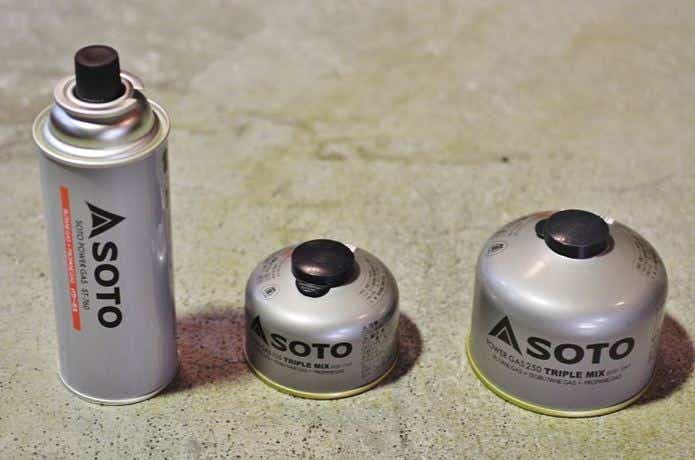
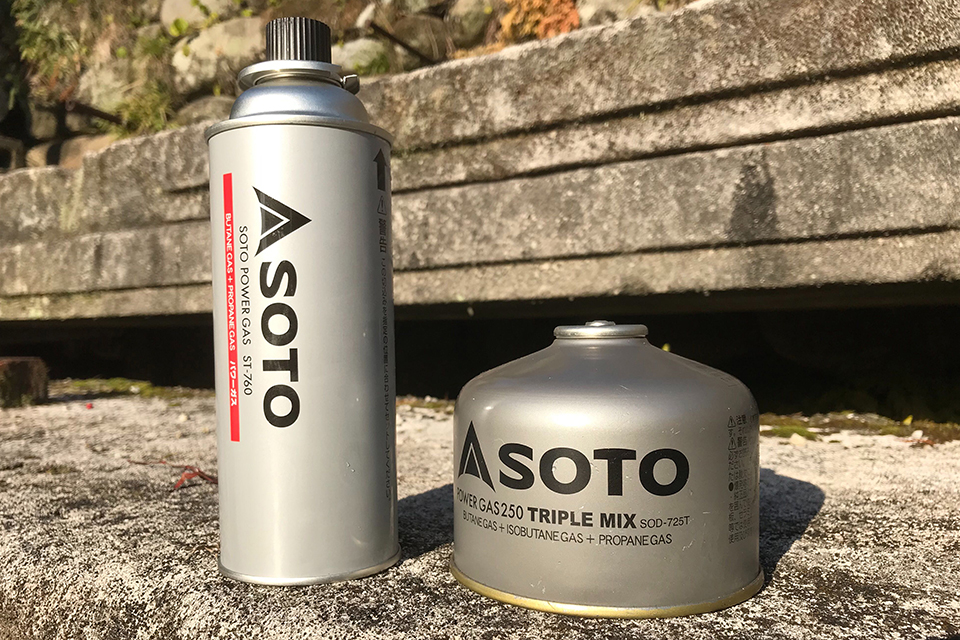
CB stands for Cassette Gas Bombe -- essentially the same butane canisters you slot into a home tabletop stove. They're tall, slim cylinders, immediately recognizable to anyone who's used a portable gas range at home. OD stands for OutDoor -- these are the squat, rounded canisters designed specifically for outdoor gas cartridge systems. The visual difference is unmistakable, even from across a campsite.
The standards behind them differ too. CB canisters follow JIS specifications with broadly standardized dimensions, which is why they're so widely available -- supermarkets, home centers, convenience stores. Iwatani's household butane cans and SOTO's CB-compatible stoves all use this format. OD canisters are engineered for hiking and lightweight camping stoves, with brands like PRIMUS, Snow Peak, and SOTO producing the round cartridges designed to handle higher internal gas pressures.
Here's the critical safety point that gets overlooked: your stove determines which canister you can use, not the other way around. Forcing a CB canister onto an OD stove or vice versa isn't an option. Even if stoves look similar, the valve fittings and connection methods are different. A SOTO ST-310 (CB) and a PRIMUS P-153 (OD) take entirely different fuel. Think of it like cookware: an induction-only pot won't work on a gas flame, even though both are "pots." Canisters and stoves are a matched set, and buying the wrong combination means you're stuck with gear that won't connect.
My own mental model: CB is "grab it from home and go," while OD is "purpose-built for the field." Neither is inherently superior -- they're designed for different contexts and different stove philosophies.
Gas Blends and Boiling Points: Cold Performance Is About What's Inside
Looking only at canister shape misses the real story about cold-weather performance. What actually determines how a canister behaves in the cold is the gas blend inside. The three main gases are n-butane, isobutane, and propane, each with a different vaporization temperature. The boiling point benchmarks: propane at -42.1degC, isobutane at -11.7degC, and n-butane at -0.5degC.
Those numbers tell you everything. The colder it gets, the more you benefit from higher propane and isobutane content. Standard CB canisters are predominantly n-butane, which means flame output drops off as temperatures fall. OD canisters, built for outdoor use, tend to incorporate more isobutane and propane, staying steadier on cold mornings. LANTERN's SOTO-supervised article and Greenfield's cold-weather guide both break this down well.
That said, the takeaway isn't "CB is always weak in cold, OD is always strong." Cold performance is driven by gas blend, full stop. CB canisters also come in cold-weather and power-gas variants that perform respectably in spring and autumn chill. On a highland morning where a standard CB felt sluggish boiling water for coffee, swapping to a cold-weather CB brought a noticeable difference -- the flame caught properly from the start. The canister label matters less than what's actually pressurized inside it.
From a cooking standpoint, this difference accumulates. Boiling water is one thing, but when you're frying bacon in one pan while heating soup in another, consistent flame output directly affects your ability to manage timing. Cold mornings are exactly when fuel choice shapes how good your breakfast turns out.
Price and Availability: The Resupply Factor
On cost and convenience, CB canisters dominate. The going rate is 100-200 yen (~$0.70-$1.40 USD) per canister, and you can find them at supermarkets, home improvement stores, and convenience stores. That "I forgot to pack spare fuel" moment? Solved on the drive to the campsite with a quick convenience store stop. I've personally run low on a multi-meal autumn trip and grabbed a replacement canister while picking up groceries. When you're cooking frequently, that restocking ease compounds into genuine peace of mind.
OD canisters are mainly found at outdoor specialty shops, some home centers, and online retailers -- not the kind of thing you'll stumble across at a highway rest stop. Pricing starts at 500+ yen (~$3.50+ USD) for a 250-size canister, so the fuel cost alone is noticeably higher. If you value the weight savings and cold-weather stability, that premium feels justified. But for weekend car campers who enjoy hot-pot dinners and pan-fried meals, the running cost difference adds up over a season.
The practical way to think about this isn't fuel quality in isolation -- it's total operating cost including resupply convenience. If you want one fuel source for both your home stove and your campsite, CB is remarkably efficient. If you're optimizing for cold conditions or backpacking weight, OD earns its price. Cookware compatibility plays in too: how your canister fits into your overall packing plan matters as much as the per-unit cost.
Stove Designs: Integrated CB, Direct-Mount OD, and Separated Types
Canister differences shape stove design directly. The most common CB configuration is the integrated type, where the canister lies on its side beneath the burner head and pot supports. The SOTO ST-310 is the classic example -- low center of gravity, stable with pans and small pots, and naturally suited to car-camping meals where you're boiling water in the morning, cooking pasta at lunch, and simmering a pot at night.
For OD canisters, the direct-mount type is standard. You screw the burner onto the top of the canister -- models like the PRIMUS P-153 and Snow Peak GigaPower Stove Ground. They're lightweight and compact, folding down small enough to tuck inside a cook pot. Ideal for solo trips and mountaineering where every gram counts. The tradeoff is a higher center of gravity, so pot size and stability need a bit more attention.
The third configuration is the separated type, where a hose connects the canister to the burner. More common with OD systems, this design lets you place the canister on the ground for better stability, making it suitable for larger pots and group cooking. Think of direct-mount as "the nimble partner for quick boils and light meals" and separated as "the steady kitchen setup when you're cooking seriously."
In summary: integrated CB excels at accessibility and ease of use, direct-mount OD at weight savings and packability, and separated types at stability and serious cooking. Flame performance isn't determined by canister alone -- burner head design and pot support width affect real-world usability just as much.
Who CB Canisters Are For: Campers Who Prioritize Cost and Convenience
Why They Shine for Spring-Through-Fall Lowland Car Camping
CB canisters hit their stride in spring-through-fall car camping at lower elevations. Boiling water morning and night, frying up bacon and eggs, cooking a quick noodle soup for lunch -- for this range of use, CB offers an unbeatable balance of ease and resupply flexibility. With car camping, the canister's elongated shape isn't a packing issue, and tossing a spare or two into the trunk adds a nice safety margin.
From a cooking perspective, CB-compatible stoves often have designs that favor stability with cookware. The SOTO ST-310, for instance, sits low on a table and handles kettles and pans with a reassuring steadiness that's well-suited to morning meal prep. Expand your view to include separated CB stoves, and you get wider pot supports that handle family-sized pots comfortably. Soup nights and hot-pot dinners benefit from that rock-solid base.
Fuel planning is also straightforward with CB. The SOTO ST-310 paired with a CB canister (ST-760) delivers a burn time of roughly 1.5 hours, as noted by OneCamper. On an autumn trip where overnight lows hit around 10degC, I ran through a liter of boiling water and a quick stir-fry with fuel to spare. "One canister covers breakfast, coffee, and a light dinner" -- being able to make that call confidently takes real stress out of meal planning.
From a cooking perspective, CB-compatible stoves often have designs that favor stability with cookware. The SOTO ST-310, for instance, sits low on a table and handles kettles and pans with a reassuring steadiness that's well-suited to morning meal prep. Expand your view to include separated CB stoves, and you get wider pot supports that handle family-sized pots comfortably. For more on family camping setups, check out our guide to recommended family tents ([/tent/family-tent-recommended]).
The Home-Crossover Advantage and Cost Efficiency
What makes CB canisters especially compelling for beginners is that they pull double duty at home. Since they're compatible with household tabletop gas stoves, buying in bulk for camping doesn't risk waste -- whatever you don't burn at the campsite gets used for hot-pot nights at the kitchen table. Compared to maintaining a separate outdoor-only fuel supply, this crossover simplifies inventory in a way that just feels smarter.
The price point reinforces this approach. CB canisters run 100-200 yen (~$0.70-$1.40 USD) each. Lower running costs than OD, and you can pick them up while grocery shopping. Forgot spares before departure? Grab them at the same store where you're buying tonight's ingredients. Not having to make a dedicated trip to an outdoor shop for fuel is a bigger deal than it sounds, especially when you're just getting into camping.
This "nothing goes to waste" quality affects real satisfaction. OD canisters, sized and priced for dedicated outdoor use, sometimes leave you with a partially-used canister and no convenient way to burn through the rest. CB canisters slide right back into your kitchen butane stove. Use them for winter hot-pot season. Keep them as emergency backup for power outages. The fuel investment never feels wasted, which lowers the barrier to getting started with camp cooking.
Cold-Weather CB Canisters Bridge the 5-10degC Gap
Want to keep the convenience of CB but hedge against spring and autumn cold snaps? Cold-weather CB canisters are built for exactly this. They offer better low-temperature endurance than standard CB while preserving the easy availability and home-stove compatibility you already rely on.
This option really earns its keep in the 5-10degC band. CAMP HACK's CB vs OD comparison recommends cold-weather gas below 10degC, and SOTO's regulator-equipped CB stoves are rated for stable performance down to 5degC. That covers late-autumn lowland camping and chilly highland mornings perfectly -- the zone where standard CB feels underpowered but switching entirely to OD seems like overkill.
From the cooking side, this upgrade matters more than it seems on paper. A slow boil for coffee is tolerable, but when you're heating soup and frying sausages simultaneously for breakfast, even a modest improvement in flame stability keeps the whole rhythm flowing. Staying within the CB ecosystem you already know, with just enough cold-weather insurance to eliminate that morning anxiety -- that's the real value of this middle path.
ℹ️ Note
Even committed CB users can eliminate most cold-weather frustration by swapping between standard and cold-weather canisters seasonally. Standard CB for spring-through-fall flatland trips; cold-weather CB once morning temps start dropping. Simple, effective.
ちゃんと説明できる?ガス缶の「CB缶」と「OD缶」の違いについて【キャンプの教科書】
CB缶とOD缶の違いを調査!ランタンにバーナーにコンロ・・・ガスを使うアウトドアグッズは多いですが、ガスカートリッジには種類があるのを知っていますか?各ガス缶の基礎知識にメリット・デメリット、火力が違う理由や、おすすめの熱源までを網羅!
camphack.nap-camp.comWho OD Canisters Are For: Campers Who Prioritize Cold Performance, Altitude, and Light Packs
Cold-Weather and High-Altitude Stability: The Blend and Build Advantage
OD canisters earn their reputation in cold and elevated environments not because of the canister shape, but because their gas blends are optimized for exactly these conditions. Outdoor-oriented OD canisters typically feature isobutane and propane formulations that outperform the n-butane-dominant blends in standard canisters at low temperatures. With boiling points at -42.1degC for propane, -11.7degC for isobutane, and -0.5degC for n-butane, the performance gap maps directly to how quickly your stove fires up on a cold morning.
The principle is straightforward: below 10degC, higher isobutane and propane ratios pay dividends. OD canisters are designed to deliver this, and the difference shows up at late-autumn highland sites and wind-exposed ridgeline camps where your water boils without the frustrating slowdown you'd get from standard fuel. At altitude, where mornings are cold and you want to break camp efficiently, a stove that lights strong and stays strong is a genuine comfort.
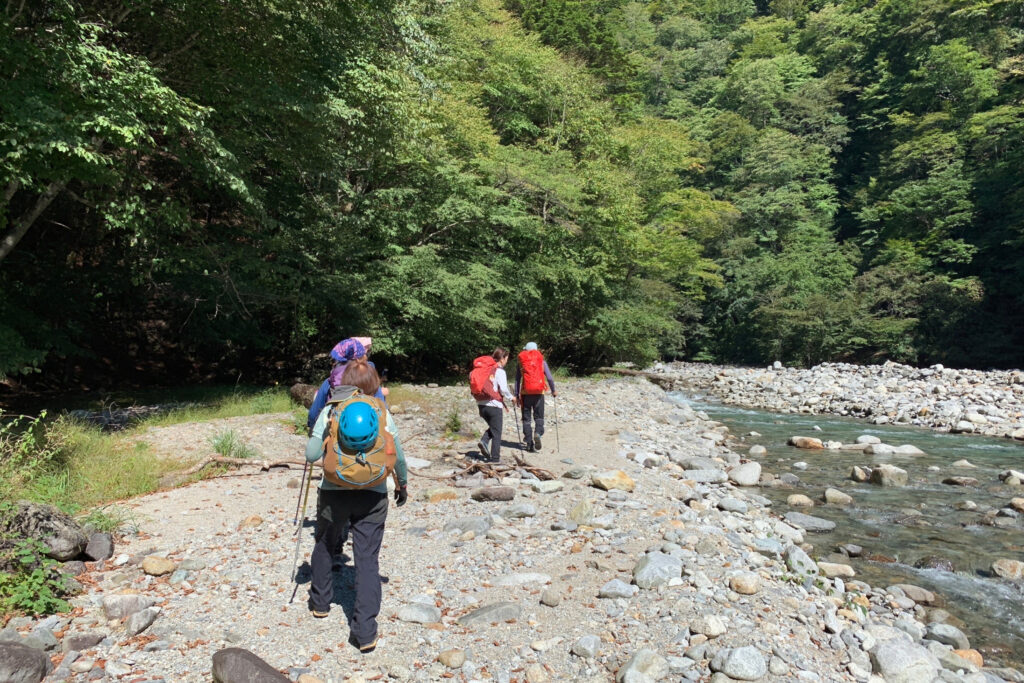
The stove hardware plays its part too. OD-compatible models trend lightweight: the PRIMUS P-153 at 116g delivers about 55 minutes of burn time on an IP-250 canister. The Snow Peak GigaPower Stove Ground at 88g goes even lighter. Combining cold-weather fuel stability with minimal carry weight makes a strong case for OD systems in mountaineering, ultralight camping, and winter outings. Browse YAMA HACK's lightweight stove roundups and the reasoning behind OD's dominance in backpacking becomes immediately clear.
Lightweight and Compact: The Canister That Fits Inside Your Cookpot
OD's other major selling point is how neatly everything packs together. The 110-size canister measures roughly 90mm diameter by 65mm tall and weighs about 200g, with an estimated 30-minute burn time. That's small enough to nest inside a cook pot alongside a compact stove, creating a self-contained cooking kit that packs beautifully.
I've carried an OD 110 and a small stove nested inside a cookpot on a late-autumn morning around 5degC with a light breeze. That all-in-one compactness is genuinely satisfying. Nothing rattling around in the pack, a quick boil-and-pack workflow, and teardown that felt like roughly 5 minutes flat. For solo and ultra-light enthusiast trips where you don't want gear sprawling across the campsite, this tidiness pays off constantly.
CB canisters have the home-crossover advantage, but in pure packing terms, their elongated shape works against them. OD's disc-like profile slides into cookware naturally, and the stove heads tend to be compact enough to join the stack. If you're the type who wants your entire cooking setup in a single container, OD is the natural fit. The minimalist approach dovetails nicely with solo tent setups where space discipline is everything.
💡 Tip
Beyond cold resilience, OD canisters have an aesthetic satisfaction when packed: your morning coffee kit fitting perfectly inside a single cook pot makes both travel and teardown remarkably smooth.
Choosing by Canister Size
OD canisters come in 110, 250, and 500 sizes, and the decision is simpler than it looks: 110 for hot-water-focused short trips, 250 for standard one-night cooking, 500 for cold-weather sessions with extended stove time.
The 110 handles day hikes and solo trips where your menu stays in the "instant noodles, coffee, cup soup" range. Weight savings are significant, and the tiny footprint helps keep your full kit compact -- ideal for ultralight hiking and quick mountain meals.
The 250 is the all-rounder. Paired with a 3.0-3.3kW stove, burn time runs about 1.5 hours. That's enough for morning and evening cooking with a margin for extras. Solo overnight trips or lightweight duo setups usually center around this size.
The 500 comes into play for winter camping with extended cook times or multi-night trips where you want fuel margin. It sacrifices some of that ultralight appeal, but when you're reheating hot pot multiple times on a cold evening or running a stove through several meals, the peace of mind is worth the weight.
Despite the higher per-canister cost compared to CB, OD's value proposition becomes clear when you factor in cold-weather flame stability, lightweight stove compatibility, and packability. If your camping involves mountaineering, ultralight trips, or winter conditions, OD isn't just "expensive gas" -- it's gear that lightens your entire loadout.
Fire Output and Cold Resistance Aren't Determined by Canister Type Alone
The Stability Boost from Regulator-Equipped Stoves
The biggest misconception worth clearing up: "CB canister = weak performance" isn't always true. Flame output depends on more than canister format. The gas blend inside matters, but so does how the stove handles pressure fluctuations. Regulator-equipped stoves smooth out the output drop as canister pressure falls, which means CB setups can perform surprisingly well in conditions where you'd expect them to struggle.
SOTO's regulator-equipped CB models are the prime example. Their official spec lists stable operation down to 5degC, which is a meaningfully wider range than standard CB's reputation suggests. For highland spring/autumn trips or early-winter mornings where you just need a reliable boil, these stoves are genuinely practical. Pair them with outdoor-rated CB canisters or power gas, and the experience diverges sharply from what you'd expect from a household butane stove.
I've felt this difference firsthand. Standard CB on a cold morning meant waiting around for the water to finally get moving. Switching to a regulator-equipped stove cut that hesitation noticeably. For cooking flow, the improvement means you can boil water for coffee and immediately move to heating soup without worrying about whether the flame will hold. Which CB stove you're running matters as much as the CB-versus-OD question itself.
One caveat: around 0degC, even regulator-equipped CB stoves hit their limits. At that point, cold-weather gas blends or OD canisters become the practical choice. The real framework isn't canister type alone -- it's gas blend multiplied by stove engineering.
シングルバーナーの選び方(後編) - SOTO|ソト
前編はこちら 次に、使用する場所(環境)をイメージしてみましょう!! バーナーをどこで使用するかイメージしてみましょう。初春や晩秋で朝晩の冷え込みが予想されるオートキャンプ場、海釣りで通年使用、雪山登山など、使用するシー […
soto.shinfuji.co.jpHow Wind, Pot Size, and Continuous Use Affect Performance
Weak flame output isn't always a temperature problem. In the field, the factors that really bite are wind, pot size, continuous burn duration, and remaining fuel level. The same CB canister that performs fine in calm conditions will struggle if wind is licking across the burner head -- the flame flickers, and your water just won't come up to temperature. Block the wind, and the perceived output bounces right back.
Pot choice matters too. A wide-bottomed pot or one loaded with extra water draws more heat, and in cold conditions, this amplifies the "my stove feels weak" sensation. Rather than starting your morning with a full stockpot, boiling a smaller amount first for immediate needs actually keeps everything moving more smoothly. On cold days, working in short bursts paradoxically gets you to a hot meal faster.
Canister cooling from extended use is another significant factor. Run a stove continuously and the canister temperature drops, reducing internal pressure and causing the classic flame fade -- the "dropout" effect. Nearly empty canisters are hit hardest. You've probably noticed this: a fresh canister burns strong, but past the halfway point, output can fall off noticeably.
At a 1,200m elevation campsite one morning, this pattern was unmistakable. Same CB canister, but repositioning out of the wind and breaking cooking into shorter sessions erased the sluggishness entirely. It felt like recovering about 30% of wasted heating time just from those adjustments. The takeaway: you can improve performance significantly without changing canisters at all.
⚠️ Warning
"Switch to OD because it's cold" isn't always the first move. Shielding from wind, right-sizing your pot, and avoiding marathon burn sessions can transform flame performance -- sometimes dramatically.
Temperature Band Reference Chart: 10degC / 5degC / 0degC
Rather than drawing hard lines, treat these temperature bands as guidelines for thinking through your setup. Canister format alone isn't the deciding factor -- the stove you pair it with shifts the equation considerably.
| Temperature Band | How to Think About It | Likely Best Pairings |
|---|---|---|
| Below 10degC | Start considering cold-weather gas instead of relying on standard CB alone | Cold-weather CB, power gas, OD canisters |
| Around 5degC | The boundary where the right CB stove can still perform well | Regulator-equipped CB, OD canisters |
| Below 0degC | Plan around cold-weather capability from the start | Strong OD blends, reassess your full setup |
The key insight in this table is that regulator-equipped CB stoves have a real role at 5degC. Without knowing this, it's tempting to jump straight to "cold equals OD." But for car campers and auto-camping (drive-in campsite) setups, an outdoor CB canister paired with a regulator stove can be exactly right. Conversely, below 0degC, even OD canisters aren't bulletproof -- sustained heating in wind can still push you to the edge.
CAMP HACK's recommendation to start thinking about cold-weather gas below 10degC makes a useful mental benchmark. Below that threshold, the question shifts from "which fuel is cheapest" to "will my stove reliably boil water this morning." For confident cooking in cold conditions, evaluate temperature band, gas blend, and stove design as a system rather than fixating on canister type alone.
Safety and Compatibility: What You Need to Watch
Why Manufacturer-Matched Canisters Matter
With gas canisters, it's important to separate "physically fits" from "officially recommended." CB canisters follow JIS dimensional standards, so cross-brand compatibility often works in practice. But "it screws on" and "the manufacturer endorses this pairing" are different claims. Stove designers engineer for their own canisters -- burn characteristics, fit, and seal quality are all tuned accordingly. I default to same-brand genuine canisters for CB because it removes a variable I don't want to think about while cooking.
For OD canisters, sticking with your stove's brand is even more fundamental. Outdoor gear pushes weight savings and cold-weather engineering hard, and brands like Snow Peak, PRIMUS, and SOTO don't cross-validate with each other's cartridges. You'll see campers running third-party OD canisters at campsites, but threading on successfully isn't the same as manufacturer approval. Prioritizing genuine matching over cost savings eliminates a potential failure point before it becomes a problem.
This matters for cooking too. When you need your stove to light immediately and burn steadily -- morning coffee, quick soup -- introducing compatibility unknowns into the equation just adds friction. Fire equipment is one area where small inconsistencies translate directly to usability issues. Using genuine canisters isn't just a safety choice; it's a simplicity choice.
Conversion adapters exist on the market, but most manufacturers and expert sources flag safety concerns. Some aftermarket adapters specify compatibility, but using combinations outside manufacturer guidelines typically voids warranties. For everyday camping use, adapters are not recommended. Gas refilling adapters -- devices for transferring gas between canisters -- carry overfill and leak risks that most manufacturers explicitly warn against. Convenience and cost savings don't justify the hazard. If you choose to use either type of adapter, thoroughly review the manufacturer's warnings and understand the risks involved.
⚠️ Warning
The impulse to "make use of what I have" is natural, but with pressurized fuel equipment, following manufacturer-specified pairings consistently avoids trouble and gives you better flame control during cooking.
Radiant Heat, Storage, and Operational Basics
Before worrying about canister types, focus on not overheating the canister itself. Integrated stoves are particularly susceptible when topped with oversized pans or griddles -- radiant heat from the cookware bottom radiates back toward the canister. Everything looks normal on the surface, but heat is slowly building where it shouldn't be. Extended sessions with wide griddles or large family pots amplify this risk.
For those cooking scenarios, separated stoves are the safer architecture. The canister sits away from the flame source, reducing heat exposure, and heat shields are easier to deploy. With integrated stoves, staying within the manufacturer's recommended pot diameter is the baseline rule. Cooking enthusiasts naturally gravitate toward bigger pans, but exceeding the stove's design limits compromises safety before it compromises cooking quality.
For storage, 40degC maximum applies to all canisters, used or new. Avoid direct sunlight, summer car interiors, and the hot zones inside tents. I once left canisters in a car during summer and found them uncomfortably hot to touch -- a wake-up call that changed my habits permanently. Now I stash them in a cooler bag to block solar heat during transport and let them cool in shade before use. Small habits, but they matter with pressurized fuel.
LANTERN, WAQ, and Arizine all consistently emphasize radiant heat and high-temperature storage risks. Camp stoves feel domestic and familiar, but the canisters contain high-pressure fuel. Large pots, griddles, open flame, summer vehicle storage -- when these factors converge, managing temperature is more important than managing flame output.
【ガスカートリッジの疑問をSOTOに聞いてみた】CB缶とOD缶の違い互換性など
www.lantern.campChoosing by Camping Style: Solo, Family, and Winter
Backpacking Solo / Ultralight: OD 110 + Lightweight Stove
When you're carrying everything on your back, the straightforward answer is OD 110 paired with a lightweight stove. The PRIMUS P-153 at 116g and the Snow Peak GigaPower Stove Ground at 88g keep total weight minimal, and the OD 110's ~30-minute burn time gives you a clear planning baseline. For hot-water-focused solo trips, one canister works. If you're cooking proper morning and evening meals, pack two for comfort.
This combination works best when overnight lows are moderate and your menu stays in the "boil water, cook instant noodles, heat soup" category. When ambitions expand to rice cooking, pan-frying, and multiple cups of coffee, a single 110 canister starts feeling tight. The 30-minute window is noticeable in practice, so deciding upfront whether you're eating trail food or cooking proper meals determines how many canisters to carry.
Factoring in cooking satisfaction, even ultralight trips benefit from asking "can I make one genuinely hot meal without watching the fuel gauge?" rather than "will one canister technically last?" For flatland overnight solos focused on boiling water, one OD 110 suffices. For trips with real morning and evening cooking, two keeps things relaxed.
Car-Based Solo: CB Canisters (Spring-Fall). Switch to Cold-Weather CB or OD Around 5degC
Solo car campers from spring through fall should start with CB canisters. Easy to pack in the trunk, easy to replace if forgotten. An ST-310-class CB stove runs about 1.5 hours per canister. For a one-night solo trip with standard cooking, one canister handles it; add a second if you drink a lot of coffee or cook serious dinners.
The inflection point, as always, is when morning lows approach 5degC. Standard CB still works at this temperature, but flame stability and startup speed start showing their limitations. If you want to stay in the CB ecosystem, cold-weather CB canisters are the natural step. If elevation is also a factor, shifting to OD gives you smoother mornings -- that first cup of coffee and any reheated meals come together without the hesitation.
Car-based solo camping gives you the widest range of options, so when in doubt, let "lowest expected temperature" and "how much cooking" drive the call. A cup noodle lunch and morning coffee? One CB canister covers it easily. Evening hot pot with pan-fried sides? Same solo trip, more fuel consumption. Prioritize flame that feels good at your coldest expected moment over saving weight, and satisfaction follows.
Family Cooking: Separated CB Stove for Stability (ST-310 Class x CB ~1.5hrs). Separated Type Strongly Recommended for Large Pots
When cooking for a family, stove form factor matters more than canister type. A separated CB stove provides the stability and workspace that family meals demand. Using an ST-310-class setup, burn time is roughly 1.5 hours per canister. Family camping means more stove time -- boiling water, warming retort pouches, soup, hot pot, grilled items -- so budget 2 canisters for an overnight trip and 3 when hot pot or stew is the main event.
Large-pot cooking especially benefits from separated stoves. Heavy pots sit securely on wider supports, and the whole setup is more manageable on a camp table. From the cook's perspective, family camping is less about "will it light" and more about "can I set this pot down without worrying." Adding ingredients, serving into kids' bowls, adjusting the pot -- when nothing wobbles, the fatigue drops noticeably.
Family dinners consume more gas than you'd estimate. Unlike solo boil-and-eat, the incremental heating adds up fast. My rule for a four-person dinner centered on hot pot or soup: 2 CB canisters minimum, 3 if breakfast includes pan cooking the next morning. A stable base that handles big pots without drama is what elevates family camp cooking from functional to genuinely enjoyable.
Winter Camping: OD 250 as the Core (~1.5 hrs/canister). Pack Extra Below 0degC
When overnight lows are approaching 0degC, build your fuel plan around OD 250 canisters. At roughly 1.5 hours per canister, a solo trip with light cooking could work on one, but in winter, it's smarter to overpack than to ration. Solo trips: 2 canisters. Duo with hot pot plans: 2 or more.
For winter duo trips with a hot pot, I prefer carrying 2 OD 250 canisters. Cooking at -2degC with extended heating, not having to stretch a single canister through the whole meal makes a psychological difference that's hard to overstate. Hot pot means repeated reheating as you eat, which means more stove time than you'd plan for. Winter camping satisfaction hinges on that pot of soup never going cold, and spare fuel is what makes that possible.
For winter duo trips with a hot pot, I prefer carrying 2 OD 250 canisters. Cooking at -2degC with extended heating, not having to stretch a single canister through the whole meal makes a psychological difference that's hard to overstate. For broader winter camping setup advice, including tent selection, see our winter camping tent guide ([/tent/tent-winter-camp]).
High-Altitude Camping: OD Advantage. Windscreens, Short Burns, and Smaller Pots for Efficiency
At elevation, I default to OD canisters. Highland camps combine cold mornings with wind exposure, meaning heat dissipates faster even when the flame is running. Beyond canister choice, blocking wind, keeping cook times short, and using smaller pots return as much efficiency as swapping fuel types. With OD 250 and its ~1.5-hour baseline, plan on 1 canister for hot-water-focused trips and 2 for morning-and-evening cooking.
The common problem at altitude isn't insufficient flame -- it's inefficient heat transfer. A large pot on a gusty morning bleeds heat into the air, burning through fuel faster than you'd expect. Boiling small batches quickly, keeping pasta and soup cook times short, and positioning the stove out of the wind -- these adjustments sometimes matter more than carrying extra canisters.
For meal planning at elevation, the trick isn't giving up ambitious cooking -- it's choosing menus that retain heat efficiently. Risotto, soup pasta, freeze-dried meals with quick add-ins: all cook fast, serve hot, and keep fuel consumption predictable. When altitude, wind, and low overnight temperatures converge, two OD 250 canisters provide enough margin to cook breakfast comfortably without rationing.
Still Undecided? This Framework Works
Decision Flowchart
If you've read this far and are thinking "just tell me what to buy" for your first setup, four variables are all you need: temperature, elevation, how you travel, and how much you cook. When you're stuck, listing conditions beats listing preferences.
Your four decision axes:
- 1. Lowest expected temperature: 10degC / 5degC / 0degC
- 2. Elevation: Lowland / Highland
- 3. Transportation: On foot / By car
- 4. Cooking scope: Mainly boiling water / Full cooking
Run through these top to bottom, and the choice emerges naturally. Spring-fall, lowland, car camping, mostly boiling water? Your first stove should be CB. Canister availability is excellent, fuel doubles for your home stove, and during the getting-started phase, CB minimizes wasted investment. Even dedicated camp cooks can work with CB when car camping provides the loading flexibility.
Flip any of those conditions -- cold weather, high altitude, or backpacking -- and OD becomes the lower-risk choice. Lightweight stoves pair naturally with OD canisters, and the flame reliability on cold mornings is worth the price premium.
The tricky zone is the overlap: mornings around 5degC, car camping, but also heading out in late autumn. For that profile, I find cold-weather CB canisters with a regulator-equipped stove to be the most practical starting point. You keep CB's resupply advantage while neutralizing most of the cold-morning frustration.
Here's the decision flow:
- Lows around 10degC at low elevation? Prioritize CB.
- Lows approaching 0degC, or heading to altitude? Prioritize OD.
- Lows around 5degC and can't decide? Cold-weather CB + regulator stove is a strong option.
- Car camping with serious cooking plans? Add separated stove type to your consideration regardless of canister.
- Backpacking with mostly boiling water? Lightweight OD direct-mount keeps everything tight.
ℹ️ Note
The best way to avoid a bad first purchase: write down your conditions briefly, find a stove that matches, and buy the same brand's genuine canisters. If larger pots are in your future, consider integrated vs. separated stove type at the same time -- it affects daily usability as much as canister choice does.
My own progression started with a separated CB stove because I wanted affordability and real cooking capability. For car camping, it was perfect -- hot pot, skillet meals, all handled with confidence. Later, I added an OD direct-mount for cold-weather solo trips, and packing efficiency improved dramatically. The most satisfying setup turned out to be neither all-CB nor all-OD, but a separated CB as the base with an OD direct-mount added for seasonal use. If you enjoy cooking at camp, this "shift by season" approach tends to land well. And if you're going deep on cooking, understanding how cookware material affects heat transfer -- titanium versus aluminum, for instance -- rounds out the picture.
Checklist Examples
When it's time to decide, filling in four fields beats staring at spec sheets. A few examples to illustrate:
Example 1: Spring car camping, mostly breakfast and coffee
- Lowest temperature: 10degC
- Elevation: Lowland
- Transportation: Car
- Cooking scope: Mainly boiling water
Verdict: CB canister is the clear first choice. Low cost, easy to replace if forgotten, outstanding as a first stove setup.
Example 2: Late-autumn highland camping, full morning and evening meals
- Lowest temperature: 5degC
- Elevation: Highland
- Transportation: Car
- Cooking scope: Full cooking
Verdict: Cold-weather CB + regulator stove, or step up to OD from the start. If pots and pans are part of the plan, favor a separated stove for stability.
Example 3: Backpacking trip, keeping weight down, focused on boiling water
- Lowest temperature: 0degC
- Elevation: Highland
- Transportation: On foot
- Cooking scope: Mainly boiling water
Verdict: OD canister is the straightforward answer. Pairs naturally with lightweight direct-mount stoves, and keeps your morning routine dependable even in the cold.
The real power of this checklist is that it surfaces your actual priorities. Car versus foot, full cooking versus boiling water -- these distinctions drive equipment choices more than brand loyalty or price per canister. Cooking enthusiasts especially should think about pot size and material alongside fuel choice. When you plan your cookware and stove as a system rather than isolated purchases, nothing ends up feeling mismatched.
Reference Data
Key Numbers at a Glance
Rather than memorizing every specification, keeping five categories of data handy covers most decisions: price, temperature thresholds, burn time, weight, and storage requirements.
| Data Point | Reference Value |
|---|---|
| CB canister price | ~100-200 yen each (~$0.70-$1.40 USD) |
| OD canister price (250-size) | 500+ yen each (~$3.50+ USD) |
| Temperature to start considering cold-weather gas | Below 10degC |
| Regulator-equipped CB stove stable use example | Down to ~5degC |
| Cold stress point | Below 0degC, even OD can feel marginal |
| CB burn time example | SOTO ST-310 + ST-760: ~1.5 hours |
| OD 250 burn time example | 3.0-3.3kW stove: ~1.5 hours |
| OD 110 burn time estimate | ~30 minutes |
| PRIMUS P-153 weight | 116g |
| PRIMUS P-153 burn time | ~55 min on IP-250 |
| Snow Peak GigaPower Stove Ground weight | 88g |
| OD 110 dimensions and weight | ~90mm dia x 65mm, ~200g |
| Canister storage temperature | Below 40degC |
For temperature thresholds, think in approximate zones rather than hard cutoffs. Below 10degC is when cold-weather gas starts making a noticeable difference. Around 5degC is where regulator-equipped CB stoves earn their keep. When mornings approach 0degC, shift your priority from "cheapest fuel" to "will my stove reliably produce hot water."
Burn time connects directly to meal planning. The 1.5-hour benchmark for a CB canister covers breakfast prep, coffee, and a light lunch boil comfortably. OD 250 canisters at 1.5 hours with a 3.0-3.3kW stove offer similar duration with better cold-weather consistency and packability -- the value isn't longer burn time but better performance per minute in demanding conditions. OD 110 at ~30 minutes is purpose-built for ultralight, boil-focused trips.
Weight and dimensions drive packing decisions. The PRIMUS P-153 at 116g and Snow Peak GigaPower Stove Ground at 88g represent "light enough to carry without thinking about it." OD 110 at roughly 90mm x 65mm and 200g fits inside most small cook pots alongside a stove head. CB canisters, with their elongated profile, pack differently -- if you're nesting them alongside cookware, check the fit before assuming it works.
The storage rule -- below 40degC -- is the one number everyone should internalize. No summer car interiors, no direct sun, no hot tent corners. That single habit provides an outsized return in safety and peace of mind. These numbers aren't glamorous, but they're the foundation that keeps your camp kitchen running smoothly.
Data sources referenced include CAMP HACK, WAQ, SOTO official documentation, Greenfield, OneCamper, YAMA HACK, and My Best.
Related Articles
Titanium vs Aluminum Cookware: Weight, Heat Conductivity, and Price Compared
On a cold morning at around 3,000 feet, boiling just 300ml of water on an OD canister stove for a cup of noodles, the appeal of a lightweight titanium pot is immediately obvious. But when evening rolls around and you want to cook a cup of rice and fry sausages the next morning, aluminum's even heat distribution makes cooking noticeably easier.
Mestin Rice Cooking: 5 Essential Tips and Easy Variations
Mestin rice cooking in Japan might seem difficult at first, but mastering just five fundamentals—water volume (rice portions), soaking time, heat control, steaming, and pot size selection—yields remarkably consistent and delicious results. Beginners often struggle with unclear guidelines on how much rice their mestin can handle and how much water to add, making this a cooking method where clear standards make all the difference.
How to Choose a Camping Skillet and Seasoning Steps
For backpacking, 8-inch cast iron varies significantly by model—lighter versions weigh around 1.1kg, while heavier models approach 1.7kg. When loaded into a pack, the heavier option often makes you think twice. A 6-inch skillet hits that sweet spot for a single serving of bacon and eggs at breakfast, with perfect portability in a campsite setup.
10 Easy Camp Recipes for Beginners — Gear and Food Safety
The secret to better camp cooking isn't more complex recipes — it's choosing meals that are hard to mess up and easy to clean up after. Here are 10 beginner-friendly recipes compared side by side across tools needed, cook time, dishes, serving size, and storability, so you can find the right fit for your trip.