
Down vs Synthetic Sleeping Bags: How to Read Temperature Ratings and Pick the Right One
Down vs Synthetic Sleeping Bags: How to Read Temperature Ratings and Pick the Right One
Down or synthetic? The answer is never one-size-fits-all. Factor in your transport method, the season, condensation risk, budget, and long-term care, and the right choice becomes surprisingly clear.
Down or synthetic — there is no single correct answer. Once you account for how you travel, what season you camp in, how much condensation you deal with, your budget, and how much maintenance you are willing to do, the right sleeping bag becomes remarkably obvious.
I have spent a November night on a highland campsite at 0-2 C (32-36 F) with no wind, waking up inside a single-wall tent soaked with condensation. That morning, I was grateful for the resilience of synthetic fill. On the other hand, when I needed to keep my total pack weight under 7 kg (15 lb) for a solo backpacking trip, the compactness and light weight of down was an overwhelming advantage.
This article starts with how to read ISO 23537 temperature ratings, then works through weight-matched comparisons and temperature-matched comparisons separately. By the end, you will be able to work backward from your expected overnight low and confidently choose a fill type based on real conditions — not vibes.
The Short Answer: It Is Not About Warmth — It Is About Your Conditions
When Down Makes Sense
Here is the bottom line up front: if you hike, ride a motorcycle, climb, or lean UL, go with down. If you drive to the campsite and value moisture tolerance and easy care, go with synthetic. That is the most practical framework. The question that matters is not "which one is warmer?" but "what conditions am I actually using this in?"
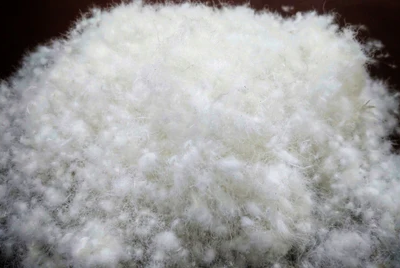
Down excels when you need to cut total pack volume and weight. Gram for gram, down delivers better insulation, so it earns its place in backpacking setups, motorcycle touring with limited panniers, and alpine kits where every cubic centimeter counts. From personal experience, even shaving one size down on the stuff sack changes how a pack comes together. For cold-weather minimalists, the real value of down is not that it is "warmer" — it is that you can carry that warmth in a smaller package.
Synthetic has its own clear lane. When you drive to camp or sleep in your vehicle, the bulk penalty barely matters. Factor in winter condensation, humid sites, that clammy feeling after consecutive nights out, and how often you toss a sleeping bag in the wash, and synthetic's moisture resistance and easy handling start to outweigh down's advantages. This scales fast when you are outfitting a whole family. In my experience, when I am loading bags for four into the car, laundry simplicity beats stuff-sack size every time.
A common misconception: "down is always warmer." As noted above, down wins on a weight-for-weight basis, but two bags rated to the same temperature are not automatically separated by fill type. A well-stuffed synthetic bag can absolutely hit the same thermal target. So rather than choosing by material name alone, sort by these four factors:
- Your expected overnight low
- How you get to camp
- How often you deal with condensation or rain
- Your budget and willingness to do careful maintenance
If transport and pack size top your list, lean down. If moisture and maintenance rank higher, lean synthetic.
Worth noting: water-resistant down and hybrid constructions sit between the two. They keep down's portability while addressing its moisture weakness — some designs use synthetic fill around the shoulders and foot box. This is a smart option if you face moisture risk but do not want the bulk of full synthetic. The trade-off is price: these tend to cost more, and the selection is thinner. Do not just trust the material label — look at which zones are reinforced and how.
For a clean side-by-side of weight, packability, moisture resistance, and price, STRIDE LAB's down vs. synthetic breakdown is a solid reference. If I had to sum it up in one line: "Down is about portability; synthetic is about moisture tolerance and operational simplicity." Most real-world dilemmas land somewhere in that framework.
Related: Rain-Proofing Your Tent: Waterproof Rating Guidelines, The Complete Guide to Choosing a Tent
Temperature ratings and how to reverse-engineer them from your overnight low fit best when you see them in the context of the full selection process — material, temperature band, shape, and sleeping pad pairing all working together.
シュラフ ダウン vs. 化繊シュラフ徹底比較!特徴やおすすめシーンを解説
シュラフを選ぶ際には、まず注目したいポイントが「中わた素材の種類」です。シュラフには主に「ダウン」と「化繊」の2種類の中わた素材があり、それぞれの特徴や利点をしっかり理解することで、ご自身のアウトドアスタイルや目的に合ったシュラフを選びやす
shop.stridelab.jpDown / Synthetic / Hybrid Comparison at a Glance
The Comparison Table
The reason material choice feels confusing is that most people compare on a single axis: "warmth." In reality, whether you compare at the same weight or the same temperature rating changes the answer entirely. At equal weight, down wins. At the same rated temperature, a properly filled synthetic bag holds its own. CAMP HACK's synthetic sleeping bag comparison test makes this point well — lining up bags by rated temperature rather than fill type reveals that material name alone does not settle it.
| Category | Down | Synthetic | Hybrid / Water-Resistant Down |
|---|---|---|---|
| Weight | Light. Better insulation-to-weight ratio | Tends heavier | Middle ground |
| Packed size | Small. Easier to pack | Tends bulkier | Middle ground |
| Price range | Higher | Relatively affordable | Tends higher |
| Wet performance | Poor | Good | Improved variants exist |
| Confidence in condensation | Lower | Higher | Moderate |
| Maintenance (wash / dry / store) | Drying and storage take effort | Relatively easy | Varies by product |
| Warmth at equal weight | Advantage | Disadvantage | Middle ground |
| Warmth at equal temp rating | Some products match | Some products match | Wide variation |
| Best use cases | Backpacking, hiking, motorcycle touring, UL | Car camping, vehicle sleeping, family, emergency prep | When you want portability AND moisture protection |
The most important row in this table: read "equal weight" and "equal temperature rating" as separate comparisons. Down has a clear edge in weight and packability because the same mass of fill produces more warmth. But when two bags are designed to the same ISO 23537 or EN 13537 Comfort or Limit rating, their thermal performance can be comparable. CAMP HACK's comparison, for instance, puts ISUKA's down "Air 450X" and synthetic "Alpha Light 700X" side by side — both rated to -6 C (21 F). The real differentiator at that point is not warmth itself but how small and light you can carry that warmth, and how confident you feel using it on a dewy morning.
Maintenance matters in the field too. Down loses performance if you do not dry it thoroughly, and storage means an uncompressed sack. As Mont-Bell's sleeping bag care guide details, the drying step is critical, and a breathable oversized storage sack is the baseline. Synthetic is more forgiving here — the psychological barrier to washing and drying is lower, which translates to higher long-term satisfaction when you factor in daily use.
On a motorcycle with two 30 L panniers, down still leaves room for rain gear, cooking kit, and extra layers. With synthetic, the sleeping bag's volume starts competing for space first, and you end up problem-solving where to fit rain shells and fire-side gear. In a car, that gap shrinks, and condensation tolerance plus easy handling move to the front of the priority list.
💡 Tip
When evaluating portability, reframe the question: instead of "which is warmer?" ask "which carries the same temperature rating in less volume?" That is where down's strength becomes obvious.

上級者は知っている。化繊シュラフが選ばれる“本当の理由”
化繊シュラフはなぜ上級者に選ばれるのか? ダウンと比較しながら、おすすめと言われる理由を徹底検証。価格・性能・使い勝手のバランスから見えた、化繊寝袋の本当の魅力を解説します。
camphack.nap-camp.comHow to Use This Table: Prioritize by What Matters Most to You
This table is not meant to crown an overall winner. What you should read from it is what you personally refuse to compromise on. The best material depends on whether you put portability, moisture tolerance, or price at the top.
If portability is non-negotiable, down is your pick. For backpacking, climbing, public transit, and motorcycle touring, the packed-size difference matters more than the weight difference. Inside a pack or pannier, "a little smaller" is a big deal. When I am loading gear, a sleeping bag that is one compression stage smaller creates breathing room for the pad, clothes, and food. Down does not just save weight — it increases how freely you can design your loadout.
If moisture tolerance is non-negotiable, synthetic is the anchor. In single-wall shelters, lakeside mornings, multi-night trips, and winter condensation, down becomes a tool you have to babysit. Synthetic holds onto more warmth when damp, and you wake up the next morning with more confidence. The situation where this really plays out: "it might have gotten a little wet, but I am using it again tonight." That is a real scenario, and synthetic handles it better.
If price is the priority, synthetic wins. Outfitting a family, doubling as emergency gear, starting with car camping — synthetic makes financial sense. Down costs more because of the material and construction. Hybrid and water-resistant down options cost even more. There is nothing wrong with saving budget on the sleeping bag and putting that money toward a better pad or tent instead.
Hybrid and water-resistant down sit in the middle. Using synthetic around moisture-prone zones like the shoulders and foot box while keeping overall portability close to pure down is a sound design philosophy. STRIDE LAB's comparison notes that the line between high-performance synthetic and water-resistant down has blurred in recent years. But products in this category vary widely, so rather than treating "hybrid" as a safe default, look at which specific weakness the design addresses.
Organized by priority:
- Portability first — Down is the primary candidate. The advantage is large for backpacking, climbing, and motorcycle touring.
- Moisture resilience first — Synthetic is the primary candidate. Stable in condensation-heavy environments and multi-night trips.
- Price and ease of use first — Synthetic is the easier starting point. Also suited for family use and backup/emergency bags.
- Want both light weight and moisture protection — Hybrid and water-resistant down enter the picture. Expect higher prices.
This table works best when you use it to surface the one thing you most want to avoid going wrong on a trip. Once that is clear, every downstream decision — temperature band, specific model — gets dramatically faster.
The Core Differences: Insulation, Weight, Packed Size, Water Resistance, and Price
Weight-Matched Comparison: The Down Advantage Through a UL Lens
This advantage kicks in when you are trying to shave total weight and total volume — backpacking, climbing, motorcycle panniers. When I am trimming a kit, the few-hundred-gram difference in the sleeping bag itself matters less than the downstream freedom it creates for the entire pack. Down compresses tighter in a stuff sack and wastes less dead space inside a pack or pannier, which means the pad, insulation layers, and food all fit together more cleanly.
That said, "down is warmer" here specifically means warmer at the same weight. The material name alone does not guarantee absolute warmth. Confusing these two claims is what leads people astray in the next section.
Temperature-Matched Comparison: Same Rating, Different Feel — It Comes Down to Design
When two bags meet the same ISO 23537 or EN 13537 temperature range, you cannot automatically say the down one is warmer. Synthetic achieves the same rating by packing in more fill, which adds weight and bulk — but the thermal output itself can match.
CAMP HACK's comparison puts ISUKA's down "Air 450X" alongside the synthetic "Alpha Light 700X," both rated to -6 C (21 F). The takeaway is not "down always wins" but rather: how does each bag achieve that temperature zone? Mummy-shape tapering, draft tubes, hood design, and fill distribution all shape the real-world feel more than material name does.
Field experience bears this out. Using two "-6 C rated" bags on alternating nights, the catalog specs look equivalent — until condensation or damp clothing enters the picture. On dry nights, down's light, enveloping feel is wonderful. On humid nights, synthetic's thermal drop-off is noticeably gentler. At the same temperature rating, what separates bags is not the fill type label but how the design interacts with your actual environment.
ℹ️ Note
"Down is warmer" is half right. More precisely: at equal weight, down has the advantage; at the same temperature rating, many products are comparable. Reading specs with that distinction makes catalog numbers far more useful.
Price and Packed Size: The Reality of Family Kits and Car Loading
Price and packed size tend to get glossed over in spec-sheet comparisons, but they hit hard in practice. Down is lighter and more compact but costs more. Synthetic is more accessible on price and generally lands in a more affordable band. If you are picking one bag for yourself and want to optimize, the investment in down pays off. If you are buying for a family, adding an emergency kit, or stocking multiple bags for vehicle camping, synthetic's cost-effectiveness jumps.
Packed size follows the same logic. Down compresses smaller; synthetic takes up more room. But if you are driving, this weakness is absorbed. With trunk space available, synthetic being "bigger" is not a dealbreaker — and its lower price and better wet performance become the real value proposition. That is why rectangular synthetic bags remain a staple for family car camping and vehicle sleeping.
On the other hand, for motorcycle and backpacking setups, packed-size difference directly constrains what else you can carry. One size up on the sleeping bag means rain gear, spare clothes, and cookware all compete harder for space. Think of it not as "convenience" but as packing design freedom.
Water-Resistant Down and High-Performance Synthetic: Where Things Stand Now
The old rules of thumb are harder to apply cleanly today. Water-resistant down has evolved to handle light moisture and humidity better, and NIKWAX-style treatments that aid loft recovery have become mainstream. Still, water-resistant down is not "fine when soaked." It mitigates down's weakness without eliminating it — you still cannot treat it as carelessly as synthetic.
Synthetic has also moved on from the "cheap but heavy and bulky" era. Advanced fiber structures have pushed warmth-to-weight ratios and resilience higher, narrowing the gap with down. At the high end, price differences shrink too, and each product's design intent shows through strongly. Including hybrid builds that put synthetic only around the shoulders and foot box, this segment cannot be judged by material name alone.
In practice, water-resistant down does add real confidence on condensation-heavy tent nights, and high-performance synthetic has graduated from "heavy but reliable" to "genuinely field-worthy." The modern approach is less about declaring a winner between down and synthetic and more about asking how far has this specific product closed its weak spot with technology.
Reading Temperature Ratings: Comfort vs. Limit and What They Actually Mean
ISO 23537 / EN 13537 Basics
The first numbers to look at on any sleeping bag spec sheet are the ISO 23537 / EN 13537 temperature ratings. Three indicators matter: T Comfort, T Limit, and T Extreme. The names sound similar, but they mean very different things.
T Comfort represents the temperature zone where a standard adult female test subject can sleep without undue strain. T Limit is the lower bound where a standard adult male, curled up, can endure for a set period. T Extreme goes further still — this is a survival threshold, not a comfort one. Treating it as a usable operating range is a serious misread of the spec.
The reference body sizes for these tests are typically 173 cm / 73 kg (5'8" / 161 lb) for the standard male and 160 cm / 60 kg (5'3" / 132 lb) for the standard female. The standard does not guarantee how any specific person will feel; it provides a common baseline so you can compare products on level ground. VASTLAND's press release for their ISO 23537-tested rectangular bag rated at Comfort 6 C (43 F), marketed as a three-season model, illustrates this well — treat the numbers as coordinates for comparison, not absolute promises.
Working Backward from Your Overnight Low: The "Buffer" Approach
The field-tested rule of thumb is to build in a margin below your expected low. Many guides suggest "aim for a T Comfort about 5 C (9 F) below your expected minimum" or "add 5-10 C (9-18 F) to T Limit for your practical comfort zone." These are experiential guidelines, not academically precise formulas — always cross-reference with site conditions like pad insulation and condensation.
When I run this calculation, I never look at the sleeping bag alone. I always factor in the pad's insulation as part of the system. A bag rated to Comfort 0 C (32 F), paired with a high-R-value pad, got me through a frosty morning with no trouble. The same bag on a thinner pad had me feeling cold along my back by 2 AM. A sleeping bag's temperature rating addresses air-side heat loss — it does not account for heat bleeding into the ground. That is the pad's job.
💡 Tip
Temperature ratings are not just about the bag. Read them alongside your expected low, your pad's R-value, your clothing layers, and tent humidity to close the gap between catalog numbers and real-world comfort.
Real-World Scenarios: 5 C, 0 C, and Below Freezing
Temperature bands are hard to visualize from numbers alone, so grounding them in actual use helps. Comfort 5 C (41 F) covers spring and fall lowland campsites and low-mountain tent camping — warm days but sharp morning chill. Most "three-season" bags cluster around this range.
Comfort 0 C (32 F) moves into late-autumn campgrounds and highland frost zones. The temperature drops harder after sunset, and radiative cooling and tent condensation become factors. At this class, design details — hood cinching, draft collars, foot-box shaping — start producing noticeable differences in perceived warmth beyond just fill weight.
Below Comfort -5 C (23 F) is early-to-deep winter territory. At this point, raising the temperature number alone is not enough; your entire sleep system matters. A strong bag on a thin pad, wearing sweat-damp base layers, inside a single-wall tent dripping with condensation — any of those can tank your perceived warmth. Flip it around: a solid pad, dry base layers, and adequate ventilation make the same bag feel significantly warmer.
Notes for the Japanese Market
One thing that gets overlooked when reading these European-origin ratings in Japan is the gap between the reference body type and the actual user. The standard is excellent for apples-to-apples comparison, but the test mannequin does not perfectly match average Japanese body proportions. Beyond build, differences in metabolism and cold sensitivity matter too — nebukuro.net's breakdown notes a roughly 3-4 C (5-7 F) gap in comfortable room temperature perception between Western and Japanese populations. That gap can translate directly into how much buffer you need in a sleeping bag.
Another blind spot: bag sizing. In standardized tests, a roomier bag has more air to heat, which can disadvantage it on paper, while a closer-fitting design tests more favorably. In practice, a smaller person using a roomy Western-cut bag and someone using a snug Japanese-market bag at the same T Comfort rating will have different experiences. Same numbers, different fit, different warmth onset.
For Japanese users, the practical takeaway is to avoid trusting T Limit aggressively. Anchor on T Comfort, and read it with a buffer below your expected overnight low. If you run cold or have a smaller frame, this approach is even more important. Extreme temperature is exactly what it says — extreme. It is not a number you plan around. Once you internalize that distinction, catalog ratings become genuinely useful information.
Where the Difference Shows Up in the Field: Condensation, Rain, Multi-Night Trips, and Winter Camping
On a Dewy Morning, Material Difference Becomes Body-Temperature Difference
Catalogs cannot show you this, but the moment the gap between down and synthetic becomes tangible is not during a dry afternoon — it is in a humid dawn. Single-wall tents and winter cold drives up interior humidity from breathing and perspiration, and water droplets on the inner wall drip onto your bag. When down's loft collapses from moisture, warmth drops ahead of what the temperature rating would suggest. You feel "somehow cold" before the thermometer explains why.
Synthetic's strength here is residual warmth retention. It is not immune to moisture, but it does not cliff-dive the way down does when damp. On a two-night winter trip where frost and condensation persisted into both mornings, the synthetic bag bounced back to usable loft faster, and breaking camp felt less stressful. Down is wonderful on dry nights, but in repeated-condensation conditions, the material's weakness translates directly into field hassle.
Rain and High Humidity: Synthetic's Steady Confidence
Rain means external moisture and reduced ventilation inside a closed tent, so humidity compounds. In damp air, down's efficiency advantage in dry conditions gives way to synthetic's ability to hold its thermal performance under moisture load.
Low-elevation forest sites, lakeshores, post-rain grass — these are places where the air itself is heavy. Keeping just the sleeping bag dry is not enough because the entire tent interior is moist, and the bag absorbs it gradually. On those nights, synthetic holds condition better through to morning. Tent-side rain strategies and ventilation, covered in the rain-proofing tent guide, tie directly into sleeping bag material choice.
On Multi-Night Trips, Recovery Ability Determines Comfort
A one-night annoyance becomes a compounding problem over multiple nights. The key metric is not warmth on night one but how much performance you can recover by the next evening. Synthetic air-dries back to a workable state fairly quickly — spread it in the sun when you get the chance, and it is ready for the next night. Even after taking on condensation, you can hang it out without overthinking.
Down, on the other hand, can look surface-dry while holding moisture inside, and loft quietly degrades over consecutive nights. Full recovery ideally means a low-heat tumble dryer — not always available at a campsite or on the road. For winter vehicle camping or multi-night road trips, synthetic tends to be the more forgiving travel companion.
ℹ️ Note
What matters on night two of a winter trip is not the catalog spec from night one — it is how much loft you recovered between morning dampness and sunset. If multi-night trips are your norm, recovery speed directly shapes sleep quality.
Winter at Low Elevation and Highland: Temperature Ratings Alone Will Not Tell the Full Story
In winter lowland-to-highland conditions, relying solely on the weather forecast's overnight low is a recipe for under-preparation. Radiative cooling on calm nights drives temperatures lower than predicted, compounded by frost and condensation. The practical response is not just bumping up the bag's rating but thinking in terms of a condensation-resistant tent setup, ventilation strategy, and pad insulation as a complete system.
Material choice surfaces again here. Down is comfortable on dry, cold nights, but the classic winter-camp combination of "deep chill + high humidity + morning condensation" exposes its loft-loss weakness. Synthetic is heavier and bulkier, but its gentler performance drop-off on damp mornings earns real trust in lowland and highland winter camping. The thing temperature bands alone miss is exactly this: real-world performance when moisture is part of the equation.
Comfort and Handling Differences: Feel, Pad Pairing, and Maintenance
Wrapped vs. Supported: How Fill Type and Shape Interact
Sleep feel is not simply a "down or synthetic" question. It is shaped by how the fill behaves inside a given bag shape. Down lofts naturally and drapes around your body's contours, so even in a mummy cut, it produces a light, enveloping sensation. There is less weight on your shoulders and feet, and the shell does not tug when you shift. That "light cocoon" feel is one of down's strongest draws in dry conditions.
Synthetic tends toward a different sensation: creating warmth through a thicker, structured air layer rather than molding to your shape. It has a plush, duvet-like volume that some sleepers actually prefer. The popularity of rectangular synthetic bags for car camping is not just about warmth — it is also about that reassuring, bed-like feel.
Layer shape on top and the picture gets clearer. Mummy bags taper at the shoulders, hips, and feet, trapping heat efficiently — a natural match for down's light drape. Rectangular bags offer room to bend your knees, stick an arm out, or shift freely, pairing well with synthetic's structured loft for a "bedding" experience. If freedom of movement matters more to you than thermal efficiency, shape may matter more than fill.
From personal experience: on a stripped-down backpacking day, a down mummy feels right — light on the body, minimal friction when rolling over. At a drive-in campsite, a synthetic rectangular bag is the one I reach for — no fuss, easy to adjust coverage, comfortable right up to lights-out. Sleep comfort is not captured by insulation specs alone. It comes down to whether you want to be wrapped or want to move.
Pad R-Value and Ground Chill: Sometimes More Important Than Fill Type
An overlooked factor in sleeping bag warmth: your back side is almost entirely insulated by your pad, not your bag. Body weight compresses the fill underneath you, so ground-side cold defense depends on your sleeping pad's R-value. When this is weak, down or synthetic, you get the "spec says warm but I feel cold" experience.
R-value measures a pad's thermal resistance — higher means more ground-cold blocking. The practical ASTM F3340-18 guideline: R-value 2-4 for three-season, 4-6 for cold weather. When overnight temps approach 0 C (32 F), comparing down versus synthetic fill matters less than checking whether your pad's insulation is up to the job.
A bag rated to T Limit -6 C (21 F) on a thin pad will leave your back and hips bleeding heat while your chest stays warm — a lopsided, frustrating experience. The same bag on a proper pad suddenly feels like a different product. I have seen this enough times to say confidently: upgrading the pad often eliminates more overnight discomfort than upgrading the bag.
If you tend to sleep cold, add a notch of R-value beyond what you think you need. In spring mountain valleys and late-autumn highlands, ground insulation priority outranks fill-type debate. At least some of those "down was cold" or "synthetic was not warm enough" reviews are actually pad problems in disguise. Trying to solve everything with the sleeping bag alone is where the analysis goes wrong.
Washing, Drying, and Storage: Practical Care by Material
The handling gap between down and synthetic is starkest after the trip. Down's performance depends on loft, so maintenance means not just cleaning but restoring that loft through proper drying. Mont-Bell's care guidelines emphasize avoiding long-term compression and using a breathable oversized storage sack. Down is not something you casually throw in the wash — it is a material that demands deliberate handling.
Skip the drying step and the inside molds while the outside looks fine. Low-heat tumble drying is necessary to pull moisture from the core and prevent clumping and loft loss. In my experience, a coin laundry's low-heat cycle works well for restoring fluff. Some setups run at around 60 C (140 F), which speeds loft recovery nicely. But it takes longer than you expect, and you need to plan for both the time and the cost. The practice of tossing dryer balls in to break up fill clumps exists for exactly this reason.
Synthetic is far more forgiving. WAQ's washing guide treats synthetic bags as straightforward to home-wash. Machine dryers are often listed as not recommended, but air drying restores condition without the anxiety of "did I get it fully dry inside?" that comes with down. For family camping and frequent-use scenarios, this maintenance simplicity is a major reason synthetic gets chosen.
For storage, synthetic also benefits from uncompressed conditions — not as critically as down, but leaving it jammed in a stuff sack long-term still degrades loft. The summary: down requires uncompressed storage; synthetic strongly benefits from it. CAMP HACK's down maintenance guide centers on this same principle. You do not need to wash after every trip, but dry thoroughly, remove moisture, and let the fill rest without compression. When you include this full care cycle, synthetic is one clear step ahead on "how much trouble is this going to be."
Recommendations by Camping Style: Solo, Family, Vehicle, and UL
Solo Backpacking / Motorcycle Touring
For solo hiking and touring, start with down. The reason is straightforward: it makes a difference in total weight and packed volume. When you are carrying tent, pad, and insulation on your back, an oversized sleeping bag throws off the whole loadout. A mummy-cut down bag packs the same temperature rating into a smaller package and stuffs quickly at camp breakdown. This gap is bigger than you would guess, whether on foot or on a bike.
When I run a weight-conscious kit, switching just the sleeping bag to synthetic noticeably inflates the pack's bulk and squeezes every other item. On a motorcycle with limited hard cases, the same applies — down's packability is not an abstract spec advantage but a real gain in how the whole loadout fits. For UL-leaning setups, the value multiplies further.
The caveat: in fall rain seasons, lakeside camps, or single-wall-heavy kits where morning dampness is unavoidable, the calculation shifts. In those conditions, water-resistant down or even a synthetic mummy enters the frame. When condensation wets the shell every morning, the portability edge matters less than waking up with stable warmth. If you do not want to give up all the weight savings, a hybrid build — down in the torso, synthetic in moisture-prone zones — can be a strong fit.
Family Car Camping
For family car camping, synthetic is the main pick. Driving eliminates the packed-size penalty, and what matters more is price, handling, and washability. When outfitting multiple sleepers, per-bag weight optimization matters less than being able to deal with dirt without stress.
With young kids, food spills, mud, drink accidents — these are normal. Add nighttime sweat and the occasional bed-wetting, and maintaining down bags becomes a project. Synthetic rectangular bags offer room for restless sleepers and bounce back from messes easily. They feel close to home bedding, which makes them approachable for family members who are not seasoned campers.
In practice, family camping satisfaction hinges less on absolute warmth and more on whether you can operate the gear without overthinking it. Open it up when warm, add a blanket when cold, readjust once the kids fall asleep. That kind of rough-and-ready use suits synthetic rectangular bags perfectly. Models like the VASTLAND ISO 23537-tested rectangular cushion sleeping bag at Comfort 6 C (43 F) fit the three-season family niche well.
Vehicle Sleeping / Emergency Preparedness
For vehicle sleeping, synthetic rectangular bags are exceptionally well-suited. A car interior avoids wind but still drops colder than expected from window radiation and radiative cooling. Err on the side of one rating tier warmer rather than assuming the car keeps you warm. Rectangular bags that do not cramp your feet and zip open for temperature adjustment fit this use case naturally.
From personal experience, on vehicle-sleeping nights with a synthetic rectangular bag plus a blanket, raw insulation mattered less than freedom to roll over. Seat contours and tight spaces mean your ability to shift position dictates comfort. A mummy bag's snug fit has its nights, but inside a vehicle, the "bedding-like" feel of a rectangular bag wins more often.
If emergency preparedness is part of the equation, synthetic's lead widens further. It stores long-term without fuss, does not demand careful handling, and works for evacuation shelters, vehicle standby, or unexpected guests. A rectangular bag doubles as a blanket. It may not match down's thermal specialization, but as a tool that crosses the line between everyday and emergency use, synthetic is more practical.
For winter vehicle sleeping and condensation management, the winter camping tent selection guide adds useful context.
UL / Mountaineering / Deep Winter
For UL and mountaineering, the answer is clear: high-fill-power down. The reason is not just insulation efficiency — it is carrying the warmth you need at the lowest possible weight and volume. When every gram affects your pace and endurance over a full day of travel, this gap matters across the entire trip. Include the packed-volume footprint inside a backpack, and down's advantage is substantial.
Mountains, however, do not let you ignore condensation and moisture. That is where a waterproof stuff sack paired with water-resistant down earns its place. It will not erase down's vulnerability, but it buys a meaningful margin against trail rain, tent humidity, and morning pack-up dampness. It is a logical pairing: protect portability while managing risk.
When deep winter enters the picture — Comfort ratings below -5 C (23 F) — down is still the default. At these temperatures, loft volume and heat-retention efficiency carry the day. But on calm lakeside nights with heavy radiative cooling, or in shelters where condensation is relentless, there is a case for going synthetic or hybrid as the conservative play. Sometimes limiting the downside when wet matters more than maximizing the upside when dry.
In deep winter, I do not default to "down, period." I look at where the moisture will come from. Dry cold? Down is unbeatable. Frost and condensation settling on the bag all night? That is where a hybrid or synthetic setup earns its keep. UL, mountaineering, and winter camping all look like "light is everything" worlds, but the real optimization is deciding where to place your center of gravity between weight savings and moisture preparedness.
The Decision Checklist: When You Cannot Make Up Your Mind
Decision Flow: Six Yes/No Questions to Settle the Material
This section is for the moment you are staring at spec sheets and going in circles. The key: do not pick "the warmer one." Pick the one less likely to fail you under your specific conditions. Down and synthetic are not better or worse — they match different conditions.
Start with your destination's overnight low. As covered earlier, read temperature ratings with a buffer: aim for a T Comfort about 5 C (9 F) below your expected minimum, or treat T Limit plus 5-10 C (9-18 F) as your practical comfort floor. If that puts you near freezing, the portability case for down strengthens.
From there, run through six questions:
- Are you traveling on foot, by motorcycle, or climbing?
Yes = lean down. Weight and volume constraints are high. No = if driving, synthetic bulk is not a real penalty.
- Will you frequently deal with condensation or rain?
Yes = lean synthetic. Single-wall shelters, lakeside sites, multi-night trips, slow-drying seasons — this is where it counts. If you still want light weight, water-resistant down or hybrid enters the mix. No = take down's advantages at face value.
- Are your packing constraints tight?
Yes = lean down. In a backpack or motorcycle hard case, this difference ripples through the entire loadout. No = with car trunk space, synthetic works fine.
- Is your budget limited, and are you outfitting a family?
Yes = lean synthetic. When buying multiple bags, total cost and ease of use outrank per-unit performance. No = the investment in down's portability may be worth it.
- Will you wash the bag frequently?
Yes = lean synthetic. Kids, vehicle sleeping, emergency use — more wash cycles mean synthetic's low-friction care adds up. No = if you have access to a low-heat dryer and are methodical about maintenance, down is manageable.
- Is your overnight low cold, and do you also need to cut pack weight?
Yes = lean down. The colder it gets, the more valuable it is to carry warmth in a small package. No = for lowland winter with car access, synthetic's practical advantages win.
The count: four or more "down" answers means you are a down camper. Four or more "synthetic" answers means synthetic is your match. If it splits 3-3, break the tie on condensation frequency — low condensation favors down, high condensation favors synthetic.
A concrete example: winter lowland + car + multi-night + kids is firmly synthetic territory. A slightly damp bag at breakdown does not derail the morning. Flip to backpacking or motorcycle touring where you are trimming every item, and the same temperature rating in down's smaller package pays off more than you would expect.
💡 Tip
Instead of staring at comparison charts, decide three things first: your overnight low, your transport method, and your condensation frequency. In the field, these three factors virtually determine material choice.
Pre-Purchase Final Check
Once you have narrowed it to two or three candidates, fix the order you evaluate them: temperature band, transport method, moisture exposure, then care routine. Reversing this order tends to lead to "it was cheap" or "the brand is famous" picks that later disappoint on packability or condensation handling.
First: does the temperature rating cover your overnight low with margin? A bag that falls short here is out, regardless of fill type. Next: are you hauling it on foot, by bike, or by car? This instantly recalibrates how much packed size matters.
Then: condensation frequency and multi-night use. A single dry night lets down shine without caveats. Morning dew, tent drip, damp clothing carried inside — stack those up, and material impressions shift. On multi-night trips especially, a small amount of first-night moisture compounds into noticeable loft difference by the second evening, and synthetic's forgiveness pays off.
Finally: storage constraints and wash realism. Limited closet space, frequent washes, shared among family members — if any of these apply, daily-life usability matters more than peak performance. For solo campers cutting weight, packed compactness translates directly into travel comfort.
Quick-reference checklist for the final call:
- Overnight low: Is the temperature rating buffered adequately?
- Transport: Foot/motorcycle, or car?
- Condensation frequency: High or low?
- Packing constraints: Tight or relaxed?
- Budget: One bag, or outfitting a family?
- Wash frequency: High or low?
If portability demands are strong, you are down-leaning. If moisture tolerance and easy operation rank higher, you are synthetic-leaning. If you want both, hybrid and water-resistant down are options — but settling "am I fundamentally a down person or a synthetic person?" first prevents more mistakes than splitting the difference.
The Full Cost Picture: Purchase, Maintenance, and Storage
The sticker price only tells part of the story. You need to account for ongoing operational costs — care, drying, and storage — to see the real total. Down costs more up front but delivers unmatched weight and volume savings. Synthetic costs less to buy and is simpler to maintain day-to-day, which can reverse the cost equation over time.
As a baseline: at the same weight, down outperforms. That has not changed. Less mass produces more warmth, and it packs smaller. But at the same temperature rating, you cannot assume down is warmer. Synthetic bags engineered to the same thermal spec exist, and at that point the differentiators become portability, moisture confidence, and home-care simplicity.
Down: You Are Paying for Carrying Warmth Small and Light
Down's cost starts at the register. It runs higher than synthetic, and outfitting a family widens the initial gap. The trade: you carry the same thermal performance in less weight and volume, which justifies the premium for backpacking, touring, and any weight-constrained setup. Packed-size savings are not just about tidiness — they directly affect pack layout, gear adjacency, and how fast you break camp.
Down's vulnerability to moisture is a real operational cost. Condensation, rain, or damp clothes degrade loft, and that means preparation and attention. Post-trip drying is not optional — Mont-Bell's care guidance makes this clear, with uncompressed breathable storage as the non-negotiable baseline. Down is a material where buying the bag also commits you to a low-heat drying routine and dedicated storage space.
The hidden cost: down demands more effort after you get home than during the trip. Even when the shell looks dry, the fill may not be. Properly restoring loft with a low-heat dryer takes real time, and that "one more step" accumulates over a season. For a solo camper maintaining one bag, the effort is manageable. For a family running four bags simultaneously, it can feel like it does not fit into a normal household workflow.
Synthetic: Lower Buy-In and Lower Friction Over Time
Synthetic's advantage is the combination of accessible pricing and wash-cycle simplicity that reduces long-term cost. Product-label instructions always apply, but in general, many synthetic models are straightforward to care for at home. The drying step is less anxious than with down. The wash-dry-store cycle is uncomplicated enough that higher usage frequency does not translate into proportionally more hassle.
Moisture tolerance adds operational value. Synthetic's gentler performance curve when damp connects directly to lower maintenance burden and reduced re-drying stress. The advantage is not "it does not get wet" — it is that getting a little wet does not break the operational flow, so you spend less time and mental energy on recovery.
The trade-off: synthetic is heavier and bulkier. Driving absorbs that, but storing multiple synthetic bags at home can take up more closet space than you would expect. So synthetic's post-purchase maintenance is easier, but its storage footprint runs a bit higher.
Once You Add Dryer Costs, Time, and Storage Space, the Math Shifts
As a real-world cost example, reports from various laundry setups suggest that a dedicated low-heat drying cycle can restore down loft effectively — with timing and cost varying by machine, dampness level, and facility. Exact figures depend on your local options, so check before committing to a care routine.
Synthetic fits into a normal laundry workflow more easily. You use the tumble dryer less often, and the "should I haul this to the laundromat?" calculation rarely comes up. Over time, for family bags, kids' bags, vehicle-sleeping bags, and emergency-prep bags, this friction reduction adds up. In my household, the family bags are synthetic — the wash-dry-return cycle just flows naturally.
ℹ️ Note
The money you spend on down buys lightness, packed size, and portability more than it buys raw warmth. The money you spend on synthetic covers moisture confidence and lower household care burden alongside the performance itself.
When evaluating cost, look beyond the price tag to the ongoing time and space you will invest. Down is "expensive to buy, but earns it back in transport." Synthetic is "easy to start with, and the overhead stays low." Include these factors and the better deal depends more on your lifestyle than on the spec sheet.
Frequently Asked Questions
The idea that down is "done for" when wet is an overstatement. With water-resistant down, disciplined waterproof packing, and access to low-heat drying — whether on the road or at home — down is very workable in practice. I keep this protocol in mind on every weight-conscious backpacking trip. That said, in environments where single-wall condensation soaks the bag every morning, down requires constant loft management. Under those conditions, synthetic simply delivers more comfortable sleep more of the time.
The "extreme temperature" number in EN 13537 and ISO 23537 specs is not the number to build your purchase around. It is a survival metric, not a comfort metric. For practical use, anchor on Comfort or at minimum Limit with generous buffer, as discussed earlier. Buying based on the lowest number on the spec sheet leads to "I survived but I was freezing" outcomes.
On the question of rectangular vs. mummy warmth: mummy bags are inherently more thermally efficient. The tapered shoulders, hips, and foot box plus an insulated hood minimize dead air. That is why brands like Mont-Bell and ISUKA default to mummy shapes for cold-rated models. But if freedom of movement and an open feel matter more — vehicle sleeping, family camping — rectangular bags are not "cold" by design. Just size up the temperature rating a notch to compensate for the extra internal volume.
Washing at home breaks down by material. Down bags are often marked as not machine-washable, and even when they are, the drying phase — low-heat tumble to restore loft — is non-negotiable. Synthetic bags are generally straightforward to machine-wash at home, though dryer restrictions vary. Check the care label rather than assuming based on material. For down-specific care, Mont-Bell's maintenance page is a reliable reference. For a general washing overview across materials, WAQ's sleeping bag wash guide is well-organized.
Summary and Next Steps
The decision framework is simple. At equal weight, down has the edge. But at the same temperature rating, well-designed synthetic bags compete directly, so do not let material name alone decide. Read temperature ratings by separating Comfort from Limit — that single habit prevents most buying mistakes. Factor in condensation, multi-night use, and wash frequency, and the right material becomes clear.
Before you buy: check your destination's overnight low first, decide whether you are hiking, riding, or driving, then lock in your moisture risk and budget ceiling. With those set, line up down, synthetic, and hybrid options at the same temperature band. Compare Comfort rating, packed size, then washability — in that order — and the choice will not waver.
For a broader look at the full sleeping bag selection process, our Complete Tent Selection Guide and Rain-Proofing Your Tent: Waterproof Rating Guidelines connect the remaining dots.
Related Articles
Envelope vs. Mummy Sleeping Bags: How to Pick the Right Shape
Choosing between an envelope and a mummy sleeping bag comes down to more than just shape. Roomy envelope bags shine for summer family camping and car-based trips, while body-hugging mummy bags excel in cold highland nights and weight-conscious backpacking or motorcycle touring. The real key to avoiding a bad purchase? Understanding temperature ratings.
Winter Camping Cold Prevention | 3 Core Principles and Layering Order
Sleepless nights on winter camping trips in Japan often stem not from insufficient sleeping bags, but from how the bed foundation is constructed. Ground-transmitted cold, radiative cooling, and inadequate air layers in mats compound when nighttime temperatures drop to near freezing on highland sites—draining body heat from your back.
Best Winter Sleeping Bags 2026: 8 Top-Rated Options for Comfort Down to -5°C
Choosing a winter sleeping bag that won't fail you starts with a simple rule: prioritize comfort temperature ratings of -5°C or lower. This guide compares 8 winter sleeping bags across price, weight, packed size, temperature range, and fill material—then walks you through temperature rating interpretation and down vs. synthetic selection to help you narrow down your options with confidence.
How to Choose a Sleeping Bag | Minimum Temperature, Comfort Range, Materials, and Shapes
The key to avoiding mistakes when choosing a sleeping bag is working backward from the expected minimum temperature of your destination. Rather than focusing on the Extreme rating, start with the EN/ISO Comfort temperature, then narrow down between down and synthetic materials, and mummy, envelope, or egg shapes based on your load capacity and how prone you are to condensation.