
8 Easy-to-Pitch Tents Ranked — Set Up in Around 10 Minutes
8 Easy-to-Pitch Tents Ranked — Set Up in Around 10 Minutes
Choosing a tent that "looks easy to pitch" can still leave you stuck on peg count or pole routing, blowing past 10 minutes before you know it. This article compares 8 models — pop-up, dome, and single-pole — across step count, peg dependency, and solo-setup viability so beginners can find a tent that genuinely goes up in around 10 minutes.
Choosing a tent that "looks easy to pitch" can still leave you stuck on peg count or pole routing, blowing past 10 minutes before you know it. This article compares 8 models — pop-up, dome, and single-pole — across step count, peg dependency, and solo-setup viability, so beginners can find a tent that genuinely goes up in around 10 minutes.
From personal experience: on a calm autumn day at a grass campsite, I pitched a Moonlight-style dome alone in just over 10 minutes. A single-pole tent took me a bit over 10 minutes on my first try too — but with any noticeable wind, add at least 5 more. Speed comes from structure, not popularity. Once you can see weight, packed size, waterproofing, vestibule, and price side by side, you can realistically narrow it down to two or three serious contenders that match your camping style.
3 Criteria Beginners Should Use to Find a 10-Minute Tent
What "Speed" Actually Means in Pop-Up and Instant Tents
When a beginner is shopping for a tent that goes up in around 10 minutes, the first thing worth examining is the pitch method itself. Speed is determined by structure before it's determined by skill. Pop-up and instant-pitch tents are fast because the frame is pre-integrated — eliminating the whole step of threading poles through sleeves and aligning crossing points. The difference isn't about dexterity; it's about how much of the assembly the product handles for you.
Quechua's "2 Seconds Easy FRESH&BLACK 2-Person" is a prime example. The official Decathlon Japan listing advertises 1-step, 2-second setup for 2 people (~$195 USD). That doesn't mean your entire camp is ready in two seconds — it means the frame-raising motion is unusually short. Orienting the door, staking everything down, and making final adjustments still take time. But the fact that you almost can't get confused during that initial raise is a genuine advantage.
Not all instant-pitch tents perform the same way, though. Models with multiple separate release points can still cause hesitation about which to pull first. As pop-up tent comparisons often note, fewer release joints typically means less confusion on first use. The DOD One Touch Tent M, for instance, integrates the inner and frame in a way that makes raising quick — but it weighs around 8.4 kg and packs to roughly W75 × D22 × H22 cm. Even if pitching itself is fast, hauling it from the car to your site erodes that ease. Speed should factor in the full handling experience, including transport, not just the moment of raising.
When this article refers to "10 minutes," it's worth separating three distinct claims: official times stated by the manufacturer, typical real-world times discussed by users, and times that are structurally achievable based on step count and intuitiveness. Instant tents often have official figures, but dome and single-pole tents rarely do — reading step count and friction points is a more practical approach.
How Dome Tents Save Time Through Repeatable Steps
For dome tents, the key metric isn't raw speed — it's how reliably the process reproduces itself. The reason domes remain beginner favorites despite involving more steps is that you can always tell what comes next. Dome tent setup guides focused on beginners consistently emphasize this: it's not about blisteringly fast pitching, but about a sequence that's hard to do wrong.
Take the Coleman Touring Dome ST as a concrete example: designed for 1–2 people, it uses 2 main poles plus 1 front pole for the vestibule. Both fly and floor are rated at approximately 1,500mm — meeting the waterproofing baseline for overnight camping. The structure makes it visually obvious what each pole does, which is exactly the advantage this style of tent offers. The Mont-bell Moonlight Tent 2 takes a similar approach: at 2.46 kg total weight with a 1,500mm fly and 2,000mm floor, it balances portability and overnight performance. Neither tent matches the snap-open immediacy of instant designs, but both are easy to internalize and get faster with each repetition.
The second dome criterion worth tracking is step count and peg dependency. Beginners lose the most time not from pole count itself, but from confusion about sleeve routing and hook sequence. Add vestibule Guy lines and front panel work, and you can easily spend several unplanned extra minutes. A well-designed dome where you cross the poles, raise the inner, and throw the fly stays linear — there's no decision paralysis.
From experience: ignore wind direction when setting up a dome and you'll pay for it when the fly starts billowing the moment you try to attach it. On a calm day it barely matters, but a single wrong orientation can add 3–5 minutes. "Easy to pitch" means not just the tent's structure, but how well the sequence holds up when wind enters the equation.
💡 Tip
Dome tents that consistently hit 10 minutes tend to share these traits: color-coded poles, a clip-primary inner attachment (no threading), and minimal vestibule fuss. Keeping your hands moving beats chasing raw seconds.
Single-Pole Tents: It All Comes Down to Tent Peg Accuracy
Single-pole tents have a lean step count on paper. Set your four corners, raise the center pole, and the shape appears — fewer parts than a dome, shorter list of steps to memorize. Tipi-style designs like the WAQ Alpha T/C are straightforward enough that watching a setup video once gives you the full picture. For a beginner, it's structurally among the easiest designs to approach on a first attempt.
The catch: that speed only materializes if your Tent pegs go in exactly where they need to. This is the critical difference from dome tents. Domes absorb minor corner-placement errors through pole tension — single-pole tents don't. If your corners drift from the correct rectangle or pentagon shape, you'll get fabric bunching or over-tension after the pole is up, and you'll be re-staking. The BUNDOK Solo Tipi 1 TC comes with 14 Tent pegs and 5 Guy lines laid out sensibly, but the final quality of the pitch lives and dies on that first placement. Its suggested retail price is 49,500 yen (~$330 USD).
The third criterion for this tent type: whether it's genuinely designed for solo setup, and whether clear learning resources exist. Single-pole tents can feel simple but still trip people up on inner-tent sequencing, vestibule arrangements, or secondary pole handling. Tents with well-produced videos and diagrams get pitched faster in real life. Staking a flat piece of ground for your first attempt, and mentally committing to the diagonal-first peg pattern, makes the pattern click much faster than learning it at the campsite under pressure.
On materials: TC-blend options like the WAQ Alpha T/C and BUNDOK Solo Tipi 1 TC are appealing for livability and campfire proximity, but from a pitch-speed perspective, the honest read is: "heavier fabric demands tighter corner precision." Get the corners right and the minimal pole count works in your favor — fewer steps translates directly into a shorter pitch time.
For beginners targeting 10 minutes, single-pole tents aren't "fastest for anyone." They're fastest for people who can put fewer pegs in exactly the right spots. Pitch method, step count, and whether you can move through the process without getting stuck — evaluate all three together, and you'll make a sharper choice than catalog impressions allow.
8 Tents Beginners Can Realistically Pitch in Around 10 Minutes
These 8 were selected based on how quickly the frame raises, how hard it is to get confused mid-process, and how forgiving the peg placement needs to be. On your first time out, splitting responsibilities between two people — one on poles, one on the fly, one on staking — makes the whole thing feel roughly 1.5× smoother than one person doing everything. Dome tents in particular benefit enormously from separating the raising role from the anchoring role.
Mont-bell Moonlight Tent 2 — Dome / 2-Person
The Mont-bell Moonlight Tent 2 strikes a particularly clean balance between speed and genuine overnight performance among beginner dome tents. Designed for 2 people, the body weight is 2.21 kg with a 2.46 kg total packed weight. Light enough for bike touring and realistic even for motorcycle camping. Waterproofing: 1,500mm fly / 2,000mm floor — comfortably above the overnight baseline on both counts. Packed dimensions are not publicly listed.
The pitch method is dome-based, but Mont-bell's characteristically logical engineering makes the structure easy to read. It doesn't have the snap-open immediacy of a pop-up design, but the role of each pole is clear, and working through the steps in order reliably produces the shape — so beginners regularly finish in around 10 minutes. The pole count isn't excessive, and post-raise corrections are easy to make, meaning you rarely get stuck wondering what to touch next. Peg dependency is moderate: the frame is self-standing without stakes in calm conditions, but staking adds essential stability for the vestibule and fly in any wind.
The beginner-friendly advantage here is the dome's inherent repeatability. On grass or flat dirt, lightly holding two opposing corners while raising snaps everything into shape quickly — two people make it even faster. The 1,500mm fly handles light to moderate rain with confidence. On windy sites, orienting the door wrong before attaching the fly turns a simple step into a fabric-wrestling match, so take a moment to read the wind first. On hard ground, the included 12 × 16cm aluminum V-pegs may not drive cleanly, and swapping them for something more aggressive makes the whole pitch easier.
One limitation: packed dimensions are not disclosed, and it's not as instant as a true pop-up design. But for anyone whose priority is "a proper overnight tent I can pitch reliably as a beginner," this is a well-rounded pick. product_links: Amazon / Rakuten / Official
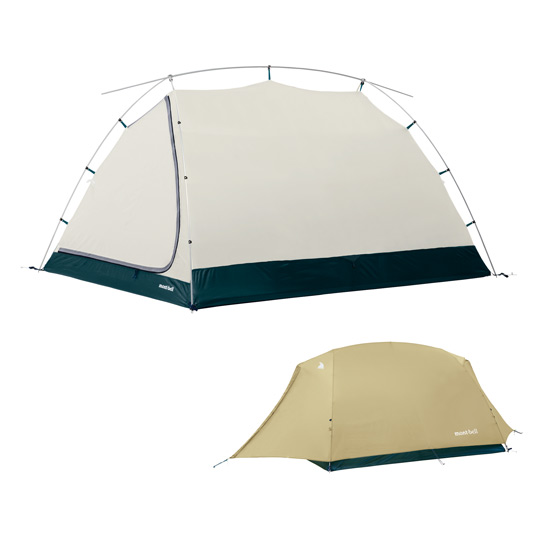
【モンベル】ムーンライト テント2
モンベルが誇るロングセラーモデル「ムーンライトテント」。月明かり(ムーンライト)の中でも簡単に設営可能というコンセプトはそのままに、大幅な軽量化と広々とした居住空間を実現しました。雨の多い日本の気候に最適な保水しにくい生地を使用し、蒸れにく
webshop.montbell.jpQuechua 2 Seconds Easy FRESH&BLACK 2-Person — Pop-Up / Blackout
The QUECHUA Camp Instant Tent 2 Seconds Easy FRESH&BLACK 2-Person is the clearest example in this list of a tent where frame-raising speed is self-evident. Built for 2 people, it uses the EASY system — pull the handles outward from both sides — and the official Decathlon Japan claim is 1-step, 2-second setup for 2 people (~$195 USD at 29,900 yen). Fly waterproofing is 2,000mm. Weight and packed dimensions are not confirmed in available data.
Why it consistently hits the 10-minute window: the setup path to a raised frame involves almost no steps. The pole threading, crossing, and clip work that conventional dome tents require are essentially pre-handled. Beginners don't get stuck at the raising step, and that advantage holds up over repeated use. The FRESH&BLACK blackout-and-insulation treatment is an added bonus — it handles daytime naps and early-morning brightness in one shot. Pop-up tents can be hit-or-miss for overnight use, but this model is built with overnights in mind.
The beginner advantage here is creating that first successful setup experience. Unfurl the tent, orient it, open the frame — that sequence is intuitive enough that you won't feel panicked at the campsite. With two people, one handles the body while the other lines up the Tent pegs, and you're done. The 2,000mm fly handles rain on paper with room to spare. The self-standing frame stays stable even on moderately uneven ground.
The limit worth noting: what's fast is the frame-raising step. A full overnight pitch still involves fine-tuning orientation, staking down, and organizing the entrance. On windy days, the tent's fast opening becomes a liability — the moment the frame springs up, it catches the wind before anyone can hold it. Packed size also tends to run larger than compact dome alternatives, making this more of a car-camping match than a motorcycle or backpacking option. product_links: Amazon / Rakuten / Official

QUECHUA (ケシュア) キャンプ ワンタッチテント 2 SECONDS EASY FRESH&BLACK 2人用
大人気の2 SECONDS テント シリーズが 2 SECONDS EASYとしてリニューアル。さらに簡単で高速に設営ができ、快適睡眠を求める方におすすめの業界初のワンタッチテント。
www.decathlon.co.jpDOD One Touch Tent M — Instant-Pitch / 2–3 People
The One Touch Tent M from DOD manages to combine quick frame raising with a vestibule that makes overnight stays comfortable — not a combination you always get in the instant-pitch category. Designed for 2–3 people. Weight, packed dimensions, and waterproofing vary by production run; commonly cited specs are approximately 8.4 kg, W75 × D22 × H22 cm packed, and a 2,000mm fly — but confirm with the specific model number before purchasing.
The beginner strength here is raising a roomy tent intuitively. For 2–3 people — too many for a solo shelter, not quite a family rig — the space gives you room to move during setup without things getting in each other's way. Having one person extend the frame while the other aligns the vestibule side makes the process dramatically faster. The design leans into the principle that fewer pull points mean fewer hesitation moments, and that holds in practice.
The constraint that matters most is the ~8.4 kg weight. Raising the frame is fast, but getting the tent from your car to the site is a different story. At 75 cm packed length, this tent is fundamentally car-camping oriented — plan accordingly. On windy days, the same speed that makes this tent pop up quickly also means it catches the wind immediately after opening; driving in the first couple of Tent pegs fast keeps things from getting chaotic. Muddy ground makes stakes slip; sandy ground makes standard included pegs hold poorly. Worth having alternatives ready. product_links: Amazon / Rakuten / Official
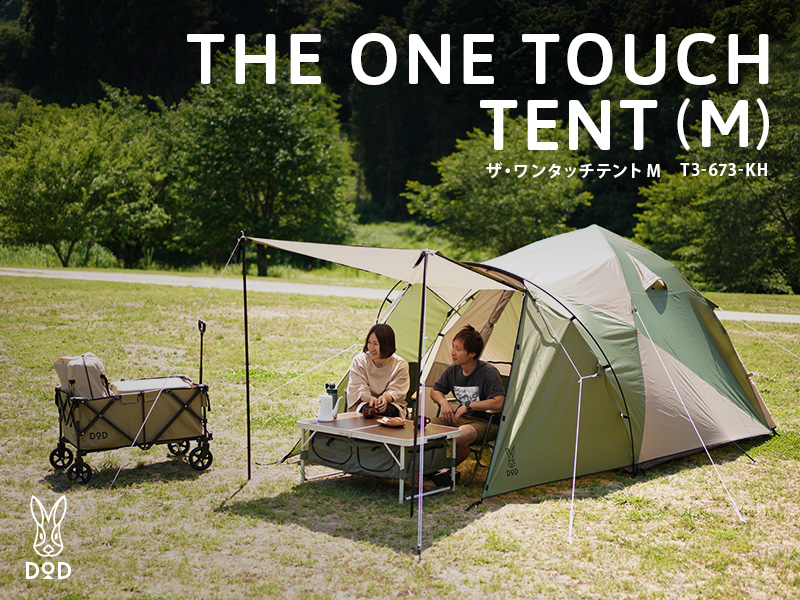
ザ・ワンタッチテントM(カーキ) T3-673-KH - DOD(ディーオーディー)【公式ブランドサイト】
ワンタッチで広がる前室付のワイド空間。テントの設営は素早く済ませて、たくさん遊ぼう。
www.dod.campNaturehike Cloud UP 2 — Dome / Solo to Duo Lightweight
The Naturehike Cloud UP 2 is the benchmark lightweight dome. Built for 2 people, the body weight in one published spec is approximately 1.36 kg, packed to approximately φ13 × 40 cm. Waterproofing varies by version — the light standard edition comes in around 1,500mm, while Pro variants are rated 4,000mm+. This article treats the Cloud UP 2 as a family of options rather than a single fixed spec.
Why 10-minute pitching is realistic: the weight itself speeds you up. The basic crossed-pole dome structure is familiar and well-understood, and when the whole package is under 1.5 kg, picking it up, rotating it, and nudging it into position all feel almost effortless. In my experience, a sub-1.5 kg tent saves time not through simpler steps but through frictionless handling — nothing fights you. Peg dependency is low to moderate; the tent stands reasonably well before stakes go in.
The solo-friendly advantage is that this tent works without straining the setup. At φ13 × 40 cm packed, the length is the dominant dimension for fitting it in a pack — it's easily strapped to the outside if needed. For anyone looking at options beyond car camping — walking in, motorcycle camping — the fact that the pitch sequence isn't unusual is a genuine asset. Lighter tents also stay manageable when you need to lift and reposition mid-setup, which matters more than it sounds when you're doing it alone.
Watch out: Cloud UP 2 isn't one product. If waterproofing is your priority, you're looking at a different version than if weight is your priority. In strong wind, the lightweight fabric gets lively during fly attachment — a second pair of hands makes the difference. On hard or gritty ground, lightweight included pegs can struggle, and your actual pitch time becomes partially a function of peg performance. product_links: Amazon / Rakuten / Official
WAQ Alpha T/C — Single-Pole / Solo
The WAQ Alpha T/C is among the more approachable single-pole tents for solo campers in terms of understanding how it goes up. Designed for solo use, the pitch method is a center-pole tipi: stake the four corners, then raise the middle. Weight, packed size, and price are not fixed to a confirmed figure here. As a TC fabric tent, the fly's water resistance can't be straightforwardly compared using mm ratings alone.
Why it can land in 10 minutes: there's only one pole, and the list of steps is short. No crossed-pole alignment to work out. The whole setup logic concentrates on peg placement and the center pole — once you have the sequence in your head, it flows. Peg dependency is high: nail the corners and the tent resolves quickly; miss them and you're adjusting after the pole is up.
The beginner upside is visual clarity. A single center point holding everything up makes the structural logic obvious, which cuts down on mid-setup confusion. The vestibule configurations let you carve out gear storage even on a solo trip. Personally, I'd expect to spend a little extra time on corner precision on the first pitch — but the time saved on every subsequent pitch makes that investment worth it. With a second person, one stakes the diagonals while the other raises the pole, and the improvement is striking.
The limits: TC fabric doesn't handle as nimbly as lightweight nylon, and the slanted walls that define single-pole geometry reduce usable floor space relative to the footprint on spec sheets. In rain, TC absorbs moisture and gets heavier, which adds friction at pack-up. On waterlogged ground, stakes can lose holding power and the shape suffers; on sand, you'll want longer stakes. product_links: Amazon / Rakuten / Official

ソロテント WAQ Alpha T/C ソロキャンプ用ティピテント
「WAQ Alpha T/C」火の粉に強いTC素材を採用。初心者でも簡単に組み立てられるソロ用のワンポールテント。3パターンにアレンジできる前室でタープいらず。巻き上げできるスカート、虫除け対策ばっちりのインナーテント付きで快適空間を作り出
waq-online.comBUNDOK Solo Tipi 1 TC — Single-Pole / Solo
The BUNDOK Solo Tipi 1 TC (BDK-75TC) is one of the more clearly laid-out single-pole solo tents — the spec sheet tells you exactly what you're working with. Designed for 1 person, total weight is approximately 4.8 kg, packed to approximately 440 × 240 × 240 mm. The pole setup is 1 main pole + 1 sub-pole, and the included kit specifies 14 Tent pegs and 5 Guy lines. Floor waterproofing is rated at 5,000mm. Suggested retail price is 49,500 yen (~$330 USD).
Why it can hit 10 minutes: step count is genuinely low. Stake the corners, raise on the main pole, add the sub-pole for vestibule shape if you want it. The solo sizing means you're not wrestling with too much fabric for one person to manage, and the included peg-and-rope count tells you upfront what goes where.
The beginner-friendly quality is a simple base form with understandable extensions. The front flap, ventilation, and skirt can all be added without breaking the core pitch — you don't need to get them all right before the tent stands. For solo camping, the natural sequence of "get the sleeping space up, then sort the vestibule" maps cleanly onto how this tent works. At 4.8 kg it skews toward comfort over ultralight, but that weight brings a fabric feel that tolerates rougher handling without punishment.
The complication: TC fabric behavior and single-pole corner precision both affect your time. If the four corners aren't square, the center pole will reveal that twist once it's raised, and you'll spend minutes fixing it. Hard ground makes staking slow. Sandy or soft ground makes short pegs unreliable — worth planning your peg loadout accordingly. The 5,000mm floor is reassuring in rain, but the fly's TC construction means comparing it to a nylon fly on mm ratings alone gives a misleading picture. product_links: Amazon / Rakuten / Official
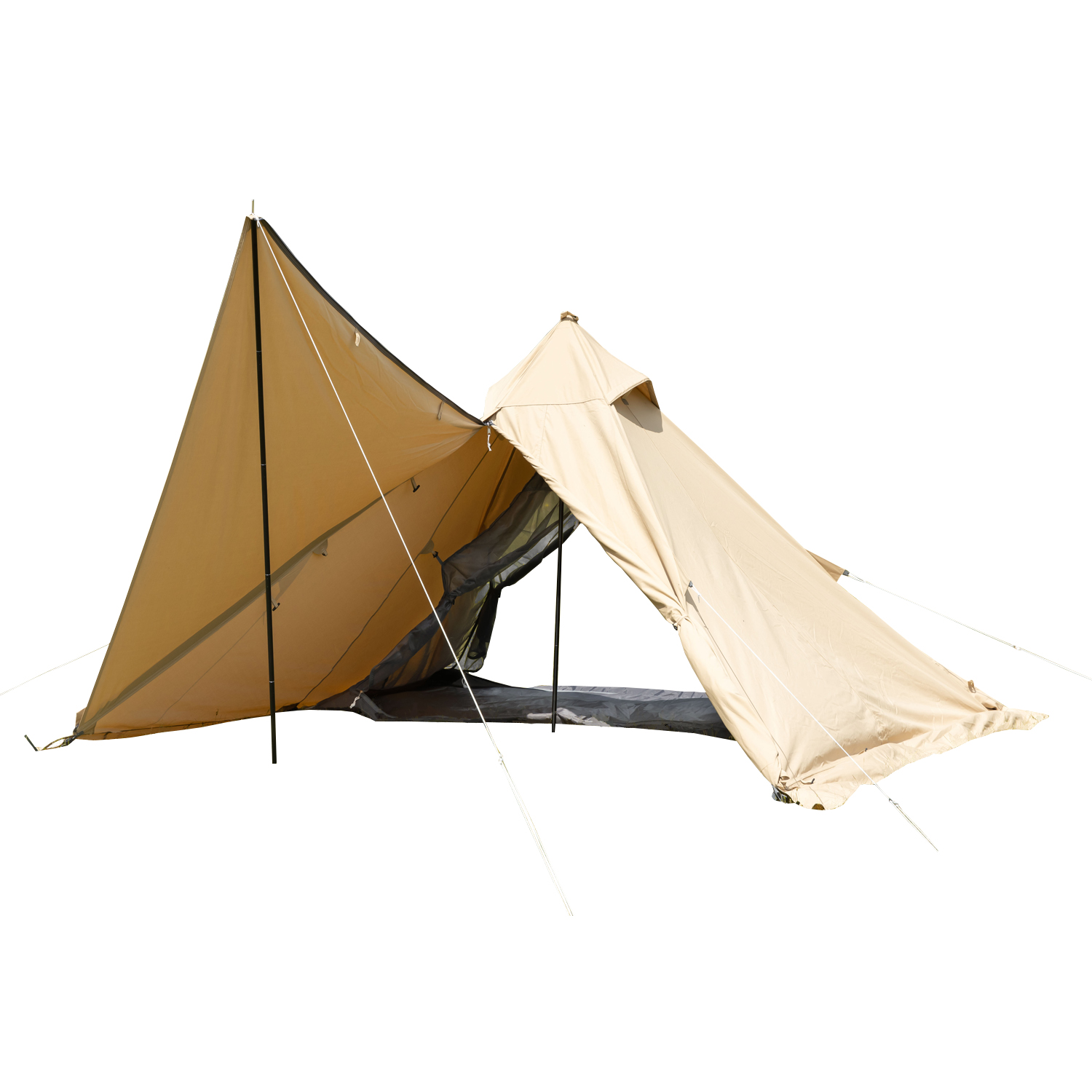
ソロティピー 1 TC サンドベージュ【テント・タープ】 | 株式会社カワセ
設営簡単。ポール一本で自立、設営できるワンポールテント。フライはポリエステルとコットンの混...
kawase-net.jpColeman Touring Dome ST — Dome / Solo to Duo
The Coleman Touring Dome ST remains a hard tent to argue against as a beginner dome. Designed for 1–2 people, total weight is approximately 4.4 kg. Waterproofing: fly ~1,500mm / floor ~1,500mm. Poles consist of 2 × FRP main poles ~φ8.5mm and 1 × FRP front pole ~φ9.5mm, with a vestibule included. Packed dimensions vary across official sources and are not fixed here.
Why it's beginner-accessible in the 10-minute range: the setup sequence is textbook dome. Two mains build the body shape, the front pole adds vestibule projection — the logic is clean, making it an excellent learning subject as much as an everyday tent. No pop-up immediacy, but the step-by-step clarity means beginners often converge on a reliable time quickly. Peg dependency is moderate; the body stands before staking, and stakes come into play primarily for vestibule stability and wind resistance.
The transferable skill is the real beginner advantage: learn to pitch this tent and you'll understand most dome tents. The vestibule creates a gear staging area right away, which matters for solo-to-duo camping. At 4.4 kg it's not walking-trip lightweight, but for car camping or motorcycle touring it's workable. Clean fundamental structure for building the dome pitching skill.
One thing to plan for: FRP poles add weight without adding lightness, and the vestibule pole means one extra step that gets longer on breezy days when the front fabric bats around. In rain, the 1,500mm fly meets the baseline, but extended rain rewards attention to Guy line angles and drainage orientation. Included steel-type pegs can go into most grounds but resist removal more stubbornly than alternatives — factor that into pack-up planning. product_links: Amazon / Rakuten / Official
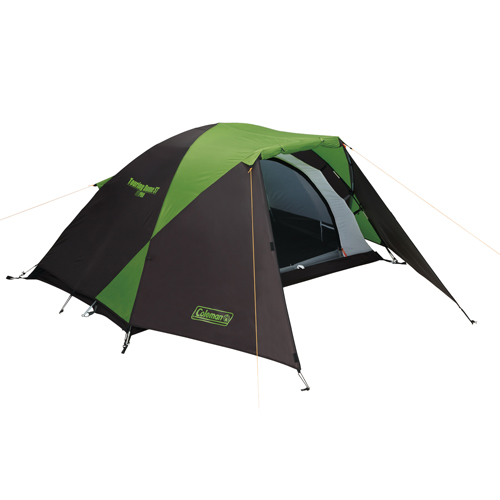
ツーリングドーム ST | コールマン|Coleman
www.coleman.co.jpLOGOS ROSY Q-TOP Dome 270 — Q-TOP Mechanism / Family Entry-Level
The LOGOS ROSY Q-TOP Dome 270 targets family beginners, using a Q-TOP mechanism that compresses the initial frame-raising step even at larger tent sizes. Capacity falls in the 2–3 person class. The "approximately 2.4 kg" total weight is an official example figure that varies by production year — check the model number at purchase. A packed size of approximately 84 × 20 × 20 cm is commonly cited; fly waterproofing in available specs shows 1,000mm.
Why it can hit 10 minutes: the Q-TOP mechanism shortens the frame-raising step beyond what a conventional dome of this size would require. Larger tents typically demand more pole management, but the Q-TOP system front-loads enough of that work that the initial raise goes faster than the size would suggest. Fewer in-the-moment decisions mean less hesitation on first use, and the repeatable result follows.
The beginner advantage for families: it reduces the risk of a big tent becoming a tent you stop using because setup is a hassle. Choosing a larger tent for pitch speed often means accepting heavier weight and bulkier storage — this design at least makes the raising step less of a bottleneck. With two adults, one handling the body extension and one managing corner alignment, the size becomes a non-issue faster than you'd expect.
ℹ️ Note
Larger tents lose more time to post-raise fine-tuning than to pole count. Designs like the Q-TOP that compress the initial frame step make it easier for beginners to stay energized through the full pitch rather than getting worn down early.
The fly waterproofing at 1,000mm is the main trade-off — the most conservative in this comparison. Fine for fair-weather-focused camping, but it leaves less buffer when conditions change. The 84 cm packed length has presence to it and suits car transport. On windy days, more surface area means more wind exposure, so the fast raising doesn't eliminate the staking work. product_links: Amazon / Rakuten / Official
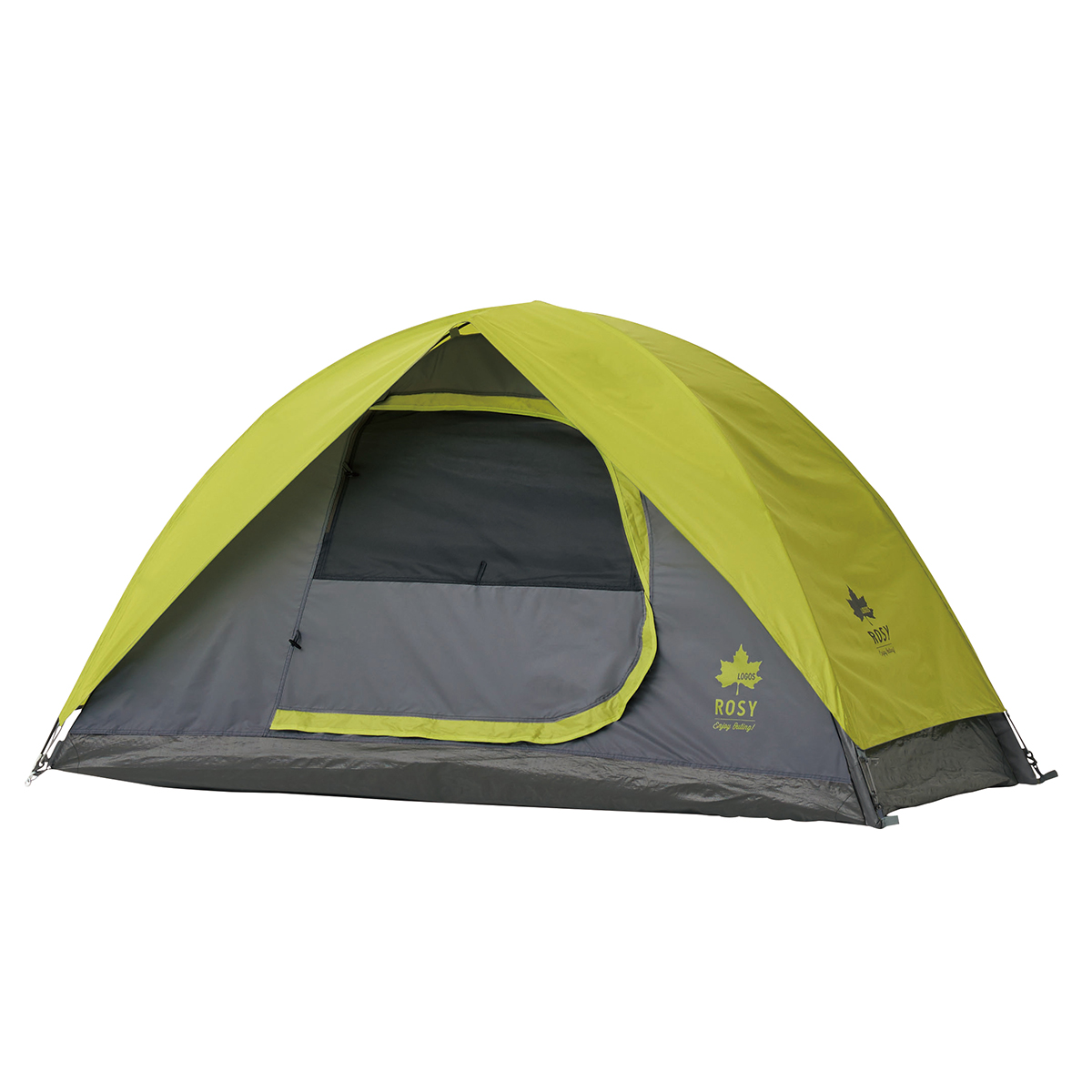
ROSY ツーリングドーム|ギア|テント|ソロ・2名用テント|製品情報|ロゴスショップ公式オンライン
ロゴス製品「ギア」>【ROSY ツーリングドーム】の製品詳細ページです。
www.logos.ne.jpComparison Table: Weight, Packed Size, Waterproofing, and Setup Ease
Laying all 8 side by side on portability, rain resistance, and pitch ease reveals differences that individual sections make hard to see. The traps beginners fall into most often: "light but weak vestibule," "fast to raise but bulky packed," "adequate waterproofing but peg precision costs time."
Comparison Table
| Model | Weight | Packed Size | Waterproofing (fly/floor) | Pitch Type | Vestibule | Best For | Price Range |
|---|---|---|---|---|---|---|---|
| Mont-bell Moonlight Tent 2 | 2.46 kg total | — | 1,500mm / 2,000mm | A-frame dome | — | Motorcycle touring, duo, beginner dome | Price not confirmed |
| QUECHUA 2 Seconds Easy FRESH&BLACK 2P | — | — | 2,000mm / — | EASY system instant-pitch | — | Car camping, minimizing pitch time | ~$195 USD (29,900 yen at Decathlon Japan) |
| DOD One Touch Tent M | ~8.4 kg | ~W75 × D22 × H22 cm | 2,000mm / 5,000mm (cited example) | Integrated-frame instant-pitch | Yes | Car camping (auto-camping), 2–3 people | Price not confirmed |
| Naturehike Cloud UP 2 | ~1.36 kg (example) | ~φ13 × 40 cm | 1,500mm–4,000mm+ depending on version | Lightweight dome | — | Lightweight touring, moto-packing, hiking-adjacent | Price not confirmed |
| WAQ Alpha T/C | — | — | Fly —/ Floor — | Single-pole | Yes | Solo, campfire proximity, livability-focused tipi use | Price not confirmed |
| BUNDOK Solo Tipi 1 TC | ~4.8 kg | ~440 × 240 × 240 mm | Fly — / 5,000mm floor | Single-pole | Yes | Solo camping, vestibule use, TC beginner | ~$330 USD (49,500 yen suggested retail) |
| Coleman Touring Dome ST | ~4.4 kg | Multiple official figures | ~1,500mm / ~1,500mm | Dome | Yes | Solo–duo beginner, touring, proven design | Price not confirmed |
| LOGOS ROSY Q-TOP Dome 270 | ~2.4 kg | ~84 × 20 × 20 cm | 1,000mm / — | Q-TOP quick dome | Yes | Family entry-level, fair-weather leisure | Price not confirmed |
The table reveals clear patterns, but the real-world handling differences are even sharper. For portability, the Naturehike Cloud UP 2 sits at the lightest end — φ13 × 40 cm fits neatly into a pack or straps cleanly to a bike. That 40 cm length is genuinely motorcycle-friendly in my experience. The DOD One Touch Tent M at ~75 cm packed is the opposite: easy to raise, but you're firmly in car-camping territory the moment you try to load it. A rough rule of thumb for rear-box or side-box packing is around φ18 × 50 cm as the practical ceiling, and 75 cm class tents don't fit that frame.
"Setup Ease" Reads More Clearly Across 3 Dimensions
Raw seconds-to-stand is a poor comparison metric for setup ease. This table organizes by step count, peg dependency, and solo-pitch viability — the same framework that more useful tent-selection guides use, because dome vs. instant-pitch and single-wall vs. double-wall have fundamentally different ease baselines.
| Model | Step Count | Peg Dependency | Solo Pitch | Setup Ease |
|---|---|---|---|---|
| Mont-bell Moonlight Tent 2 | Low | Moderate | Easy | 4/5 |
| QUECHUA 2 Seconds Easy FRESH&BLACK 2P | Minimal | Moderate | Easy | 5/5 |
| DOD One Touch Tent M | Low | Moderate | Possible, but weight is a factor | 4/5 |
| Naturehike Cloud UP 2 | Standard | Moderate | Easy | 4/5 |
| WAQ Alpha T/C | Low | High | Possible | 3/5 |
| BUNDOK Solo Tipi 1 TC | Low | High | Possible | 3/5 |
| Coleman Touring Dome ST | Standard | Moderate | Easy | 4/5 |
| LOGOS ROSY Q-TOP Dome 270 | Low | Moderate | Possible | 4/5 |
These scores come from structural analysis, not impressions. Instant-pitch tents score high because the integrated frame eliminates the pole-threading and crossing-point alignment steps entirely. The Quechua EASY system earns its 5/5 there — almost nothing to figure out during the raise. The peg dependency still isn't zero for overnight use because final anchoring is always required.
Dome tents cluster around 4/5. The Moonlight Tent 2, Cloud UP 2, and Touring Dome ST all have self-evident raising logic that's reproducible solo. The margin between them comes from vestibule handling and fly attachment experience — tents with more elaborate vestibule work add a small step count overhead. That said, the structural logic stays legible, so they're faster on the second pitch than almost any other style.
Single-pole tents land at 3/5 because their short step count coexists with front-loaded peg precision demands. The WAQ Alpha T/C and BUNDOK Solo Tipi 1 TC go up fast when all four corners land correctly — but any baseline error gets amplified once the center pole is raised. In other words: fewer total steps, but mistakes cluster at the beginning and are costly. That's exactly why first-time pitch times vary more for this style.
⚠️ Warning
The faster a tent goes up, the more the post-raise anchoring matters. Instant-pitch and single-pole tents that skip proper staking become wind hazards. A 10-minute pitch only counts as stable if peg placement was part of it — evaluate structure for how easily pegs can be set in the right spots, not just how fast the frame goes up.
Rain Resistance: Read the "1,500mm Fly + Higher Floor" Combination
Raw waterproofing numbers are meaningful for tent comparison, but bigger isn't always better in isolation. The commonly used benchmark — 1,500mm for heavy rain — is a practical overnight reference. Of the 8 models here: the Moonlight Tent 2 and Touring Dome ST hit that baseline on the fly; the Quechua and DOD exceed it; the LOGOS ROSY Q-TOP Dome 270 at 1,000mm leans fair-weather.
The floor matters more than most people budget for, because body weight converts floor pressure into moisture penetration from below. A higher floor rating than the fly is worth actively seeking. The Moonlight Tent 2's 2,000mm floor and BUNDOK Solo Tipi 1 TC's 5,000mm floor reflect this logic. The Touring Dome ST at 1,500mm / 1,500mm meets the baseline but has less margin on ground-side moisture.
TC models — WAQ Alpha T/C and BUNDOK Solo Tipi 1 TC — can't be directly compared to nylon/polyester fly tents using mm ratings. TC has genuine advantages in ventilation and campfire spark resistance, but rain performance has to be evaluated differently. The number comparison simply doesn't translate.
Narrowing the Table by Use Case
Motorcycle touring first: the Moonlight Tent 2 and Cloud UP 2 are the top two. The Moonlight balances overnight performance with manageable weight at 2.46 kg total; the Cloud UP 2 goes lighter. Prioritize weight and pack size above all? Cloud UP 2. Want more setup repeatability and overnight confidence? Moonlight.
Minimizing setup confusion: the Quechua 2 Seconds Easy is the clearest answer. DOD's One Touch Tent M follows the same direction but packs and weighs like a car-camping tent.
Solo atmosphere + vestibule flexibility: the WAQ Alpha T/C and BUNDOK Solo Tipi 1 TC come into consideration. Just understand that their time-saving comes with a peg-precision dependency that domes and instant tents don't have. "Fast once you know it" is accurate; "easy on first attempt" is less so.
Family fair-weather camping: the LOGOS ROSY Q-TOP Dome 270 earns a spot. Q-TOP reduces the frame-raising burden for a larger tent, which is exactly where families lose the most time. Note that rain resistance is the weakest in this group.
Footnote: Waterproofing benchmarks follow commonly cited outdoor references: ~500mm for light rain, ~1,000mm for moderate rain, ~1,500mm for heavy rain. This article uses 1,500mm as the overnight fly baseline. Floor ratings are treated as a separate and ideally higher-than-fly specification, because downward pressure from body weight and ground moisture create meaningful floor penetration risk.
Which Type Is Least Likely to Go Wrong?
Instant-Pitch / Pop-Up
If "not failing on your first ever pitch" is the single criterion, instant-pitch and pop-up tents are the frontrunners. The reason is simple: the mental step of figuring out how the frame goes together is mostly gone. Models like the Quechua 2 Seconds Easy FRESH&BLACK 2-Person — where the raising motion is intuitive from the first attempt — keep you moving without stopping to think, and that confidence tends to carry through repeated use. Getting the tent up before dark on your first night is a real advantage.
That said, fast to pitch does not mean comfortable to sleep in regardless of conditions. Integrated-frame designs trend larger and heavier than compact domes — the DOD One Touch Tent M at ~8.4 kg packed to ~W75 × D22 × H22 cm illustrates this well. Fast from car to standing, but not light from car to site.
The other thing worth separating clearly: leisure pop-ups and overnight tents are different categories. Sun shelters and park canopy-style pop-ups open in seconds but often have simplified waterproofing and anchor systems that aren't adequate for sleeping in. For a first overnight tent, check that the fly hits the waterproofing baseline, there's a vestibule for gear, and there's a proper ventilation system — speed alone doesn't cover those bases.
At 5–6 m/s wind on a riverside site, instant-pitch tents catch wind the moment the frame opens. Attaching the fly solo in those conditions turns into a two-handed battle with fabric. On calm days these are the fastest option; add any real wind and the speed advantage erodes faster than with a dome.
Dome
All things considered, the dome is the style least likely to go wrong for a beginner. Not the fastest to raise in absolute terms, but the shape resolves logically and the process repeats well. The Coleman Touring Dome ST and Mont-bell Moonlight Tent 2 remain popular year after year for exactly this reason — they're well-rounded without obvious weak points.
Where domes keep you moving: the inner either clips onto the poles or hangs from them — either way the shape becomes visible fast, and you always know what to touch next. Domes also absorb some corner-placement error through pole tension, so you don't need to be as precise upfront as you do with single-pole designs. That built-in tolerance is the dome's core first-pitch advantage.
A properly sized vestibule and good self-standing behavior are secondary time-savers. When a tent stands without staking, you can raise it and then walk it into the ideal position — no wasted stakes on a location you'll abandon. A useful vestibule means gear gets organized right after the tent is up, rather than scattered while you figure out where things go. Lightweight overnight domes like the Moonlight Tent 2 handle touring well; ultralight options like the Cloud UP 2 lean further toward weight-reduction priorities.
Single-Pole
Step count on paper: minimal. Stake four corners, raise one pole, done. That simplicity is real — experienced campers pitch single-pole tents quickly, and even on a first attempt, 10 minutes is structurally achievable. No multi-pole crossing logic to work through; the setup logic is concentrated and short.
The beginner friction point is equally clear: everything depends on Tent peg placement precision. Get the first four corners right and the tent resolves cleanly. Let them drift and you're resetting after the pole is up. This is the fundamental difference from dome behavior — single-pole tents front-load the consequences of early mistakes. The BUNDOK Solo Tipi 1 TC has a forgiving enough base form that most of the process is smooth, but whether it looks good when finished depends almost entirely on that initial corner layout.
Living inside one has its own quirks. The center pole reduces layout flexibility, and slanted walls mean the effective floor space is smaller than the footprint implies. Dead space runs higher than in a dome. Vestibule configurations and front panel options can recover a lot of that usability — the WAQ Alpha T/C and Solo Tipi-style designs with front room arrangements are noticeably more livable — but each added comfort feature adds a corresponding step.
For deeper comparison of single-pole options, the dedicated single-pole tent guide organizes the trade-offs usefully.
Two-Room Tents
Pure livability: two-room tents are the best-structured option here. Combining a sleeping room with a living/gear space solves multiple camping friction points in one — wet gear storage, family movement, rain-day comfort. Post-pitch satisfaction is high.
The trade-off: getting a two-room tent up in around 10 minutes without problems is a beginner's hardest ask. More poles, more fabric, more stakes — every variable increases. Some two-room designs now market quick-pitch mechanisms, but even those are tight on 10 minutes when you factor in orientation, sleeve and clip work, living section extension, and final tensioning. That sequence takes time even for practiced campers.
Two-room tents also present more wind surface during pitch, which complicates solo setup at the worst moments. The strong case for livability is real — but the axis has shifted from "easy to pitch" to "great to live in". Beginners building that first success experience are better served starting with a dome or a proper overnight instant-pitch tent. Once you've internalized camping flow, two-room designs deliver on their advantages rather than fighting you. The two-room tent selection guide covers those trade-offs in detail.
Actually Hitting 10 Minutes: Practical Techniques
The 30-Second Pre-Pitch Check
Reproducing a 10-minute pitch at the actual campsite starts before any poles come out. Locking in what you look at in the first 30 seconds does more than any technique learned with the tent already out. Most beginner time losses come from realizing mid-setup that the tent is facing the wrong way, the staking lines won't reach, or the ground has a bump that needs accounting for.
Three things I always look at first: wind direction, ground flatness, and guy-line clearance. Facing the entrance directly into the wind means the fly billows the moment you pick it up. The basic principle is back to the wind, positioned on even ground. Checking that Guy lines can run straight outward without hitting obstacles saves the maddening step of re-siting a tent you've already raised.
This doesn't take long. The full checklist in practice:
- Which direction is the wind coming from?
- Is the ground level, without significant rises or drops?
- Does the entrance and vestibule face where I want to walk?
- Is there clear space for Guy lines in every direction?
- Do my Tent pegs suit this specific ground?
That last item is the most commonly skipped. Grass and firm compacted dirt work fine with standard Y-shaped or forged pegs. Sand or soft ground makes short included pegs unreliable — they go in but won't hold, and re-staking eats minutes. Rather than hoping the included pegs are good enough, decide in advance that sandy ground gets sand pegs. One deliberate choice before arrival is worth more than any improvisation on site.
For reliable pitch times, nothing beats a full practice pitch in a garden or local park first. Even the most forgiving dome tent — Moonlight Tent 2 included — has a first-pitch "where is this part?" discovery phase. Sorting poles, Tent pegs, and Guy lines by separate bag or color at home removes the rummaging from your campsite experience entirely.
Minimum Stakes, Maximum Stability: The Diagonal First Rule
One of the biggest speed improvements comes from not trying to make everything perfect simultaneously. Get the frame standing first with a minimum set of stakes, then tune tension once the shape is visible. The order you stake in matters.
For both dome and single-pole designs, the most stable approach starts with opposing corners — diagonal pairs. Establishing two diagonal anchor points first creates a reference plane that resists twisting. On windy days: rather than chasing all four corners at once, anchor the downwind side first and work diagonally, so the frame can't be pushed over while you finish.
This sequencing effect is especially pronounced for single-pole tents. Staking without a diagonal strategy often means the center pole reveals asymmetric tension once it's up — one side pulls, the other sags, and you're back to re-staking. Commit to the reference edge first, then take the opposite diagonal, and fill in from there. The BUNDOK Solo Tipi 1 TC — already a reasonably clean structure — goes up neatly when the corner sequence is followed; the same tent looks messy when corners are placed in random order.
Domes absorb more error, but diagonal staking still reduces inner-tent and fly twist. The payoff compounds over multiple pitches.
For peg-to-ground matching: sand and soft ground need 38–41 cm sand pegs — short V-pegs spin in place. Hard ground needs forged steel or Y-stake designs that drive cleanly without bending. You don't need to replace every included peg, but designating your first few anchor points to purpose-built pegs reduces early-pitch failures. Even on a tent with a vestibule like the Coleman Touring Dome ST, getting those first key stakes solid makes every subsequent adjustment faster.
ℹ️ Note
On a light-rain night at a grass site, I'll often build just the vestibule first — quickly, to shelter gear — then work on the sleeping section calmly. Doing it this way keeps the pressure off and, counterintuitively, the total working time often ends up shorter than trying to raise everything at once under time pressure.
Worth adding: in rain, waterproofing ratings matter, but pitch order affects comfort as much as specs do. The goal is getting the sleeping section up without soaking it — how you sequence the raise matters as much as what the numbers say.
Pack-Down Routine: Building Next Session's Speed
A 10-minute pitch next time starts with how you pack down this time. How well you routinize the pack-down determines how fast you start next session. Most people who struggle to pitch quickly aren't slow during setup — they're paying for a chaotic pack-down from last time.
I keep the take-down sequence fixed: decide whether to coil Guy lines or pull pegs first, and don't vary it. A good sequence: release Guy line tension, pull poles, collect Tent pegs. For single-pole tents, release some of the tent's outward tension before pulling the center pole. For domes, keep the fly-inner separation point consistent every time — it eliminates one more decision during re-packing.
Parts organization matters more than most people admit. Guy lines stuffed into the bag tangled are Guy lines that tangle again next time. Knock mud off pegs, count them, coil each Guy line individually, and keep the pole bag, peg bag, and body bag separate — that alone saves several minutes at the start of your next session. Designs with separate stuff sacks — like the Moonlight Tent 2 — make this easy; lightweight tents like the Cloud UP 2 reward assigning roles to bags even when they're not pre-divided.
Think of packing down as preparing the first minute of next session rather than finishing this one. A 10-minute pitch isn't achieved through on-site speed alone — it's built from site selection, wind reading, diagonal staking, matching pegs to ground, and clean pack-down discipline forming a repeatable sequence.
By Camping Style
Solo
For solo camping where you want both quick pitching and genuine portability, a rough target of 2–4 kg and packed length around φ18 × 50 cm or less gives you options that work beyond just car camping — bikes, light hikes, and short carries all stay realistic.
The most naturally fitting lightweight dome is the Naturehike Cloud UP 2. Approximately 1.36 kg body weight and ~φ13 × 40 cm packed means it fits almost anywhere — strapped externally to a pack, tucked into a side pocket, loaded onto a small bike. The 2-person sizing in a solo context means useful working room without the tent fighting you, and more gear staging space once you're inside. Dome pitch logic keeps corner precision from being a high-stakes moment.
If campfire atmosphere, insulation, or blackout comfort is the priority, WAQ Alpha T/C and BUNDOK Solo Tipi 1 TC enter the conversation. The Solo Tipi 1 TC at ~4.8 kg and ~440 × 240 × 240 mm packed stays manageable for solo use even if it's not walking-trip territory. Single-pole step count is genuinely short and the flow is fast once you have it — but field time makes this clear in a way specs don't: the pitches where corners landed right are strikingly faster than the pitches where they didn't.
Solo shortcut: mobility first means Cloud UP 2; atmosphere and vestibule flexibility first means single-pole. Both options have real strengths, and that one decision usually cuts the comparison down to two meaningful candidates. For a wider solo tent comparison, the dedicated solo tent guide covers the full range.
Duo
Duo camping is where vestibule usefulness matters most. Two people generate twice the wet gear, shoes, and mid-change clothing — a sleeping space alone doesn't cut it. On that criterion, the two most consistently solid beginner picks are the Moonlight Tent 2 and Coleman Touring Dome ST.
The Moonlight Tent 2 at 2.21 kg body / 2.46 kg total is light for a 2-person tent. It gets somewhat cozy with two people and full gear, but the carry weight means arriving at the campsite without being pre-fatigued — which matters more than it sounds when you're pitching immediately after. Dome repeatability holds; with two people, one on poles and one sorting the skirt, the flow sequence writes itself.
The Touring Dome ST's duo argument rests on vestibule practicality. Shoes, damp layers, and anything you don't want inside the sleeping area all go there without ceremony. In rain, that vestibule is what keeps the entrance area livable — otherwise everything wet ends up crowding the door. My consistent experience with duo camping: the vestibule is worth more than the sleeping room square footage for day-to-day comfort.
For rainy conditions: fly waterproofing of 1,500mm or higher is a clean threshold that simplifies decisions. Both the Moonlight Tent 2 (1,500mm fly) and Touring Dome ST (~1,500mm fly) clear it, and both have vestibules. For duo overnight camping in variable weather, these two are the most field-proven choices.
Family
For families, pure pitch speed matters less than keeping everyone's hands doing something useful. One adult managing everything while watching kids and organizing arrival gear will exceed any tent's advertised time. The design that helps here is the LOGOS ROSY Q-TOP Dome 270 and similar Q-TOP designs.
The Q-TOP mechanism shortens the most confusing phase — initial frame raising — which is exactly where families lose coherence. Kids have a short patience window; if the tent is standing before they wander off, you can redirect their energy productively. Once the structure is up, moving gear inside, positioning shoes, and sorting sleeping bags is work kids can help with.
The realistic framing for family "10-minute pitching": it's a split-role estimate, not a solo time. One adult fully alone, managing tent, children, and arrival gear simultaneously, will run longer. What actually helps: assigning a hammer holder, a pole holder, and a small-item collector before you start. In my experience with elementary-age kids, that role assignment cuts the felt time roughly in half — not because the work goes faster, but because nobody is standing around waiting.
Q-TOP's shared-learning advantage: the sequence is easy enough to pre-brief with a short video at home so everyone knows their role on arrival. "Who holds this pole, who pulls this strap" becomes familiar before you're standing in the field. For a wider family tent comparison, the family tent guide organizes the key considerations.
Walk-In / Motorcycle Camping
Weight and pack size come before everything else here. The practical ceiling: 2–4 kg and packed length under 50 cm. Once you exceed that, the "can I comfortably carry this" question starts competing with the actual camping experience.
The most direct fit is the Cloud UP 2: ~1.36 kg, ~φ13 × 40 cm. That 40 cm length gives genuine packing flexibility — horizontal, vertical, side pocket, frame straps — without compromising. Lighter tents also mean that repositioning and fine-tuning mid-pitch is easier, which reduces the second-guessing that adds phantom minutes.
For a balance point between ultralight and overnight comfort, the Moonlight Tent 2 at 2.46 kg total is still within motorcycle touring range. Not as light as the Cloud UP 2 for walking trips, but manageable on a bike. The DOD One Touch Tent M at ~8.4 kg with ~75 cm packed is a contrast case: raises fast but loses the portability argument before you even leave the parking lot.
Walk-in and motorcycle camping: hold the weight and length limits first, then choose from domes within those constraints. That approach keeps both pitch repeatability and carrying viability intact without compromise.
Rain Concerns
For rain-focused selection, the priority order is clear: fly at 1,500mm or higher first, floor rating higher than the fly second, vestibule present third. That stack removes most of the decision ambiguity. Models below the 1,500mm fly threshold become fair-weather tools.
Specifically: the Moonlight Tent 2 is the clearest all-round rain pick — 1,500mm fly, 2,000mm floor, manageable weight, vestibule geometry. The Touring Dome ST at ~1,500mm / ~1,500mm meets the threshold and adds a vestibule that becomes essential when rain forces you to manage wet gear at the entrance. That staging area changes the entire wet-weather experience.
Among instant-pitch options, the QUECHUA 2 Seconds Easy FRESH&BLACK 2-Person with a 2,000mm fly stands out — fast pitch plus meaningful rain margin. The LOGOS ROSY Q-TOP Dome 270 at 1,000mm drops in rain priority ranking by comparison.
TC tents — WAQ Alpha T/C and BUNDOK Solo Tipi 1 TC — operate on different rain logic. The Solo Tipi 1 TC's 5,000mm floor is genuinely impressive, but the fly's TC construction can't be evaluated against nylon fly specs using the same mm scale. For beginners wanting clear, comparable rain benchmarks, 1,500mm+ fly with vestibule gives more actionable guidance than TC specs do.
⚠️ Warning
For anyone worried about rain: a vestibule matters as much as waterproofing numbers. A gear staging area outside the sleeping space means you can keep the entrance dry, keep wet items contained, and move in and out without soaking the interior. No fly rating fully compensates for a missing vestibule.
Frequently Asked Questions
Are instant/pop-up tents really that easy?
Yes — at least when it comes to getting the frame up quickly. Instant-pitch designs give beginners a real advantage because the step that usually creates confusion — figuring out which pole goes where — is mostly eliminated. Models like the Quechua 2 Seconds Easy and DOD One Touch Tent keep the frame-raising motion simple enough that even first-timers rarely get stuck there. The shape appears before you have time to second-guess yourself.
That said, "easy" here applies only to raising the skeleton. For overnight camping, you still need to orient the door, stake everything down, sort out vestibule access — and the full picture is more nuanced. In my experience, what makes instant-pitch fast on calm days — the frame springs open quickly — becomes a liability in wind, because the tent catches wind the moment it opens before anyone can hold it down.
There's also a meaningful split worth making: overnight use versus daytime/leisure use. Simple pop-ups for parks or day outings open fast but often have simplified waterproofing and anchoring that doesn't hold up for sleeping. If you're planning an overnight trip, check fly waterproofing, vestibule design, and stake-down quality beyond raw pitch speed. A dome tent is often more well-rounded for sleeping purposes — fast enough, and genuinely better in rain and wind.
How many mm of waterproofing do I actually need?
The practical baseline: 1,500mm for the fly and higher for the floor. Common outdoor reference guides use 500mm for light rain, 1,000mm for moderate rain, and 1,500mm for heavy rain — so if you're buying primarily for overnight trips, 1,500mm on the fly is the threshold to target.
The Mont-bell Moonlight Tent 2 (1,500mm fly / 2,000mm floor) and Coleman Touring Dome ST (~1,500mm / ~1,500mm) represent the entry-level reference point well. The higher floor spec is logical: rain doesn't only come from above — kneeling, setting down gear, and simple ground dampness all create downward pressure that pushes moisture through a floor with less margin.
Models with lower ratings work fine in fair weather, but leave less buffer when conditions shift. TC fabric tents add another layer of complexity — their rain behavior can't be read off mm numbers the way synthetic fly tents can. For beginners who want decision-making to be simple: prioritize 1,500mm+ fly and a higher-rated floor, and most overnight rain scenarios are covered.
Are the included tent pegs actually sufficient?
Better question than count: do they hold in the ground you're camping on? Tent peg guides consistently note that included pegs are a starter set, not a permanent solution — and upgrading often makes pitching noticeably faster. Pegs that bend, slip out, or won't drive in smoothly turn each anchor point into a time sink.
The Mont-bell Moonlight Tent 2 includes 12 × 16cm aluminum V-pegs; the BUNDOK Solo Tipi 1 TC comes with 14 pegs — both adequate in count, but hard-packed dirt calls for forged steel pegs that drive cleanly. Grass and typical soil work well with Y-shaped or V-shaped pegs. Sandy or loose ground genuinely needs dedicated sand pegs — and the 38–41 cm long versions make a difference that short standard pegs simply can't replicate.
Pegs that go in cleanly the first time eliminate re-staking — and re-staking is where setup time silently balloons. Struggling with included pegs, by contrast, stacks up small delays at every anchor point. The mental model that works: forged pegs for hard ground, Y or V-shape for normal soil and grass, sand pegs for soft or sandy ground. That one decision tree makes pitch repeatability dramatically more consistent.
ℹ️ Note
Peg selection affects beginners as much as tent design choice does. Getting that match right — ground type to peg type — is one of the highest-leverage improvements you can make to your setup routine.
Should I practice pitching at home first?
Yes — once is enough to make a real difference on the day. That single practice run is what eliminates the "wait, what comes next?" pause that costs most beginners their time at the actual campsite. The delay isn't from physical effort — it's from momentary process uncertainty. Running through it once in a garden or park makes those one-to-two-minute hesitations disappear.
In my own early camping, I'd flip a pole end-for-end, or put the fly on backwards — and each mistake broke the rhythm. After one complete pitch from start to finish, that category of error basically stopped. For dome tents: internalize the pole crossing order. For single-pole tents: know where the four corners should sit. For pop-up designs: practice the folding-back-down method (often the only genuinely tricky step).
The benefits compound beyond speed. You also learn exactly how many Tent pegs you need, how long the Guy lines run, and the best way to orient the entrance relative to where you'll be spending time — all things that make the post-arrival routine flow naturally. When you can estimate your pitch time reliably, you protect the buffer before dark, and that margin reduces beginner anxiety in a meaningful way.
Summary and Next Steps
The shortcut to consistent 10-minute pitching is evaluating pitch method alongside step count and peg dependency — not just the headline design style. Comparing all 8 tents indefinitely is less useful than narrowing to 2–3 that match your group size, travel method, and comfort with setup complexity. Size for sleeping headcount plus one person's worth of gear; set a weight and packed-size ceiling based on how you're traveling; keep 1,500mm+ fly waterproofing as a filter if rain is a concern.
Before buying, watch a pitch video and run one practice session close to home — it removes the campsite guesswork. Sourcing ground-appropriate Tent pegs separately is, in practice, as impactful as tent selection itself. I also find that adjusting Guy line lengths in advance at home means tension can be set in one pass at the campsite rather than requiring iteration.
Related articles: Tent Size Selection Guide, How to Choose an Easy-to-Pitch Tent (detailed setup techniques)
A former product development engineer at an outdoor gear manufacturer. A technically-minded writer who can discuss everything from tent materials and construction to sleeping bag insulation specs. With 60+ nights of solo camping per year, he rigorously tests the gap between catalog claims and real-world performance.
Related Articles
The Complete Guide to Choosing a Tent
Before hunting for popular models, understanding tent shapes, materials, and sizing will save you from costly mistakes. Whether you're buying your first tent, deciding between solo and family setups, or rethinking rain and wind protection, this guide lays out the criteria that actually matter.
Best Solo Tents Compared: How to Pick the Right One
Choosing a solo tent is never as simple as going with the lightest option. Weight, ease of setup, livability, waterproofing, and vestibule usability all factor in — skip any of them, and buyer's remorse hits fast. This article covers
How to Choose a Family Tent: A Practical Buying Guide
Picking a family tent based on looks or popularity alone often leads to regret -- it felt smaller than expected, or rainy days were miserable. This guide is for families buying their first tent or outgrowing their current one.
How to Choose an Easy-Setup Tent: A Structure-by-Structure Comparison
Picking a tent based on 'looks easy to set up' or 'I like the style' tends to backfire the moment rain or wind hits on your first overnight. This guide breaks down instant, pop-up, dome, and single-pole designs by real-world usability and overnight performance for first-time buyers and anyone tired of regrettin