
One-Pole Tents: Do They Live Up to the Hype? Looks vs. Real-World Usability
One-Pole Tents: Do They Live Up to the Hype? Looks vs. Real-World Usability
One-pole tents combine head-turning looks at the campsite with a setup process simple enough for one person to handle alone. After using a solo-sized model (~2.2 kg, packed to 42×19×19 cm) on an autumn highland trip, the stripped-down setup routine was genuinely comfortable — but the center-pole layout constraints hit harder than expected.
One-pole tents combine head-turning looks at the campsite with a setup process simple enough for one person to handle alone. After using a solo-sized model (~2.2 kg, packed to 42×19×19 cm) on an autumn highland trip, the stripped-down setup routine was genuinely comfortable — but the center-pole layout constraints hit harder than expected.
This article is for anyone curious about one-pole tents, whether you're a beginner or someone trying to figure out if one really suits solo, duo, or family camping. Choosing purely on looks tends to lead to regret. But go in understanding the center pole, the peg dependency, and the rain-entry situation, and you'll likely end up happy with the shelter.
I'll walk through waterproofing ratings (2,000 mm vs. 5,000 mm), what TC 65/35 versus polyester actually means in practice, how 460×460×300 cm family-size models perform, and what to know about chimney port models (some KingCamp products list openings of around φ9 cm). For anything involving wood-burning stoves, safety requirements vary by model — always consult the manufacturer's official documentation for specifications, heat resistance, clearance distances, and ventilation requirements before purchasing.
Why One-Pole Tents Look So Good in Photos
The photogenic quality of a one-pole tent isn't incidental — it comes directly from the shape. A single center pole pushing up a cone or pyramid of fabric creates a silhouette with a clear, defined apex. Unlike a dome that spreads wide and low, the one-pole form converges upward, giving it a natural visual weight the moment it's planted at a site. Price.com Magazine has flagged one-pole tents as shapes that "photograph easily," and the reason is exactly this: a three-dimensional presence that stands apart rather than blending in.
Out in the field, the height really earns its keep. Even a solo model like the BUNDOK Solo Tipi 1 — at roughly 240×240×150 cm — carries more visual presence than the numbers suggest because the apex genuinely stands up. In my experience, the effect gets stronger the lower your chair and table setup is. When the rest of the gear runs along a horizontal plane, that single point at the peak punches clean through the frame and becomes the obvious subject of the photo.
The silhouette also stays readable in complex natural backgrounds. Whether you're in forest or meadow, the simple outline of a one-pole tent doesn't dissolve into the scenery. At dusk with the light behind it, the tipi ridge lifts cleanly against the sky. Dome tents blend harmoniously into landscapes — which is a strength for some things — but a one-pole tent becomes its own subject on the strength of its outline alone.
It also makes composition easier. A one-pole tent alone already anchors a frame, but connect a hex tarp and you get something more: the tent's sharp peak and the low, horizontal spread of the tarp work together as foreground and depth. The visual split between sleeping space and lounge area reads immediately, which keeps the whole site from looking cluttered. A viewer can tell what's what at a glance.
💡 Tip
For evening side-lighting, shooting at around 45 degrees rather than straight-on lets you capture both the apex and the tarp lines in the same frame — that angle is where the one-pole's three-dimensionality really shows.
There's also the straightforward atmosphere boost. The tipi shape evokes lodges and wilderness camps, so just pitching one shifts the mood slightly toward a "stay" rather than a "campsite." Wooden tables, rugs, and warm lantern light all pair naturally with it — without overdoing the decoration, the space reads less like a corner of a campground and more like a room someone actually lives in. Go up to the 460×460×300 cm family-size class, and the effect becomes even stronger: something landmark-like that reads from a distance.
The visual appeal of a one-pole tent, then, is less about trend and more about structure: a pointed apex, a tall proportion, an outline that lifts clear of the landscape, and a composition that clicks into place when paired with a tarp. The looks get talked about first, but the reason those looks hold up in photos is that the shape has real logic behind it.
The Practical Case for One-Pole Tents
The appeal goes beyond aesthetics. The clearest functional advantage is how straightforward setup and takedown actually are. The basic sequence: stake out the perimeter first to establish the footprint, then raise the center pole to lift the tent. You skip the multi-pole threading and crossing of dome tent assembly, which means fewer steps to remember. On calm days, I can drive eight Tent pegs/stakes and raise the center pole in under ten minutes — and more importantly, it's the same sequence every time. That repeatability matters a lot when you're setting up solo.
The packed volume works out to roughly 15 L, which fits into car storage easily and can realistically be integrated into a touring bag. Lighter ultralight-focused models push even smaller. The structural simplicity translates directly into portability.
The livability balance also makes one-pole tents consistently popular for solo and duo use. Yes, the center pole imposes constraints — but for a small group, those constraints are predictable and easy to plan around. The BUNDOK Solo Tipi 1 runs approximately 240×240×150 cm for the fly and 220×100×135 cm for the inner, which in solo use makes it easy to separate sleeping space from gear storage. Two-person use pairs well with a "sleeping area here, gear there" approach that leaves little dead space. That said, larger one-pole models are simpler in steps but heavier in practice — the real usability sweet spot is genuinely solo to duo.
Takedown is similarly clean. Pull the center support, remove the Tent pegs/stakes, and the fabric falls in a predictable way that's easy to fold. After rain, the simple structure gives you a clear mental map of where to shake water off and what to dry first — less guesswork than a complex frame tent. CAMP HACK and BE-PAL both regularly feature one-pole tents as easy-to-pitch options, and the structural simplicity is the whole reason.
Among quick-setup tent styles, one-pole tents don't match the instant-pop of a quick-pitch design, but they hold the line as practical options with few steps and an easy learning curve. For a genre that gets discussed mostly through aesthetics, the actual reason they stay popular is this accumulated usability — one person, no confusion, easy stowage, workable livability for small groups.
Where One-Pole Tents Fall Short
The setup sequence may be simple, but the real-world livability depends heavily on how well you can work around the center pole and angled walls. Miss on this and "more awkward than I expected" overtakes the visual satisfaction quickly. WAQ specifically lists layout freedom and peg dependency as the tent type's main weaknesses — and they're right.
The Center Pole Controls Your Whole Floor Plan
The most immediate constraint: the center pole occupies the middle of your living space. The floor area looks generous, but you're routing everything — cot, table, gear bags — around that single column, which cuts your movement into quadrants. The impact is clearest when you're trying to run a sleeping area and a gear-storage zone simultaneously.
When I used a solo tipi, I could position a low table and chair without trouble — but the moment I tried to shift the cot or mat slightly, things got tight fast. The numbers said it should fit. The lived experience was that sitting, standing, and moving through the doorway all became fragmented by the pole. CAMP HACK makes the same point: one-pole tents don't offer the same furniture-arrangement freedom as domes.
The Perimeter Is Surprisingly Hard to Use
The other blind spot is dead space near the walls. Because the tent gains all its height at the center, the ceiling drops off sharply toward the edges. Wide floor area on paper — but toward the perimeter, "you can put things there, but you can't really use the space" describes it accurately.
This gets more pronounced in larger models. A 460×460×300 cm tent feels open in the middle, but the sloping walls push in hard toward the edges, limiting where you can actually stand and move. It works for gear storage, but sitting deep in a chair, changing clothes beside a cot, or placing taller storage containers near the walls all reveal the discomfort. As Yosocam notes in its beginner-oriented breakdowns, visual floor area and practical usable floor area don't match.
ℹ️ Note
If you're planning to use a cot or any gear with vertical height, look at how far the center headroom extends rather than just total floor dimensions. That's a more reliable predictor of usability.
Peg Dependency Means Ground Conditions Matter
One-pole tents are not freestanding. They get their shape from the ground up — stake out the perimeter, then raise the pole. Hard ground makes stakes difficult to drive; sand gives poor holding; rocky terrain makes precise angles nearly impossible. Unlike a dome where you can raise the frame and adjust afterward, the initial stake positions determine everything about how the final pitch looks.
On a day with forecast winds around 5 m/s, I spent significantly longer than expected just adjusting stake angles. The setup isn't complicated — but when individual stakes don't bite well, the whole tension balance goes soft. One-pole tents get described as "beginner-friendly," and they are — provided the ground lets the stakes work properly. The structural simplicity leaves no margin for fudging bad conditions.
Rain-Day Entry Is a Real Weak Point
The rain complaint that comes up most often is water blowing in through the door. Even on models with wide openings, the geometry of a one-pole tent means the entry faces weather exposure, and every open-and-close cycle brings moisture in. Models without a real vestibule or canopy leave shoes and small gear constantly exposed.
I felt this directly during a wet-morning breakdown. The doorway area stayed unstable — small changes in the tent's orientation relative to wind direction produced big changes in how much water came in. Models like the BUNDOK Solo Tipi 1 that can be configured to create vestibule-like front coverage handle this better, but shallower overhangs mean you're carrying rain inside with every entry. Weatherproofing isn't just about waterproof ratings — how much overhead coverage you can create at the entry is equally important.
Large Models Are "Simple to Set Up" But Not Light to Handle
The structural logic stays the same for big tents, but on-site the weight of the fabric matters more than the steps. The bigger the tent, the more effort goes into spreading it out, getting the orientation right, and working out even tension along the perimeter. An eight-person family tent can technically be set up solo, but "effortless" isn't the right word.
The contrast with small solo models is stark. A ~2.2 kg tent packed to ~42×19×19 cm is easy to pick up, flip around, and position. A large one or a TC-fabric model starts to feel heavy the moment you're just unrolling it. Simple structure does not equal easy handling — simple structure plus a lot of material is still a workout. This gap is easy to overlook for anyone drawn to large tents primarily by how they look.
Rain, Wind, and Condensation — What to Expect
Wind: Panel Count, Guy Lines, and Tent Orientation
The cone or pyramid shape of a one-pole tent works in its favor in wind — rather than presenting a flat wall, it tends to deflect airflow along its surface. CAPTAIN STAG's documentation notes this as a property of the tipi form, and in practice, the initial impact of a gust does feel softer than against a vertical-walled tent.
That said, "deflects airflow" is not the same as "as stable as a dome." A one-pole tent holds its shape through center pole plus perimeter stake tension — one slack face is enough to throw the whole system off balance. As noted earlier, the peg dependency that's manageable in calm conditions becomes a real liability in weather. The margin of "this still feels okay" before things start moving is narrower than with a self-supporting cross-pole dome.
Wind behavior also varies with panel count. A square base with fewer panels tends to catch more wind per face than a hex or octagonal design, where the forces get distributed across more angles and each face presents less area. People usually choose this for aesthetic reasons, but on a windy day the difference shows up in how the tent handles.
The stake-down pattern matters just as much. Where you anchor your Guy lines changes how the fabric behaves dramatically — especially on the entry face or any larger panel that takes direct wind. A sloppily pitched one-pole tent may hold its shape but pulse and flex constantly, grinding on pole and stake connections. A one-pole tent's wind resistance is less about whether it's standing and more about whether it's tensioned properly — that framing is closer to the real situation.
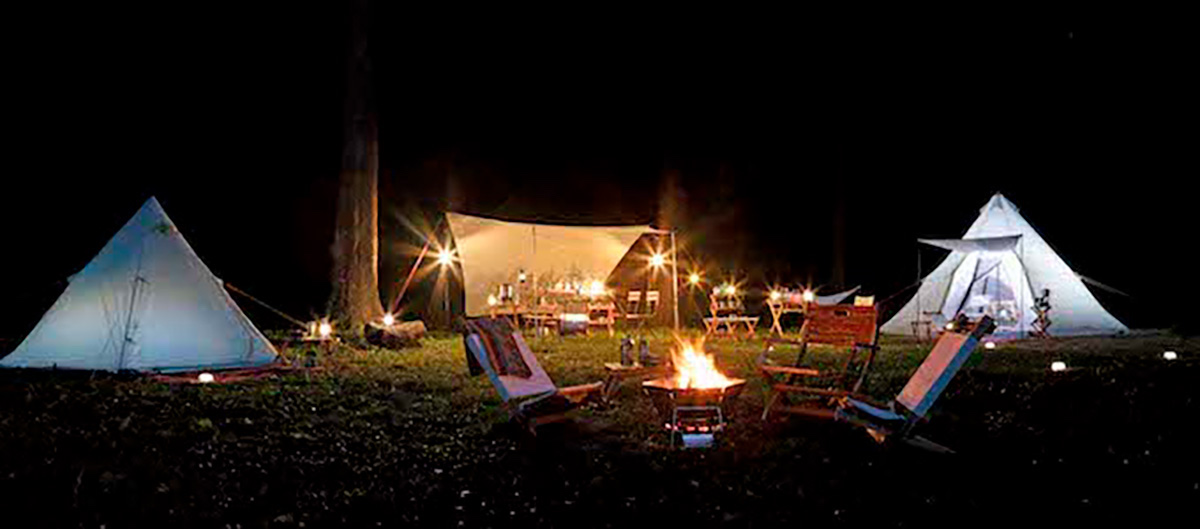
ワンポールテント(ティピー)を選ぶ | テントの種類と選び方 | アウトドアお役立ち情報
キャンプ、フェスなどアウトドアシーンを楽しく演出するワンポールテント(ティピー型)は、今一番人気のあるテントです。キャプテンスタッグのワンポールテントはシンプルでおしゃれ、サイズも選べます。テントの演出も楽しみましょう。
www.captainstag.netRain: Vestibule, Canopy, Skirt, and Groundsheet
In rain, waterproof fabric is only part of the story. What you can do at the entry drives comfort as much as the spec sheet. A tent that can create a proper vestibule or canopy keeps rain out during entry and exit, and gives you somewhere to park wet shoes and gear. The BUNDOK Solo Tipi 1's front configuration works reasonably well for this — and on wet days, that front overhang proves its value.
Along the skirt: a skirted tent does a better job blocking cold air and wind at ground level, but it also traps moisture inside. It's not automatically superior — it's a weather-blocking tool that trades off against ventilation. In autumn and winter rain it's genuinely useful; on a humid night, cracking the skirt open slightly changes the interior feel significantly.
Groundsheet management is easy to overlook. A sheet that fits the floor footprint accurately, or sits slightly inside it, keeps ground moisture from wicking upward. One that extends beyond the perimeter acts as a rain collector and channels water under the floor. One-pole tents have ground-level perimeters that make this issue more pronounced than in some other designs. On a rainy day, what happens at your feet matters as much as what the fly rating says.
Condensation: Material Choices and Ventilation Practice
Condensation depends more on fabric character than on tent shape. Polyester is light and dries fast — excellent for packdown — but when temperature differentials develop overnight, the interior surface beads up. I've had plenty of autumn camping mornings where a polyester tent's interior was covered in a fine layer of droplets that left gear and sleeping bags faintly damp.
TC (typically 65% polyester / 35% cotton) absorbs and manages moisture differently. The surface doesn't bead in the same way, and the interior feel stays drier to the touch. LANTERN's TC material overview addresses this difference specifically. In my own experience, the same temperature and humidity conditions produce noticeably less that cold-wet-wall feeling in a TC tent — extended time inside is just more comfortable.
The trade-off is clear: TC and cotton are heavier and much harder to dry. After a long rain, breaking camp with a TC tent takes real effort. If you're optimizing for quick, low-hassle exits in wet weather, polyester is actually the easier call. The absence of condensation and the ease of wet-weather takedown don't line up neatly.
Ventilation practice changes how much condensation accumulates. One-pole tents concentrate warm humid air at the apex naturally — models with a functioning top vent can release it effectively. Cracking the entry plus using the upper vent is often enough to reduce morning moisture noticeably. Seal everything in cold weather and even a well-shaped tent can't carry away interior humidity.
💡 Tip
For condensation, TC and cotton have the edge. For wet-weather packdown, polyester wins cleanly. Which matters more to you determines which material is right.
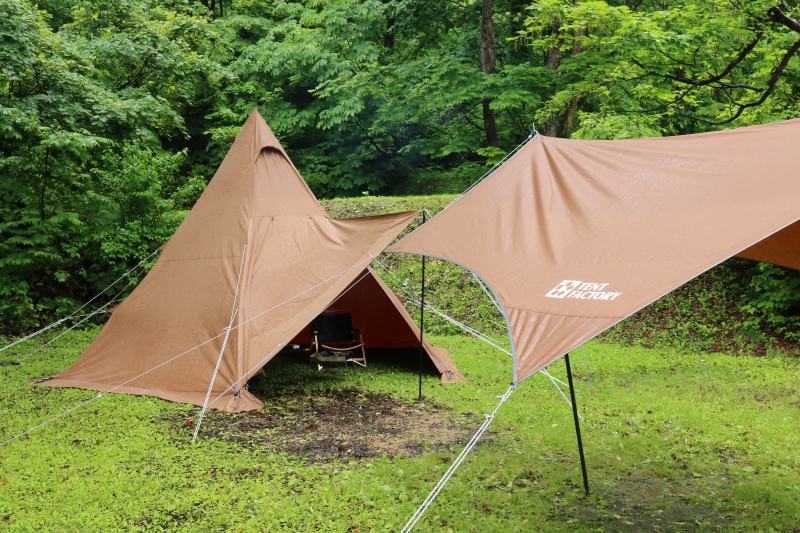
TC素材って雨天使用はどうなの?LANTERN編集部が試してみた
www.lantern.campWaterproofing Ratings: What 2,000 mm vs. 5,000 mm Actually Means
Higher numbers look reassuring, but in tent design, waterproof ratings mean different things for different parts of the tent. The common one-pole configuration pairs a fly at around 2,000 mm with a floor at 5,000 mm or higher. There's logic to this: the roof sees rain; the floor sees pressure from knees, gear, and body weight.
A practical way to read these: 2,000 mm on the fly covers typical camping rain at a functional level; 5,000 mm on the floor provides confidence against pressure from above. But these numbers are part of a broader picture. Whether a one-pole tent handles rain well depends on vestibule design, perimeter sealing, and ventilation as much as on the fabric rating alone.
Choosing One That's Both Photogenic and Functional
Check 1: Headcount and Site Dimensions
One-pole tents tend to feel smaller inside than they look on paper. The standard advice — add one to the listed capacity before comparing — exists for a reason, and it's sound. The sizing guide "How to Choose a Tent by Size" goes into the calculation method in more detail:
Site footprint matters just as much. One-pole tents pitch in a roughly circular or polygonal pattern, which means the total occupied area including stake-out positions tends to be larger than a comparable dome. A big one-pole tent looks spectacular, but if you haven't accounted for the car, the fire grill, the tarp, and traffic paths, you'll run out of room fast. When sizing gets confusing, the better filter is "can I actually live here?" rather than "does the sleeper count match?"
Check 2: Vestibule and Canopy Configuration
Vestibule and canopy design is where photogenic and practical split the fastest. A tent with a dramatic opening looks great in photos but becomes a problem in rain if water pours in and there's nowhere for shoes and wet gear to go. The visual appeal of a one-pole tent is in the silhouette — the actual comfort depends heavily on how much semi-covered outdoor space you can create at the entry.
A usable vestibule means wet chairs, a cooler, firewood, and rain gear can all stage outside the main tent body. The difference is significant in wet conditions. Tents like the BUNDOK Solo Tipi 1 that work well with a front vestibule configuration handle this cleanly even as solo shelters — and they photograph well too.
Also worth checking: can you attach a tarp and extend the setup? A beautiful solo tent that doesn't connect cleanly to a tarp limits the whole site's potential. One-pole tents read as anchors — pairing them with a tarp often completes the living space rather than just adding coverage. When entry position, attachment angle, and pole options all align, the "looks great" tent becomes the "works great" tent.
Check 3: Skirt and Ventilation
The skirt is a strong seasonal signal. A skirted tent keeps cold air from washing in along the ground in winter or wind — the difference at foot level is meaningful. On a cold night inside a TC tent with a skirt, that creeping chill from the ground is noticeably reduced. The visual weight it adds is a bonus; the value is functional.
For year-round use, though, how easily the skirt opens and rolls back matters as much as whether it exists. A skirt isn't simply "better when closed." In warm weather, a tent that traps air at the base gets stuffy. Cold-weather capable doesn't mean all-season capable unless the perimeter treatment gives you options.
Ventilation should be read alongside the skirt. The ideal is high and low openings working together. Warm, humid air rises; cool outside air enters low. A tent that can create this flow keeps condensation moving out and smoke from staying in. High-only ventilation doesn't work without a lower inlet; low-only ventilation leaves humid air pooling at the apex. One-pole tents naturally collect moisture at the top, so the quality of ventilation design has an outsized effect on how the inside actually feels.
ℹ️ Note
I don't evaluate winter tents on skirt presence alone. A tent that lets me adjust the perimeter and move air through both high and low openings is more versatile across seasons — the skirt is one tool among several.
Check 4: Fabric
Material choice is where choosing on atmosphere alone leads to regret. One-pole tents typically come in polyester, TC, and cotton — each with distinct seasonal strengths and maintenance demands, as WAQ's fabric overview covers in depth.
Polyester is light, dries fast, and suits anyone who prioritizes a quick exit. For solo or touring use, the weight advantage is real: the BUNDOK Solo Tipi 1 polyester version comes in at ~2.2 kg with a packed size of ~42×19×19 cm. That's a roughly 15 L pack volume — feasible for motorcycle panniers, not just car trunks. The downsides are clear: condensation forms readily, and fire sparks present a genuine risk to the fabric.
TC sits in the middle — the standard 65% polyester / 35% cotton blend balances drying speed with comfort. Light diffusion is softer, condensation is gentler, and the fire grill pairing is more relaxed. It's the choice for spring/autumn/winter stays where you want to linger. The BUNDOK Solo Tipi 1 TC comes in at ~4.8 kg — 2.6 kg heavier than the polyester version. That gap is easy to dismiss on paper and impossible to ignore on a loaded motorcycle.
Cotton leans even harder toward atmosphere and comfort. Condensation resistance and light quality are both excellent; weight and drying difficulty are both at their worst. Long, stationary camp stays suit it well; anyone who needs to pack up and move regularly should look elsewhere. The right choice isn't about quality — it's about what season, what transport, and how much maintenance you're willing to accept.

テント生地の素材は4種類!はじめてでも失敗しない選び方とは?
テント生地の特徴を知らずに使うと、重くて運ぶのに苦労したり、結露や雨漏りでくつろぎづらくなってしまったりとキャンプの快適さに影響します。この記事では、テント生地の素材の種類から特徴、メリット・デメリットまでをご紹介します。初心者にもおすすめ
waq-online.comCheck 5: Chimney Ports and Safety Requirements
The chimney port is one of the most visually appealing features in a winter one-pole tent — a wood stove inside a tipi creates a genuinely special atmosphere. But this is one area where "it looks amazing" is not a sufficient reason to buy. A chimney port is an opening, not a safety certification. The real question is whether the whole system is designed to be operated safely.
Some KingCamp models, for example, list chimney openings of approximately φ9 cm. That number tells you a hole exists — it doesn't tell you whether your specific stove matches, because compatibility involves pipe outer diameter, insertion angle, heat shielding, and surrounding clearance. A tight fit around the chimney leaves no margin for adjustment.
As hinata's wood stove guide covers, safe stove operation inside a tent depends on ventilation quality, chimney clearance, and fire-resistant treatment of surrounding materials. One-pole tents have center poles and angled walls that limit where a stove can realistically go. Even with a chimney port, a tent with weak ventilation, insufficient clearance from combustibles, or a cramped stove-area layout is functionally dangerous.
The visual case for a chimney port sticking up through a tipi apex is strong. The purchasing case depends entirely on whether the tent's design actually handles winter gear safely — not just whether it has a hole. If winter use with a stove is the plan, the evaluation needs to include ventilation routing, stove placement geometry, and interior clearance, not just the skirt and fabric.

薪ストーブ対応テントおすすめ16選!ソロ~ファミリー向けの選び方・注意点も解説 | キャンプ・アウトドア情報メディアhinata
肌寒い季節のキャンプでは、薪ストーブで暖をとりながら過ごす時間に憧れる人も多いでしょう。本記事では、薪ストーブ対応のおすすめテント16選を厳選して紹介します。ソロやファミリー、ワンポール型などのタイプ別に特徴を解説し、換気や煙突ポートなど安
hinata.meFabric Comparison
Polyester: Light and Fast-Drying, but Condensation-Prone
Polyester one-pole tents are made for anyone who puts weight savings and ease of handling first. Even in rain, the fabric doesn't soak through readily, and drying after wet-weather packdown is quick — both practical advantages for weekend trips or camping trips that end in the rain. As noted elsewhere in this article, the tent's shape looks clean when pitched, but packdown is where the fabric's handleability actually shows. Polyester delivers on that front.
The BUNDOK Solo Tipi 1 polyester version lands at ~2.2 kg with a packed size of ~42×19×19 cm — roughly 15 L by volume. That fits in a car without a second thought, and with proper planning also fits in motorcycle luggage. This is a tent you can realistically take places.
The weaknesses are well-defined. Condensation: when overnight temperatures drop, interior moisture turns to droplets on the fabric, requiring morning wipe-down and extra drying time. Fire sparks: close campfire use is a real risk — a small ember can punch a pinhole, which doesn't mix well with atmosphere-first campsite setups.
Light blocking is also weaker than TC or cotton. Summer sun comes through early, and interior temperature rises faster. The flip side: weight, drying speed, and maintenance ease all favor polyester, and for solo touring or wet-weather camping, those advantages are hard to argue with.
TC / Polycotton: Atmosphere and Comfort at a Weight Cost
TC — typically 65% polyester, 35% cotton — sits between the two extremes, packaging the handling of polyester with some of cotton's lived-in quality. LANTERN and WAQ both treat it as the standard benchmark, and the reason is the balance: the muted light through the fabric, the softer air inside, the way the interior feels less clinical than polyester, all of it pairs well with what one-pole tents do visually.
The experiential differences show up in how light diffuses and how condensation behaves. Morning sun comes through gently; afternoon glare stays manageable. And where polyester gives you that cold wet-wall feeling when temperatures drop, TC tends to absorb moisture in a way that doesn't bead and drip. The interior feels drier even under similar conditions. Fire grill proximity is also more relaxed.
The costs are concrete. The BUNDOK Solo Tipi 1 TC weighs ~4.8 kg — 2.6 kg more than the polyester version. Packed volume moves toward the 25 L range. You feel the difference the moment you pick it up. That gap is manageable in a car; it's significant on a motorcycle or when carrying gear by hand. "I preferred how it looked" doesn't absorb 2.6 kg over a full trip.
Drying is TC's other character trait. After wet-weather packdown, polyester can release moisture quickly in morning sun. TC holds dampness in seams and folded areas even when the main fabric looks dry — a "looks dry, still isn't" quality that's the flip side of its interior comfort. TC is a realistic compromise for people who prioritize atmosphere and comfort — not as extreme as cotton, not as easy as polyester.
Cotton: Premium Feel, Real Maintenance Demands
Cotton is the furthest toward atmosphere and comfort of the three. The fabric quality, the way light enters, the calm of the interior — all of it suits the classic tipi aesthetic more than any other material. The campsite presence is strong in a way that goes beyond "looks good" into "actually creates a space."
On the comfort side, condensation is mild and light blocking is high. Cold early mornings don't produce the all-over-interior-moisture that polyester delivers. Direct sun stays manageable through the day. Fire grill pairing is relatively relaxed. Long, slow camp stays are where cotton earns its place.
The downsides are starker than TC. Heavy, slow to dry, and demanding after getting wet. This is not a material for quick exits or frequent moves. Long rain exposure leaves the fabric carrying significant water weight; drying it properly takes time and effort. One-pole tents have a lot of fabric surface area, which amplifies this.
Cotton works well for campers who prioritize atmosphere and extended comfort and are based in one spot. It's the wrong call for anyone focused on light, fast camping. This isn't about quality — it's about what kind of camping the material was designed for.
💡 Tip
Quick material guide: TC or cotton for atmosphere and comfort; polyester for weight and low-maintenance. One-pole tents make visual statements, and the fabric is where that statement either supports or undercuts your actual camping experience.
Fabric Comparison Table
| Polyester | TC / Polycotton | Cotton | |
|---|---|---|---|
| Weight | Light | Medium | Heavy |
| Drying speed | Dries quickly | Dries slowly | Dries slowly |
| Condensation | Prone to condensation | Less prone | Less prone |
| Spark resistance | Low | Moderate | Moderate |
| Light blocking | Standard | High | High |
| Rain performance | Most polyester models have clear water-resistance specs; easy to assess | Handles light rain well, but drying after saturation takes time | Absorbs rain effectively, but heavy drying load after extended wet weather |
| Best for | Solo, touring, short trips with wet-weather packdown | Spring/autumn/winter stays, fire grill camping, atmosphere-focused trips | Extended stationary camps, comfort-first, immersive space setups |
Which Camping Style Is the Right Fit?
Solo and Touring
One-pole tents make the most sense for solo campers and tourers. The structure is simple, the visual payoff is high, and as long as you're not pushing the capacity, size selection is forgiving. The BUNDOK Solo Tipi 1 pitches at roughly 240×240×150 cm and packs to 42×19×19 cm at ~2.2 kg — around 15 L, small enough for motorcycle rear bags or top cases, realistic enough to take even without a car.
At this scale, the basic rhythm of sleeping, storing gear, and using a minimal vestibule area works without stress. The center pole in solo use is less an obstacle than an anchor point that actually helps you orient the layout. It becomes a problem as people are added — for one person, it usually doesn't get in the way.
The weight divide matters for tourers: go polyester and the tent stays agile; shift to TC for atmosphere and portability drops sharply. The TC Solo Tipi 1 at ~4.8 kg is attractive for car-based camping, but for anyone riding light, the weight hits before the aesthetics do.
Who it works for: solo campers who want atmosphere alongside function, and tourers looking for that combination of easy setup and photos that actually look good. Who it doesn't: anyone regularly dealing with poor ground conditions or unpredictable weather. In those situations, the peg dependency starts to look like the design's weakest link.
Duo
Duo camping also pairs well with one-pole tents — especially couples or friends who want to do more than sleep inside. The tall silhouette and enclosed feel work well with low chairs, a rug, and a small table. That "room in the tent" quality draws a lot of winter stay-in campers, and the atmosphere is genuinely different from a dome.
The center pole can't be ignored at duo capacity, though. Sleeping two is manageable, but moving around gear and navigating night-time bathroom exits involve routing around the pole in ways that accumulate. In my duo experience, how you both move around the center determines comfort more than the tent's total dimensions. Two people in low-style setups fit well; add cots or large vertical gear and it compresses fast.
For duo use, this is the right pick for people who prioritize setup ease, aesthetics, and interior atmosphere. It's not the right pick if there's a lot of gear, rain-day movement is important, or a central obstacle would be frustrating. For pure layout flexibility at two people, a dome is the more straightforward tool.
Small Family Groups
Families can use one-pole tents, but from here the evaluation shifts from "suited to this" toward "suited if the conditions align." Family-size one-pole tents at roughly 460×460×300 cm can sleep eight, and the impact on a campsite is undeniable. Used with a family, the tent body can create a genuine living-room atmosphere. The appeal is real.
What comes with that: weight and peg dependency both scale up. Bigger tents require more ground area with consistent conditions, and the setup that's "simple in steps" becomes physically demanding in practice. "It's large and photogenic so it works for families" is half the story. The whole story includes wet-weather packdown volume, Guy line management in wind, and the difference between a tent that's standing and one that's properly tensioned.
Small children make the center pole a concrete concern. Thinking through a toddler running around inside, the pole is an obvious collision point, and nighttime bathroom runs create navigation problems that adults just absorb. The family use case where one-pole tents work best is older children who can be verbally guided around the layout.
Small families can make it work well with car-based camping, atmosphere as a priority, and a site with plenty of room. For families with young children prioritizing free movement, a two-room tent or large dome is the more practical tool.
High-Wind, High-Altitude, and Coastal Conditions
One-pole tents handle calm conditions well and look great when properly pitched. For sustained strong wind or consistent rain, they move down the priority list — not because the shape is inherently bad, but because of the dependence on tension management and peg placement. In high-altitude or coastal settings where wind is the default, that dependency is a constant challenge.
The specific mismatch: sites with soft or inconsistent ground. A one-pole tent doesn't freestand — it only finds its shape once the perimeter is staked. Loose ground lets it stand, but it won't pitch cleanly, and usability and aesthetics both suffer. For regularly variable alpine conditions or constant coastal crosswinds, the dome's self-supporting structure provides more consistent results.
Winter is a different calculation. Winter one-pole tent value is in comfort for extended indoor stays, not weather resistance. TC or chimney-port cold-weather models pair well with heating and long evenings inside. That's not the same as being weatherproof. Even the φ9 cm chimney openings on some KingCamp models leave limited margin for stove-area adjustment — layout inside requires care. The winter appeal is genuine; the "it handles rough weather" interpretation is not accurate.
⚠️ Warning
One-pole tents perform best in calm-season solo or duo use, or winter "stay-in" setups. The value is in setup simplicity and spatial atmosphere — not weather robustness. Plan accordingly.
Using One-Pole Tents in Designated Campsites
Compatibility with assigned campsites makes or breaks the one-pole experience. The short version: works well for someone who chooses size conservatively and accounts for rope clearance; doesn't work for someone trying to fit a large tent into a small pitch. Guy lines mean the actual ground area required is larger than the tent footprint alone — the number of square meters on the site map isn't the whole story.
Smaller models handle this gracefully. The BUNDOK Solo Tipi 1's ~240×240 cm footprint fits comfortably in solo pitches and typical auto-camping sites, leaves room for a car and tarp, and keeps the visual-to-practical balance intact. This size is the range where "looks good and actually works in the space" holds.
Large one-pole tents get difficult. The tent body may look ideal, but once you factor in entry direction, parking, Guy line clearance, and neighbor proximity, the site geometry often defeats the ideal pitch. Family-size models create a real gap between "fits on paper" and "can actually be used comfortably."
One-pole tents work in designated sites for campers who size down slightly from their instinct and can accurately visualize occupied footprint including ropes. They don't work well for large-tent-in-small-pitch attempts, or for families with children who need unrestricted movement through the site. The photo-and-function balance holds best in small-to-medium sizes at solo or duo capacity.
Size Breakdown: Small vs. Large in Practice
Small Solo/Duo Tents — Advantages and Limits
The most practical one-pole size for solo to duo use is the ~240×240×150 cm class, exemplified by the BUNDOK Solo Tipi 1. At ~2.2 kg with a ~42×19×19 cm packed size (~15 L), this is the tent you can actually take on a motorcycle, not just a car trip. It's also the size where "I want to try a one-pole tent without it becoming a transport problem" finds its answer.
Livability at solo capacity is genuinely comfortable. The inner dimensions of ~220×100×135 cm give you enough length for sleep and gear organization. With a front vestibule configuration, wet shoes and small items can live outside the main space. The one-pole aesthetic works here without the practical compromises compounding.
Small tents aren't without limitations. The center pole feels proportionally more significant in a smaller footprint, and duo use compresses the layout quickly. Two sleeping mats may fit — but add clothes-changing space and gear access and the margin shrinks. The center pole shifts from "spatial anchor" to "layout constraint" as soon as a second person enters the equation. Call this size range honest: good for solo, workable for duo with intention.
The TC variant makes the weight gap visceral. The Solo Tipi 1 TC at ~4.8 kg in a ~440×240×240 mm pack is a noticeably different physical object to carry. Car camping: fully manageable. Motorcycle or on-foot: clearly harder. Small one-pole tents work best when the lightweight polyester version goes places under its own power.
Large Family Tents — Advantages and Limits
The appeal of a large one-pole tent is immediately obvious from inside: space that extends upward. A 460×460×300 cm tent sleeping eight has a center height that lets adults move freely, transforms the campsite visually, and creates a genuine lounge when furnished low. For a small family staying put, the luxury reads clearly.
The spec-sheet version of that experience requires context. A representative pack size for this class is around 62×25×25 cm — big enough that it dictates where in the car it goes. Setup itself isn't complex, but spreading the fabric, orienting it, and working tension evenly across the perimeter takes real physical effort at this scale.
The biggest differentiator at large sizes is how pitch conditions interact with Guy line management. A 300 cm apex looks spectacular; in any wind, slack lines make the silhouette sag and the interior feel unstable. This size class requires every Guy line doing its share before it becomes what it looks like in the promotional image. In exposed positions, basic Guy lines often aren't enough.
Family use also amplifies the center pole issue. Adults can navigate around it; daily life with kids means more routing around obstacles. A large one-pole tent is not "free layout just because it's big" — it's a tent that demands deliberate layout design. The interior is generous, but it's not as flexible as an equivalent dome.
💡 Tip
Large one-pole tents reveal their real character when you think about specific furniture placement and movement patterns rather than just occupant count. Numbers first, imagination second.
One-Pole vs. Dome vs. Pop-Up
Choosing between tent structures is really choosing between different priority sets, not just sizes. One-pole tents are simple to set up and strong visual anchors, but they depend on good peg placement and carry a layout constraint in the center. That constraint is an acceptable quirk at small sizes; it becomes a real factor at larger ones.
Dome tents use the same floor space with better freedom. No center obstacle, vertical walls that actually stand, clean sleeping arrangements — for families or anyone who prioritizes consistent livability, domes are the more practical tool. They may not photograph as dramatically, but the reliability of setup and interior layout often matters more than aesthetics when stakes are higher.
Pop-up and quick-pitch designs operate on a different axis entirely. Speed of setup is unmatched — genuinely useful for day-trip adjacent camping, family events, or anyone who needs the tent up and down as fast as possible. The trade-off is atmosphere and site presence. The three-way breakdown looks like this: one-pole for atmosphere and setup simplicity; dome for versatility; quick-pitch for pure convenience.
My own shorthand: solo or duo where I want both photo appeal and portability, small one-pole. Family camping where I don't want to think about layout, dome. Speed-of-setup is the constraint, quick-pitch. The gap between a small and large one-pole isn't just floor area — it's how far the tent's character as a specific structure either works for you or pushes back.
Tarp Extensions, Forked Poles, and Winter Setups
Connecting a Hex or Rectangle Tarp
A one-pole tent already looks complete alone. Adding a hex or rectangle tarp raises both the aesthetics and the functionality. On models where the front opens well, connecting a tarp out front works like adding a proper entrance hall — rain stays out during entry and exit, wet shoes and gear have somewhere to live, and you can deal with a cooler or fire grill without ducking in and out of the rain.
Two main configurations exist. The first is a vestibule extension: connect a hex tarp at an angle off the front of the one-pole, creating a covered zone with real depth between the tent entrance and the outside world. This is the highest-satisfaction arrangement for solo or duo use in my experience. The BUNDOK Solo Tipi 1's front configuration supports this well, and for a ~240×240×150 cm tent where the interior gets tight if you try to do everything inside, offloading kitchen and storage to the tarp side is a meaningful quality-of-life improvement.
The second is a side connection: attach a rectangle tarp laterally to expand the living space outward. Better suited to larger tents or multiple-person use — this separates the sleeping zone from eating and relaxing areas, which is especially useful in rain. Hex tarps pair visually with the tent's triangular silhouette; rectangle tarps maximize covered area more practically. Photo-first: hex. Function-first for family use: rectangle.
When I was running a small one-pole without a tarp, every rainy day made me wish for a half-step of overhead coverage at the door. Adding a tarp increases the setup, but it compensates directly for one-pole tents' structurally weaker vestibule area. What looks like a visual expansion is actually a practical fix for the real question of where wet shoes, wet clothes, and firewood go.
Forked Pole Systems: The Trade-Offs
Replacing a one-pole tent's single center support with a forked two-leg pole system eliminates the main interior obstacle. Products like DOD's Futamata no Kiwami work as aftermarket conversion kits specifically for this purpose. The center pole is part of the tent's visual identity, but in use it becomes the baseline around which you plan every layout decision. Removing it changes what's possible.
The most tangible gain is being able to place a cot or mat toward the center. With a center pole, you push sleeping positions toward the walls, where headroom drops. Remove the center constraint and the longest flat zone is suddenly available. It's less "more flexibility" and more "finally able to use the space I was working around." The effect is most pronounced in smaller one-pole tents where the pole takes up a proportionally larger fraction of floor space.
The costs are just as clear: more gear, more weight, more pack volume. The kit adds parts, the carry bag gets thicker, and the compact simplicity that made the small one-pole attractive starts to erode. I found that after converting, the interior was genuinely more comfortable, but the packed bundle was noticeably denser and the casual portability had taken a step back.
Setup precision also increases slightly. A forked pole's position and leg spread affect tent tension, so it's not a drop-in replacement that requires no adjustment. Worth the effort, though — this is a structural fix for the most persistent complaint about one-pole tents. Atmosphere unchanged; usability raised a level.
⚠️ Warning
Converting a small one-pole to forked pole doesn't make the inside feel bigger — it makes the layout feel obvious. With the center obstacle gone, where the cot, the small table, and the gear bags go becomes immediately clear rather than a constraint-management puzzle.
Wood Stove Safety Checklist
Pairing a wood stove with a winter one-pole tent is genuinely appealing, but this is the one area where the visual case has to come second. Some models — including certain KingCamp products — list chimney openings of around φ9 cm, but this is a reference dimension, not a safety approval. Chimney port diameter alone doesn't determine safe operation: heat shielding, clearance around the port, floor material heat resistance, and ventilation routing all need to be checked against the manufacturer's specific documentation. Operating outside the conditions the manual specifies creates serious risk.
Floor management matters too. A heat-resistant mat under the stove, and awareness of where ash and sparks can fall during firewood handling, keeps the interior stable. One-pole tents have low walls toward the perimeter, which means positioning the stove away from the center risks tent proximity; positioning it centrally risks walking routes. This is another place where a forked pole helps — clearing the center creates usable space for stove positioning without the layout compromising safety clearances.
Winter one-pole tent use with a wood stove isn't simply "add a heater." It's a full reassessment of ventilation routing, interior configuration, and safety clearances — worth doing properly, and rewarding when it comes together.
Pre-Purchase Checklist
One-pole tents are easy to get excited about in a store or on a product page. Narrowing choices gets cleaner when you work through five areas in order — headcount, fabric, features, site conditions, and winter stove requirements — before getting into model comparisons. Working through this sequence cuts the "heavier than I expected," "didn't fit the pitch," and "not enough vestibule" outcomes that tend to show up after purchase.
Size: Don't take rated capacity at face value. Treating the listed sleeper count plus one as your target is a practical starting point. Solo campers shopping a 2-person rating, duos looking at 3-person territory — that one-step buffer absorbs the gap between stated capacity and real-world comfort. The BUNDOK Solo Tipi 1 works cleanly as a solo tent with that framing. Add more gear inside, more time sheltering from rain, or a cot and low table, and the rated footprint gets tight quickly. One-pole tent walls drop steeply toward the perimeter, so usable floor area runs smaller than the floor dimension numbers suggest.
Fabric: As covered above, let season and maintenance tolerance drive this decision rather than aesthetics. Polyester handles spring and summer well, dries fast, and keeps the tent moveable — the BUNDOK at ~2.2 kg is genuinely packable. Polyester with fire grill camping involves some care around sparks. For stays that lean into autumn, winter, and fire, TC is the better fit — the standard 65/35 blend manages condensation, light, and spark exposure with better balance. Cotton takes comfort further in all those directions but adds weight and drying time accordingly. Think about the morning after a rainy night, working through drying the tent — that scenario tends to clarify which material is actually right.
Features: Decide upfront which of vestibule/canopy, skirt, and ventilation matter most to you. Vestibule and canopy directly determine where wet gear goes when it's raining. Shoes, wet outer layers, a cooler, firewood — anyone who doesn't want these inside the tent puts vestibule access high. Skirt manages cold air at ground level in autumn and winter. Ventilation is quieter but structurally important for one-pole tents: warm humid air pools at the apex, and poor ventilation design translates directly to condensation and stuffiness. CAPTAIN STAG's one-pole coverage treats practical gear — vestibule depth, ventilation layout — as the real differentiator between models, not just visual design.
Site conditions: One-pole tents respond directly to pitch size and ground hardness. Larger tents need more clear area — the full stake-out including Guy lines, not just the tent footprint. An eight-person-capacity tent raises the ground requirement significantly. Ground texture matters too: firm soil holds stakes at the right angle; gravel prevents deep placement; sand gives marginal holding. In my experience, when the stakes go in cleanly, a one-pole tent pitches satisfyingly well. When the ground fights back, the challenge isn't the steps — it's the accumulated micro-adjustments.
Winter stove use: If this is in the plan, the evaluation gets a layer more complex. A "chimney port included" label is the beginning, not the end — the actual spec, ventilation design, and safety conditions need to be verified together. LANTERN's TC material coverage extends into winter tent operation specifically because material choice and ventilation management are intertwined decisions. For chimney-port one-pole tents, KingCamp-style φ9 cm openings provide a reference dimension, but stove clearance and heat shielding around the opening need to be confirmed for safe operation. What makes a tent good as a winter shelter is how closely its design accommodates stove operation — not just how warm it looks.
When in doubt, work through your use case against the list rather than browsing more models.
- Size: use actual sleeper count plus one
- Fabric: match to season and maintenance tolerance, not aesthetics
- Establish priority order: vestibule, skirt, ventilation
- Account for pitch size and ground conditions up front
- Winter stove use: evaluate the full system, not just whether a port exists
💡 Tip
For one-pole tents, "where does the gear go?" and "what do I do inside if it rains?" often determine the right size more than the sleeper count does. Building in one size of extra room pays off in the long run.
Rain, Wind, and Condensation FAQ
Wind: Panel Count, Guy Lines, and Which Way the Door Faces
"Is a one-pole tent more wind-resistant than a dome?" The honest answer: the shape helps with airflow deflection, but the shape alone doesn't determine wind stability. A cone or pyramid deflects wind differently than a vertical wall, and in practice the initial gust impact feels softer. But actual stability in wind depends on panel count, Guy line attachment points, and how evenly the whole structure is tensioned at setup.
CAPTAIN STAG's one-pole documentation acknowledges that the easy-to-pitch form works well when peg placement and tension are right — and struggles when they're not. In the field, I've found that which face the door opens toward matters more than the forecast wind speed. Campsite logic pushes you toward a convenient or scenic entry direction, but if a large panel ends up facing directly into the wind, the shape advantage disappears. Large tents are especially constrained by site geometry — parking, neighbors, and boundaries limit how freely you can orient for wind.
Guy line effectiveness is the other factor. A center pole plus perimeter stake system is structurally rational, but weak peripheral support means any slack face destabilizes the whole tent. Lightweight solo one-pole tents are forgiving to pitch but lose confidence quickly when Guy lines are minimal. Wind-facing sides benefit from prioritized tensioning over visual tidiness. A one-pole tent in wind isn't "strong" or "weak" — a well-tensioned individual tent behaves predictably; an imprecisely tensioned one doesn't.
Rain: Vestibule Depth and the Waterproof Rating Relationship
"How many mm of waterproofing is enough?" For the fly, 2,000 mm is a functional baseline for typical camping rain. But comfort in rain depends on more than the spec sheet number. Extended rain or wind-driven rain is where the tent's design — not just its materials — determines experience.
The BUNDOK Solo Tipi 1's front configuration creates a workable vestibule-style area, giving wet shoes and gear somewhere to stage outside the sleeping zone. That's a real practical advantage. A one-pole tent where the front overhang is minimal, regardless of its fly rating, will pull moisture in every time the door opens. A tent with a deep vestibule adds a buffer against wind-driven rain that its waterproof number doesn't capture.
LANTERN's rain-use coverage makes the same point: tent weather performance involves how moisture enters, how ventilation handles humidity, and how the whole system manages rain — not just what's printed on the fabric tag. Waterproof rating, vestibule depth, door geometry, and DWR treatment all belong in the same evaluation. A tent that's technically holding out the rain but carrying water inside every time you open the door isn't functioning as a rain tent. A tent with usable wet-weather vestibule coverage is the one that earns the "good in rain" description.
ℹ️ Note
Comfort in rain comes down less to sleeping-hours leakage and more to how well you can manage wet gear at the entry — that's where the experience diverges between good and frustrating wet-weather setups.
Condensation: Fabric Type and Ventilation Practice
"How much difference does fabric make for condensation?" TC and cotton have a real advantage — but "less condensation" is not the same as "no condensation." Polyester beads up visibly; touching the interior on a cold morning often finds moisture. TC and cotton absorb humidity differently, and the "dripping wet wall" experience is less common. LANTERN's consistent position on TC aligns with this: the material earns comfort marks across use cases.
But fabric choice only gets you partway. People breathing inside, cooking anything that produces steam, and ground moisture rising all produce humidity regardless of tent material. What moves that humidity out is air circulation between high and low points. One-pole tents pool warm air at the apex naturally — combining a top vent with a lower outlet or cracked entry moves that air and reduces morning moisture noticeably. A night where the airflow was set up properly shows up in how the interior feels the next morning.
CAMP HACK's one-pole analysis notes the same thing: ventilation quality has an outsized effect on comfort in a structurally simple tent. Call it: fabric is half the equation, usage is the other half. Switching to TC genuinely shifts the experience toward comfort, but TC that absorbed rain or heavy overnight condensation needs longer to dry — a different operational challenge. A polyester tent with a cracked entry and open top vent on a cold night often performs better than the material's reputation suggests. Condensation in one-pole tents is best approached as something to manage with smart ventilation rather than eliminate through material selection alone.
![【忖度なし】ワンポールテントおすすめ人気ランキング14選|2026年 | CAMP HACK[キャンプハック]](https://images.camphack.jp/wp-content/uploads/2023/12/onepoletent.jpg)
【忖度なし】ワンポールテントおすすめ人気ランキング14選|2026年 | CAMP HACK[キャンプハック]
2026年最新のワンポールテントを徹底検証。2人以上用とソロ用ごとに、定番のテンマクデザインからワンティグリス、人気のゼインアーツまで網羅しています。煙突穴や拡張方法、設営のコツ、おすすめレイアウトも紹介しているので要チェックです。
camphack.nap-camp.comThe Bottom Line: A One-Pole Tent Is a Photogenic Tool — Not a Universal One
One-pole tents genuinely earn their visual reputation. Setup clarity, carry weight, and campsite presence combine into something with real ownership satisfaction.
Comfort, though, isn't determined by looks alone. The center pole, how you work the layout, whether stakes hold in your typical ground conditions, and how the entry handles rain all contribute to how the tent actually performs. On the days everything clicks — right pitch, right conditions — a one-pole tent delivers on both the photo and the living experience. On days when the entry fights the rain or the stakes won't angle correctly, the same tent becomes noticeably more frustrating.
When choosing: work the decision in order — use case → fabric → vestibule, skirt, and ventilation → site conditions and ground quality. One-pole tents aren't all-purpose, but the right one for your specific use lands well on both aesthetics and function.
Related Articles
The Complete Guide to Choosing a Tent
Before hunting for popular models, understanding tent shapes, materials, and sizing will save you from costly mistakes. Whether you're buying your first tent, deciding between solo and family setups, or rethinking rain and wind protection, this guide lays out the criteria that actually matter.
Best Solo Tents Compared: How to Pick the Right One
Choosing a solo tent is never as simple as going with the lightest option. Weight, ease of setup, livability, waterproofing, and vestibule usability all factor in — skip any of them, and buyer's remorse hits fast. This article covers
How to Choose a Family Tent: A Practical Buying Guide
Picking a family tent based on looks or popularity alone often leads to regret -- it felt smaller than expected, or rainy days were miserable. This guide is for families buying their first tent or outgrowing their current one.
How to Choose an Easy-Setup Tent: A Structure-by-Structure Comparison
Picking a tent based on 'looks easy to set up' or 'I like the style' tends to backfire the moment rain or wind hits on your first overnight. This guide breaks down instant, pop-up, dome, and single-pole designs by real-world usability and overnight performance for first-time buyers and anyone tired of regrettin